

The Forgotten 1920s Fight for Federal Public Hunting Lands
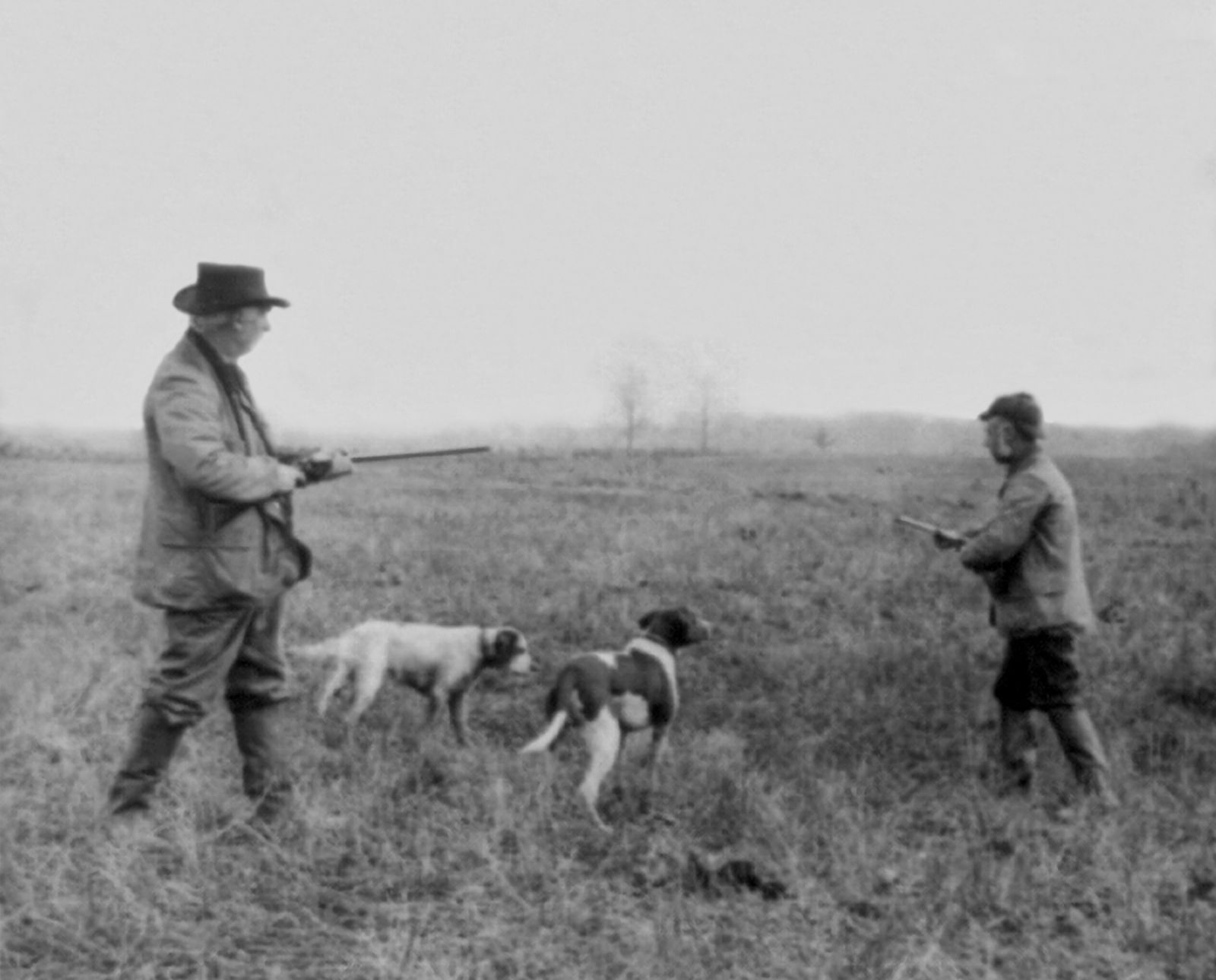
Frederic C. Walcott envisioned federally funded public hunting grounds. What followed was a six-year battle over hunting access, states’ rights, and who should control America’s wildlife.
This article was originally published in the summer 2026 issue of Project Upland Magazine.
Each year, approximately five million public land hunters put their leather boots in Eastern forests and on Western sands, or don rubber boots to trudge through Gulf Coast gumbo mud. They have this opportunity because it is guaranteed by America’s Bill of Rights. It was not a simple or easy journey. Public land has always been subject to the crosscurrents of competing interests, its acquisition and access tried, poked, and prodded since the country was founded. Our land and wildlife could easily have been the privilege, initially, of only royalty. Instead, these resources belong to the people.
Early in America’s history, guardianship of shared resources included navigable waters, forest resources, and public recreation. Called public-trust property, these shared natural resources were part of the Tenth Amendment to the Bill of Rights, which, for rights not specifically delegated to the federal government, gave oversight powers to individual states in their role as trustees for the people. The U.S. Supreme Court, in a series of nineteenth-century decisions, expanded the scope of public-trust property, ruling that wildlife was also the property of the state and held in trust for the benefit of its citizens.
Our Constitution and Bill of Rights set the stage for who owned America’s public land. The federal government held title to property, such as territories, until some or all ownership was transferred to a state after it was admitted to the Union. The government could, however, retain title for obligations that included public recreation and conservation.
In theory, it is a simple model. In practice, not so much. Yet our imperfect public land model has endured for 235 years.
Early Public Hunting Land Acquisition
The first federal land set aside to protect natural resources for the public was Hot Springs in the Arkansas Territory. Signed into law by President Andrew Jackson in 1832, the purchase provided access to the perceived benefits of the therapeutic spring water. Yosemite Park Reservation was next, in 1864, when President Abraham Lincoln transferred, at the state’s request, land in the Yosemite Valley to California. Yellowstone National Park, created in 1872, was America’s first federally owned and administered park.
There was no mention of preserving an individual’s right to hunt and fish in the Hot Springs, Yosemite, or Yellowstone acquisitions. Of lands set aside for the public before 1880, only Vermont and New York specifically referenced hunting. Vermont’s General Assembly, in 1777, was the first state to pass a bill guaranteeing an individual’s right to hunt and fish on state property. When the New York State Park Commission created the 1,303-square-mile Adirondack Park in 1873, however, it did not just protect hunting and fishing; it promoted them.
Adirondack Park was conceived by the New York State Park Commission, a seven-member committee headed by former New York governor and 1868 presidential candidate Horatio Seymour. Aiming to “secure the permanency of the forests” and safeguard the Hudson River watershed, the framers wisely titled the initiative “a grand public hunting park” to garner public support. Promulgated in the press as “the people’s hunting grounds,” they used phrases such as “every traveler must have venison and trout for his meals” to shift public attention toward the reward of access to hunting and fishing lands. No one blinked as New Yorkers signed away an area the size of Rhode Island.
If New York was an illustration of how well the public hunting structure could work, Michigan was an example of what could go wrong. In 1889, Michigan state representatives sponsored a bill to set aside “all accretions and marsh formations” in Saginaw Bay, including Maisou Island, as a public hunting ground. The problem was title. H. H. Warner, the millionaire New York “kidney cure” mogul, had purchased Maisou Island as a private hunting club, and he was not about to surrender it.
Title challenges between Warner and the state went back and forth in the courts for more than a decade, the polarizing issue bringing out the worst in both camps. It took the United States Supreme Court to settle the dispute. When the judgment went to Warner in 1899, he sold the property. Rather than offer it to the state “for the benefit of the people,” however, he sold it to the Sabina, Tuscola & Huron Railroad. The new owner converted Maisou Island into a railroad depot, with a summer resort planned as “a paradise for children as well as grown people.”
In 1909, John W. Weeks introduced legislation that authorized the federal government, through the Department of Agriculture’s National Forest Reservation Commission, to purchase private lands encompassing rivers and watersheds. Passed by both chambers in 1911, the Weeks Law transformed public hunting. Over the following decades, the Weeks Law added more than 20 million acres to the National Forest system, including provisions for public hunting access.
AGPA and the “Pennsylvania Model” for Public Hunting
The 1910s through the early 1920s were a prosperous period for the American hunter, and much of the credit belongs to the New York–based American Game Protective and Propagation Association (AGPA). Founded in 1911 by a litany of prominent sportsmen-conservationists, its advisory board included such notables as Theodore Roosevelt and George Bird Grinnell. AGPA is perhaps best known for its groundbreaking game management practices, but its role in expanding public hunting opportunities was equally significant.
It was Pennsylvania Fish and Game Commissioner John M. Phillips who proved that AGPA’s principles were not just theories. Phillips backed the initiation of a $1 state hunting license, one of AGPA’s main doctrines, to be used for land purchases, reforestation, restocking, game law enforcement, and predator management. He embraced the idea, credited to AGPA’s first president, John B. Burnham, of setting aside game refuges adjacent to public hunting grounds. The Pennsylvania game chief also put a monetary value on wildlife, his tabulations of its economic importance making it easier for state legislators to support fish and game programs.
Pennsylvania was quickly recognized as America’s leader in big game and upland bird management. By the late 1910s, game protective associations were lobbying for similar programs in Connecticut, Massachusetts, Minnesota, New Mexico, New York, Ohio, Texas, and Utah. The game-refuge–public-hunting model grew into a national movement. By the mid-1920s, Louisiana had added 60,000 acres of public hunting land, and Ohio, embracing the “Pennsylvania model,” purchased its first 10,000 acres and then added thousands more. Arizona, Idaho, Michigan, Missouri, Nevada, Washington, and Wisconsin also passed legislation establishing public hunting lands.
The New-Anthony Bill and the Federal Public Hunting Fight
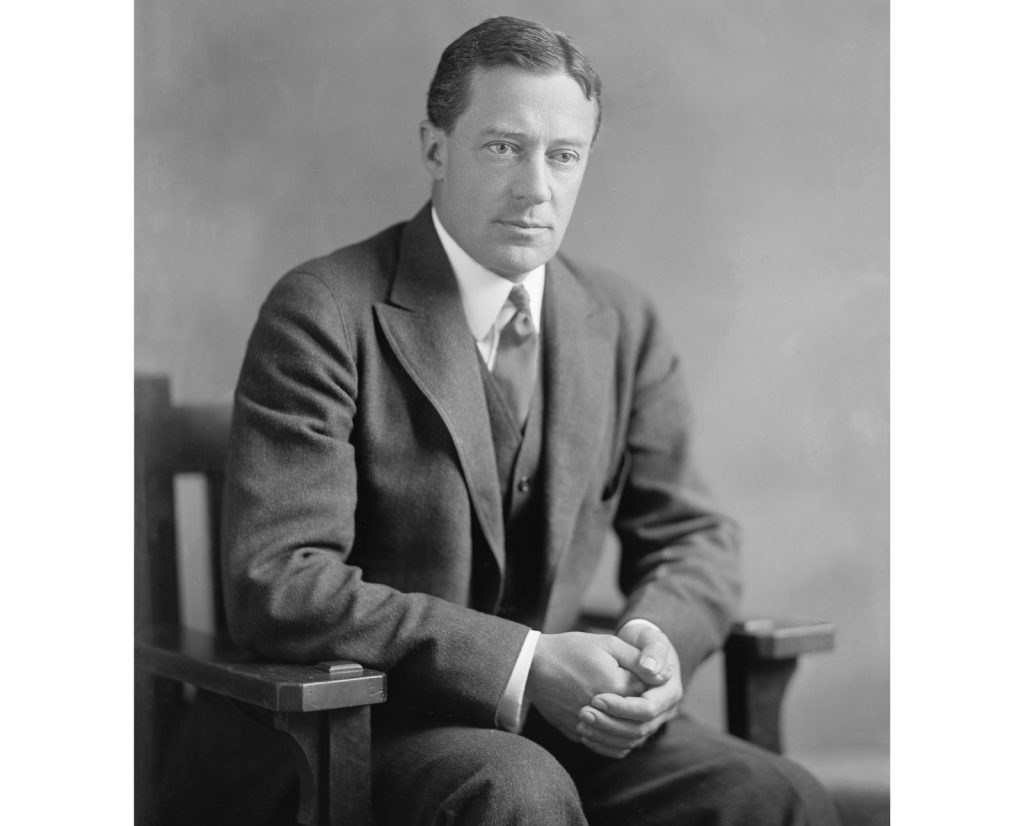
Acquisition of public hunting lands was proving so productive at the state level that, logically, the next move on the public-hunting chessboard was to put the weight of the federal government behind it. The mover and shaker who spearheaded the national thrust was AGPA director Frederic Collin Walcott, an 1891 Yale graduate, investment banker, and director of the Connecticut State Board of Fish and Game.
The motivation behind America’s wealthiest men championing causes like public hunting was not always clear. Walcott was an exception, and his rationale was patriotism. Access to public hunting was vital to the nation in a time of war, Walcott wrote, by training men to take care of themselves in the outdoors and become skilled with firearms. Learning the topography and resources of their state made them better citizens. Providing opportunities for public hunting assured the “health and happiness of its citizens, which comes from the enjoyment of legitimate outdoors sport,” he argued, and was “the surest antidote to all forms of radicalism.”
Walcott took the stage at the 1921 AGPA conference in New York City to ignite the federal wildlife movement. Curiously, he titled his presentation “The Necessity of Free Shooting Grounds,” but he never fully addressed the subject. Instead, he used the platform to advance the larger goal of a federal wildlife program modeled on the successful “Pennsylvania model.” He introduced the concept of modern business management of wildlife through funds generated by a $1 federal hunting license, in addition to a state license, and he saw wisdom in the United States Biological Survey’s oversight of resources that crossed state boundaries. At the end of his talk, Walcott challenged attendees: “There is a loud call to duty.”
At first, everything went according to plan. The same year that Walcott delivered his address, Indiana senator Harry S. New and Kansas representative Daniel Read Anthony Jr. introduced the New-Anthony Bill. Known as “Federal Aid for Sportsmen” and the “Federal Public Shooting Ground–Bird Refuge Act,” it embraced AGPA’s and Walcott’s core values by mandating a $1 federal license to fund the purchase of land for public hunting, game refuges, wildlife science under the auspices of the United States Biological Survey, and a force of federal game wardens to uphold game laws.
Listen: The Public Trust Doctrine – The Civics of Conservation
Supported by most of America’s conservation and naturalist organizations, the New-Anthony Bill was a groundbreaking proposal that existed nowhere else in the world. As it gained traction, AGPA principals testified at subcommittee meetings, and newspapers kept its message in front of the public. Field and Stream even sent outdoor writer Alan W. Sells on a nationwide motor tour to promote awareness, traveling in a “specially equipped Ford truck” with two upland game dogs and a motion picture projector.
The bill sailed through the Senate. Then, all hell broke loose.
Before the New-Anthony Bill reached the House, it was strongly opposed by the Western Association of State Fish and Game Commissioners (WASFG), a newly minted organization hastily founded by game commissioners from Arizona, Colorado, Idaho, New Mexico, Utah, and Wyoming. According to Utah Fish and Game Commissioner and WASFG president D. H. Madsen, the purpose of the organized resistance was to “protect the heritage of western wildlife against threatened encroachment of Eastern interests.”
Western Opposition to Federal Public Hunting Lands
Madsen presented WASFG’s platform in lectures and newspapers. The organization, he said, objected to “government control” over fish and game within the states, a $1 federal license fee that could be expended however “Congress sees fit,” and the role of federal game wardens, which he characterized as “federal police.” Another member worded it more forcefully: “The West is tired of being dictated to by New York”—a reference to AGPA—“and by Washington, DC”—meaning politicians. The theatrics were to play out as a battle between the states and the federal government, and the West against the East.
On the House floor, Utah and Wyoming lawmakers were joined by Tennessee to lead the battle, their orations proclaiming that the bill only served “the interests of wealthy sportsmen” and that it was “an invasion of state rights by the federal government.” Their campaign had its desired effect when, in February 1923, the New-Anthony Federal Public Shooting Ground–Bird Refuge Act was killed after a bitter fight.
The Fight for Federal Public Hunting Grounds Continues
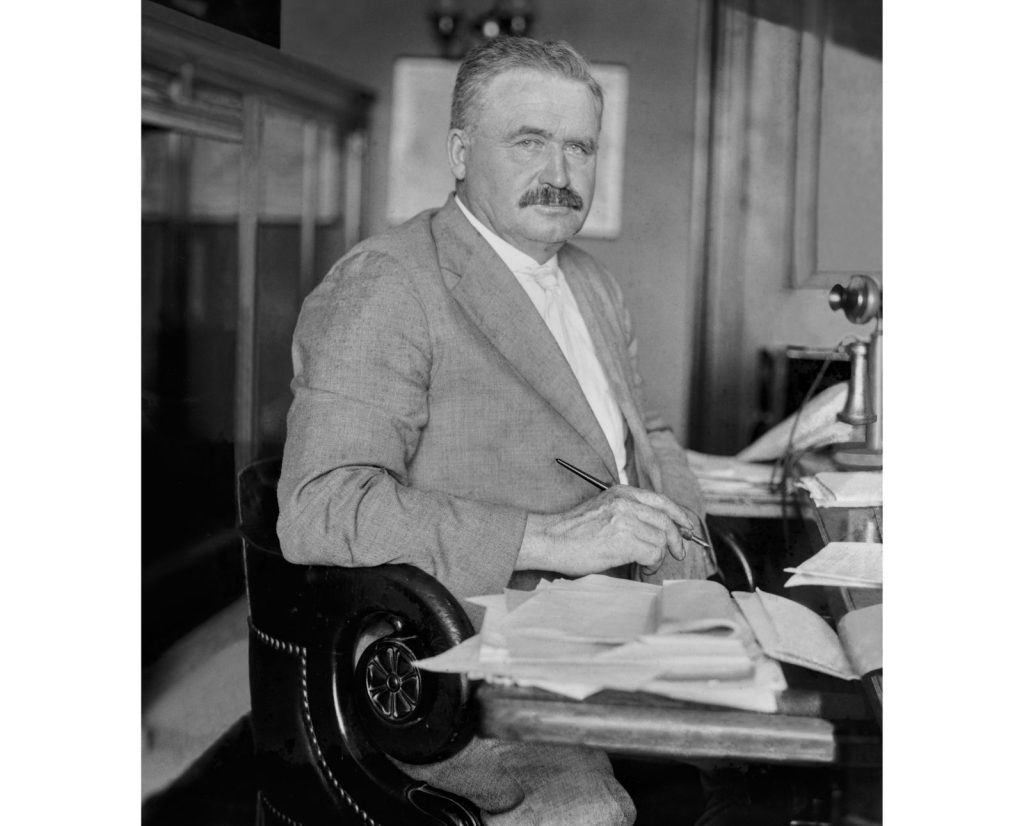
The New-Anthony Bill was reintroduced as the Brookhart-Anthony Bill in 1924. It passed the House before Senate detractors circled their wagons. California, Colorado, and Oregon joined the opposition, and Delaware and New York City quickly followed. Utah senators William H. King and Reed Smoot managed to suppress the bill before it came to a vote. It was killed the next year, again, this time a result of “obstructive tactics against this bill by Senator [Reed] Smoot of Utah,” whose filibuster lasted until Congress adjourned its session.
After three years of political thrashing, promotion of the New-Anthony Federal Public Shooting Ground–Bird Refuge Act was given to William H. Dilg, a founder and president of the Izaak Walton League (IWL). Dilg’s first order of business was to extend an olive branch to D. H. Madsen and Senator Smoot. Madsen was placated with the offer to draft a more palatable bill, and Smoot was enlisted to introduce it in Congress. The new “Madsen State Game Law Bill” was rolled out with an excise tax on firearms and ammunition to replace the objectionable federal license requirement, and it eliminated funding for federal game wardens.
The IWL invited Madsen to New York and Chicago, where he met with original bill backers John Burnham of AGPA, U.S. Biological Survey chief Edward W. Nelson, and T. Gilbert Pierson, president of the National Audubon Society. When he returned to Utah with the promise of federal funds to create Utah’s Bear River Migratory Bird Refuge, it looked as if the amended Dilg-Madsen version, now endorsed by the intractable WASFG, was going to fly.
Instead, when a draft was brought before a congressional subcommittee, it was crucified. Senator Smoot smelled blood and declined to shepherd it through the Senate. Senator King railed against the Dilg-Madsen version on the floor and, to discredit AGPA’s John Burnham, charged that Burnham was a puppet of big arms and ammunition companies, which were behind the bill only to increase their profits. Then, in a curious move, William H. Dilg, the latest patron of the Federal Public Shooting Ground–Bird Refuge Act, turned against it. Likely, it was revenge. Dilg had just been ousted as president of the IWL, and the organization remained an ardent supporter of the measure.
In a race to appease its critics, Madsen agreed to drop the excise tax amendment. Then Senator King sidestepped him by striking a deal to drop the public shooting grounds piece. Madsen was furious, advising Utah sportsmen he could no longer support the bill and that King’s move meant the death of the Bear River refuge promise. In June, the embattled measure was once again on the Senate docket but was “prevented a vote by several senators who opposed it,” notably the lever-pulling William King.
As 1926 closed, again without a vote on the measure, D. H. Madsen was named vice president of the International Association of Game, Fish, and Conservation Commissioners. That year, Frederic C. Walcott, the man who originally introduced the public shooting-game refuge model to the nation, was the organization’s president. No one ever recorded the words between Walcott and Madsen, the principal architect of its failure.
The maligned bill was on the docket for another Senate vote in 1927. Former IWL president Dilg fired an early salvo in a vicious editorial. “The bill has been killed so many times,” he penned, “that it has become a joke.” California lawmakers sided with Dilg, adding Utah’s promised Bear River wetlands restoration to their grievances by demanding a list of other planned state public shooting-game refuges. Others fumed that the bill only promised “new Federal Bureau jobs” and the likelihood that California dollars would be used to develop shooting grounds on the Potomac River, “within easy distance of Washington.”
Supporters were just as animated and equally motivated, but they failed again. In the words of renowned naturalist , “the odious and impossible old game refuge bill was knocked out of the ring on May 24, by Senators William H. King and [Washington Senator] C. C. Dill,” adding that it currently “lies in a comatose condition.”
The Norbeck-Andresen Migratory Bird Conservation Act
It had been a protracted, six-year battle. The original patrons of the public shooting ground–game refuge bill, Senator New and Representative Anthony, were followed by William H. Dilg and D. H. Madsen. Now, in the summer of 1927, the mantle passed to South Dakota senator Peter Norbeck and Minnesota representative A. H. Andresen. Neither was new to conservation legislation. Norbeck, as South Dakota governor, backed the 30,000-acre Black Hills game sanctuary in 1920, and Andresen secured federal funding for a Mississippi River refuge in 1928.
William T. Hornaday offered Norbeck some unsolicited advice in a January 1928 letter. “Do not, I beg of you, become the sponsor of that bill before the Senate,” he wrote. “Let it quietly die and drop into oblivion.” Convinced of the merits of AGPA and Frederic Walcott’s vision, however, Norbeck ignored the advice. He would restore the amendments for public shooting grounds and their funding tool, the federal license.
The tide against him was too strong. During closed-door sessions, every feature of the Norbeck-Andresen bill was slashed except one—a provision to fund federal migratory game refuges. The final version of the renamed Norbeck Migratory Game Refuge Bill, also titled the Norbeck-Andresen Migratory Bird Conservation Act, was prepared for the Senate by the bill’s most ardent opponents, William King and Washington State’s C. C. Dill. What started as a farsighted concept to link multiple conservation objectives ended with a single success for migratory bird refuges.
Called by Hornaday “the most amusing opera ever seen in the guise of wildlife conservation,” the Norbeck Migratory Game Refuge Bill passed the Senate on April 18, 1928, the House on January 29, 1929, and was signed into law that year by President Calvin Coolidge. Norbeck did not celebrate. “This bill bears my name,” he said, “but it is not in any respect my bill.”
What Might Have Been for Federal Public Hunting Lands
Only a few of the 1920s players remained onstage during the next chapter in America’s wildlife lawmaking—the Roosevelt administration’s handling of the 1930s Dust Bowl migratory waterfowl emergency. Ousted IWL president William H. Dilg died in 1927 at 58. U.S. Biological Survey chief E. W. Nelson was “forced to voluntarily retire” the same year. After 17 years as head of AGPA, John B. Burnham resigned in the spring of 1928. The next year, Utah Fish and Game Commissioner D. H. Madsen was named, not surprisingly, superintendent of Utah’s Bear River Migratory Bird Refuge.
The man who started it all, Frederic Walcott, became a Connecticut senator and chairman of the Senate Committee on Conservation of Wildlife Resources. Walcott was there to see the $1 Federal Duck Stamp, which he first advocated in 1921, become law in 1934. So was Peter Norbeck, who was a committee member. William T. Hornaday, the “battle-scarred veteran of wildlife,” made a brief appearance that year, just long enough to charge that “every duck stamp on a hunting license is a badge of hard-hearted brutality.”
We’ll never know what our federal public shooting grounds might have looked like had Walcott and the others succeeded in passing the New-Anthony Bill. Even so, we’ve done pretty well. Today, America’s five million public land hunters have access to portions of more than 640 million acres of Department of the Interior lands spread across more than 400 National Wildlife Refuges, 150 National Forests, and Bureau of Land Management holdings. Additionally, public hunting is offered on hundreds of millions of acres of state-owned lands.
It may not be perfect, but it is more public hunting land access than any other nation in the world.