


Skillet Spanakopita Pie with Ruffed Grouse, Morels, and Nettles
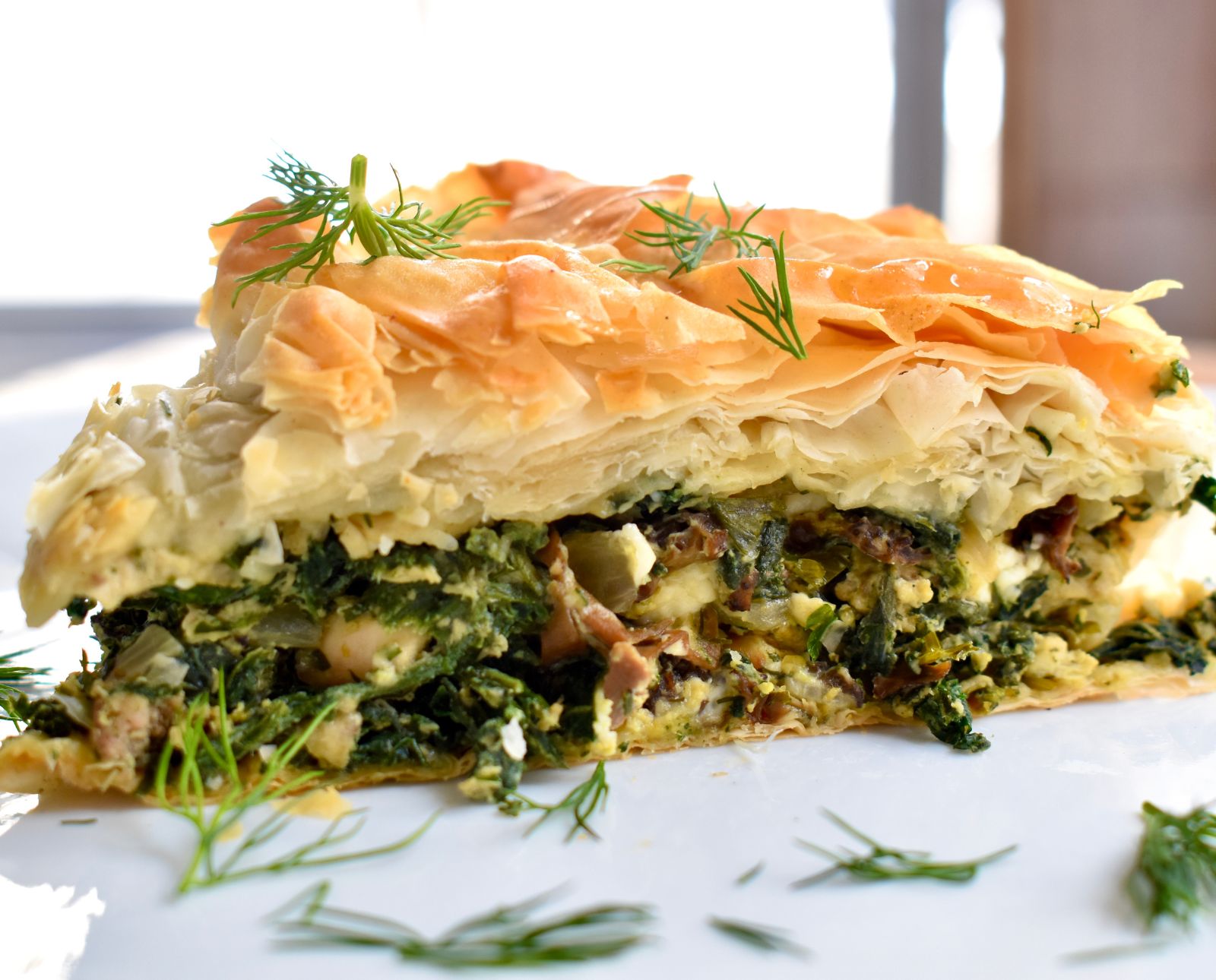
A wild North American take on a traditional Mediterranean dish featuring wild game and foraged ingredients
This ruffed grouse recipe combines wild game with morel mushrooms, stinging nettles, feta, herbs, and flaky phyllo pastry in a skillet version of Greek spanakopita. It’s a savory wild game pie built around ingredients gathered from the northern hardwoods but inspired by a Mediterranean tradition of cooking with seasonal wild greens.
Wild Foods and the Mediterranean Diet
The Mediterranean diet has become one of those things that exists in a strange middle ground between nutritional science and lifestyle influencer branding. Mention it, and most people immediately picture olive oil, grilled fish, wine, fresh vegetables . . . maybe a tanned 98-year-old man in a Speedo, slowly eating tomatoes beside the sea somewhere in Greece. Meow.
There’s truth to some of that, of course. Traditional Mediterranean cuisines are full of vegetables, legumes, seafood, olive oil, herbs, and relatively modest portions of meat. Study after study continues to associate these diets with good long-term health.
Still, I sometimes wonder if we oversimplify the idea a bit too much.
When people attempt the Mediterranean diet in North America, they often focus entirely on ingredients while ignoring the broader lifestyle that surrounds those ingredients. Olive oil gets swapped in for butter. More fish gets eaten, probably farmed salmon and tilapia. Maybe someone starts buying feta cheese and cherry tomatoes. But many of the less obvious underlying factors tend to get ignored.
Historically, Mediterranean people didn’t just eat differently; they lived differently, too.
Many traditional Mediterranean communities consumed a surprising amount of wild food, especially greens. In places like Crete, villagers historically gathered huge varieties of wild edible plants throughout the year: dandelions, chicories, fennel greens, amaranth, sorrel, purslane, and countless others. Wild herbs and bitter greens were not health-food accessories sprinkled delicately over restaurant plates. They were normal food. Everyday food. And, for the most part, they still are.
Gathering them also required movement, and that part often gets lost.
Traditional Mediterranean diets emerged alongside lifestyles that involved farming, fishing, shepherding, walking long distances, tending gardens, climbing hills, hunting, gathering plants, and physically participating in the procurement of food itself. People weren’t simply selecting healthier options from the shelf at the local Whole Foods; calories were tied directly to movement and labor in a way that feels increasingly foreign to modern life.
Hunting ruffed grouse in the autumn and foraging spring mushrooms and nettles from a northern hardwood forest may not initially seem connected to Mediterranean food traditions, but the more I think about it, the more parallels I see.
A day spent walking logging roads, pushing through alder thickets, climbing ridges, and wandering damp forests in search of game or wild edibles shares more with traditional food cultures than many people probably realize. You’re physically engaged in obtaining ingredients. You’re eating seasonally. You’re interacting directly with a landscape instead of simply purchasing a sanitized version of it.
Even the foods themselves begin to overlap in interesting ways.
Why Ruffed Grouse, Morels, and Nettles Work In A Spanakopita Pie
A day spent walking logging roads, pushing through alder thickets, climbing ridges, and wandering damp forests in search of game or wild edibles shares more with traditional food cultures than many people probably realize. You’re physically engaged in obtaining ingredients. You’re eating seasonally. You’re interacting directly with a landscape instead of simply purchasing a sanitized version of it.
Even the foods themselves begin to overlap in interesting ways.
Spanakopita, at least in its modern Western form, is often understood as a spinach pie. Historically, though, it’s probably more accurate to think of it as a greens pie: a flexible recipe designed to accommodate whatever herbs, wild greens, cheese, or other ingredients happened to be abundant nearby. Cooks across Greece made countless variations depending on season and geography.
That flexibility is part of why wild ingredients fit into the dish so naturally.
Nettles, for example, feel very much at home in spanakopita. Like many Mediterranean wild greens, they possess a mineral-rich, slightly earthy flavor that balances beautifully with feta cheese, herbs, olive oil, and lemon. Morels, another spring delight, contribute deep woodland savoriness, while ruffed grouse adds richness and texture that feels much more interesting than conventional chicken.
All three wild ingredients also store well: the grouse and blanched nettles in the freezer and the mushrooms dehydrated and stored in the pantry. You could swap them for other seasonal wild greens and mushrooms with little to no change to the recipe.
Importantly, none of this feels forced or gimmicky.
In fact, I’d argue that wild grouse fits the spirit of these pies better than industrial chicken breast ever could. Traditional peasant cooking was rarely built around bland, uniform ingredients. It was often robust, coarse-textured, herbaceous, gamey, and designed to accommodate more assertive textures and flavors.
There’s another aspect of traditional Mediterranean eating that I think hunters, in particular, understand, too: Meals were often slower and more communal than modern North American meals.
Wild food rarely feels disposable. A ruffed grouse or a basket of morels usually gets shared intentionally, whether among hunting partners, friends, or family gathered around a table. There’s often conversation attached to it: stories about the hunt, the dog work, the weather, the place where the mushrooms were found (but maybe not the exact place). The food you procured yourself carries context. It has a story.
That’s something increasingly missing from modern eating, where meals are often eaten alone, rushed, distracted, bought and delivered, or heavily processed.
I don’t say any of this to romanticize older cultures or suggest hunters have secretly solved nutrition. Obviously, you can absolutely eat unhealthy wild game meals, too. But I do think there’s value in recognizing that many traditional cuisines were healthier not simply because of individual ingredients but because of the larger patterns surrounding them: seasonal eating, physical movement, shared meals, wild plants, moderate portions of richer foods like wild meats and fish, and cooking from scratch.
This skillet pie pulls a surprising number of those threads together.
Wild grouse, foraged mushrooms, spring nettles, herbs, feta, olive oil, and crisp phyllo pastry all combine into something that feels hearty without being heavy. It’s rustic food at its best: practical, seasonal, communal, and built around ingredients that actually taste like the landscape they came from.
Note: A rustic, layered phyllo pie leans into wild greens and upland birds while staying true to the spirit of spanakopita. One grouse will stick to a truer spanakopita, while two will push it more into a game pie. Either works!
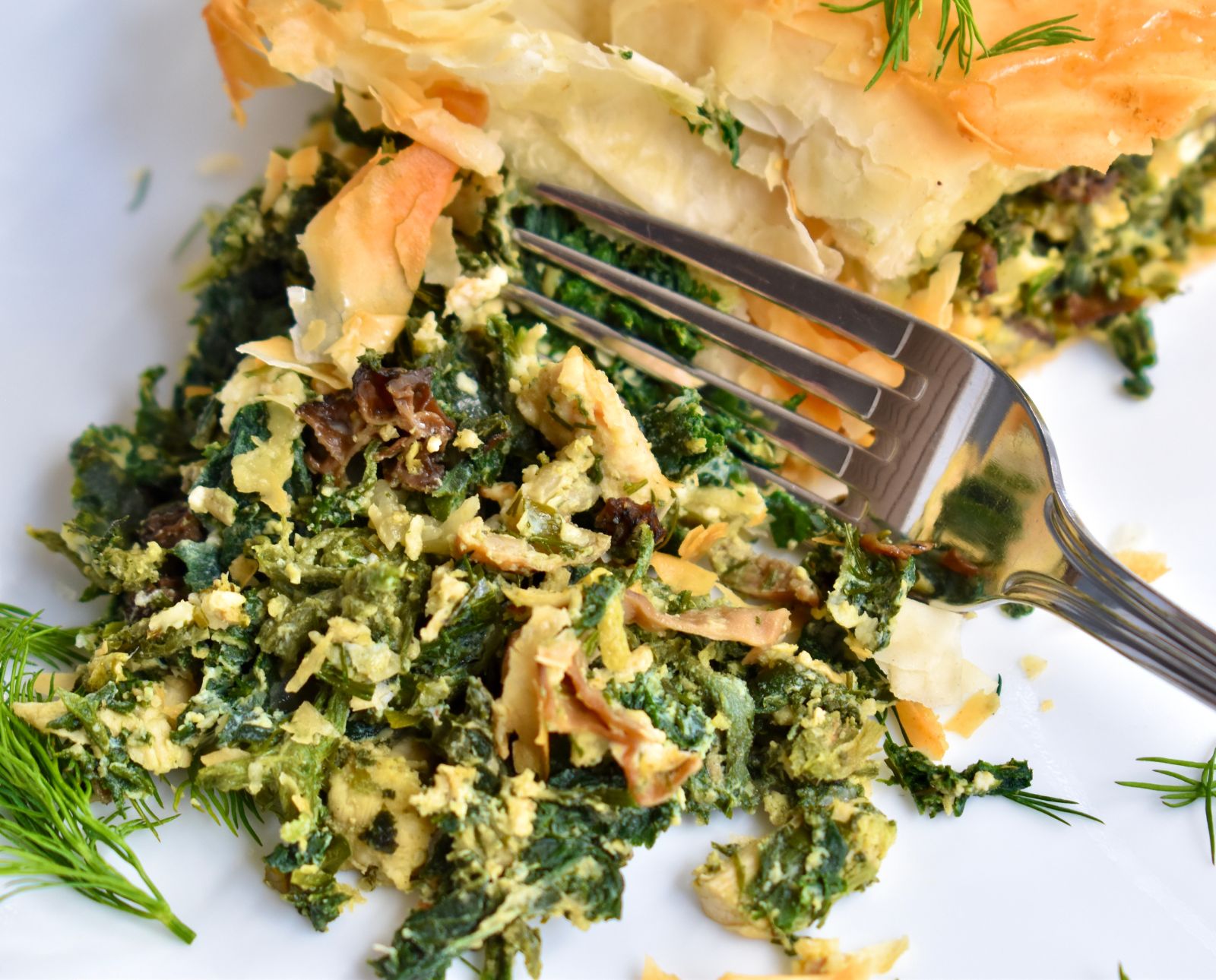

Ruffed Grouse Spanakopita with Morel Mushrooms and Nettles
Ingredients
Method
- If you are not using leftover grouse meat, preheat the oven to 375°F. Rub the grouse with olive oil and season generously with salt and pepper. Transfer to a roasting rack set inside a baking sheet and roast for about 20 minutes, or until cooked through. Let cool, then shred the meat into bite-size pieces, discarding the bones.
- Heat 1 tablespoon olive oil in a skillet over medium-high heat. Add the onion and morels and cook for about 5 minutes, or until the onion is soft and lightly browned. Add the garlic and cook for 1 minute. Add the nettles and cook for another 5 minutes, or until the excess moisture has completely evaporated. Season with a pinch of salt and pepper. Transfer the mixture to a bowl and let cool.
- Fold the shredded grouse, dill, parsley, lemon zest, and feta into the onion and mushroom mixture. Taste and adjust the seasoning with salt and pepper as needed. Add the eggs and mix well.
- Preheat the oven to 375°F.
- Brush a 10-inch skillet with melted butter. Lay five or six sheets of phyllo in the skillet, brushing each sheet lightly with butter and allowing the edges to overhang the rim.
- Add the filling and spread it evenly in the skillet. Layer the remaining phyllo sheets on top, brushing each with butter. Fold the overhanging edges inward to seal the pie, then brush the top generously with butter.
- Bake for 30 to 40 minutes, or until the phyllo is crisp and lightly browned. Let the pie rest for 10 to 15 minutes before slicing. If desired, drizzle with honey before serving.

Where are the morels in the ingredients list?
Ah, sorry about that! Just added them. Thanks for catching it!