

An International Affair: What a Trip to Germany Taught Me About German Hunting Dogs and the Deutsch Langhaar
From wild partridge fields to breeding programs, read a firsthand experience about the German hunting culture that’s shaped today’s versatile hunting dogs
This article was originally published in the spring 2025 issue of Project Upland Magazine.
“You’re back—you must be really serious about this.”
The comment was equal parts teasing and sincere. I suppose we were a bit of a spectacle: four Americans traveling to rural Germany for the second time in two years to attend a hunting dog event. One trip? Sure, we were curious. But two? Yeah, we must be serious.
For a few years, I had the immense fortune of co-hosting the Hunting Dog Confidential podcast with dog historian and author Craig Koshyk. In each episode, the modern era’s foremost expert on pointing dogs shared his knowledge and personal insights from decades of traveling to study hunting dogs in their homelands—and I occupied a front-row seat.
“The best way to understand a dog is to understand the people that developed it and the place where it was developed,” he’d say. “Dog breeds are ultimately a product of human culture.”
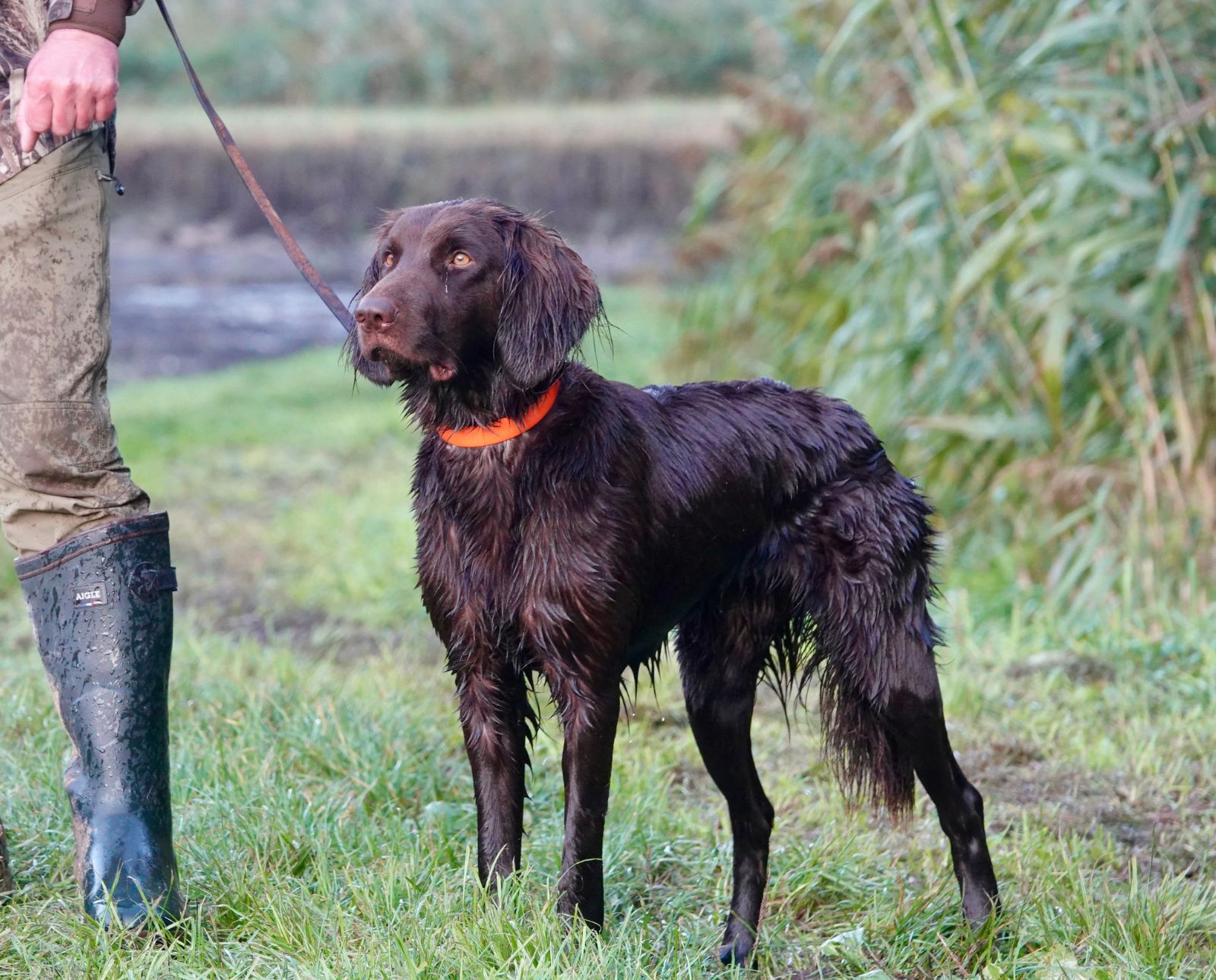
So there I was, in Germany, seeking to better understand my dogs. More than that, though, my little delegation was there to forge relationships. We represented the North American breed club of the Deutsch Langhaar, which is a member club of the larger German association, the Deutsch Langhaar Verband. Even though we regularly conducted business with our German colleagues by email, we knew that technology could never replace the benefits of appearing in person. So, we showed up.
Twice.
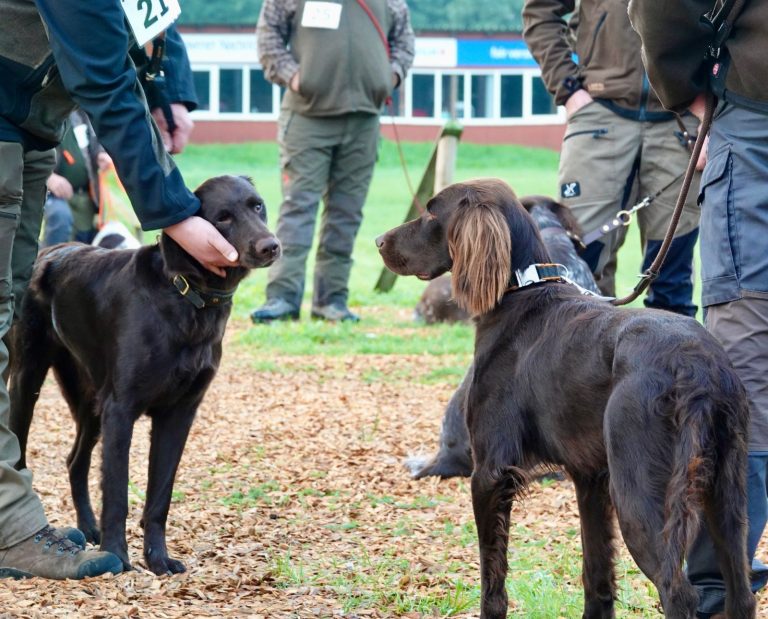
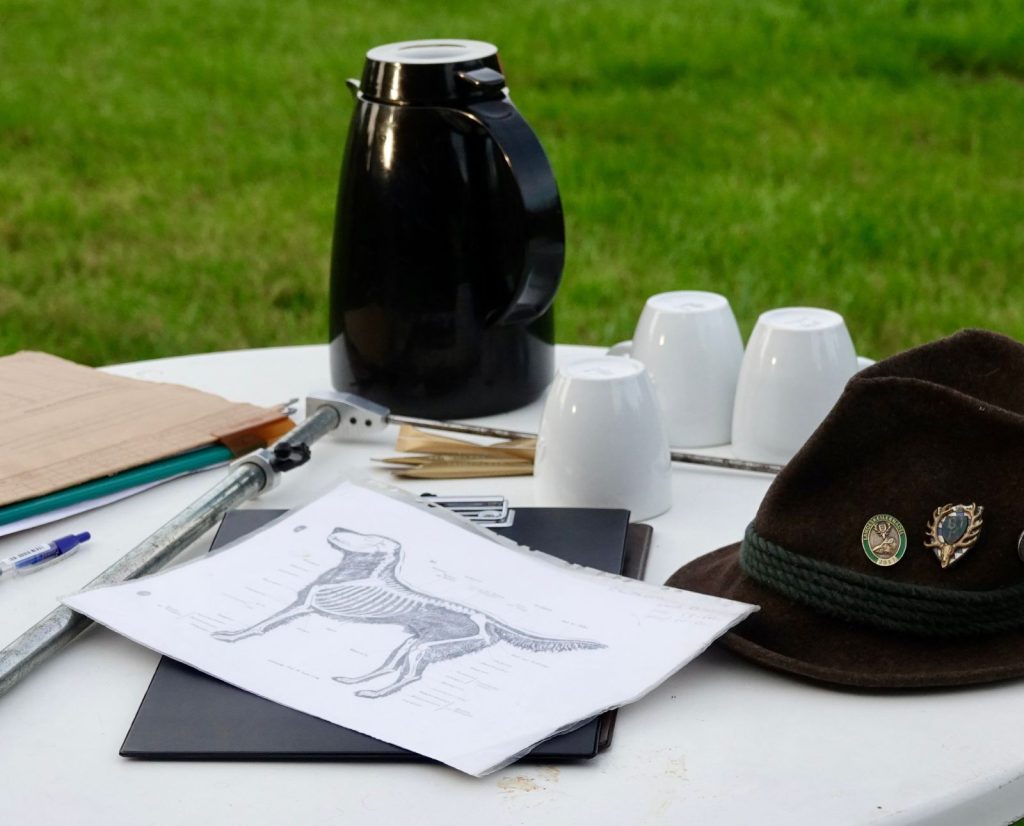
The dog event in question was the annual Schorlemer test, an invitational event that evaluates the year’s top breeding candidates. Qualifying dogs are judged on their performance in the field and water. Then, they’re assessed by breed show judges who evaluate their conformation and temperament. It’s a who’s who event in the Deutsch Langhaar world—for dogs and people alike.
Understanding German Hunting Dogs in Their Homeland
The field portion of this year’s performance test was held in sugar beet fields. Navigating the half-buried beets was a bit of an ankle-buster, but the leafy rows provided ample cover for the target game: gray partridges and hares.
It was a delight to see the dogs work a bird I’m familiar with, albeit in a landscape unlike anything I’d ever hunted. Wild covey birds provided an extra challenge compared to the liberated birds we tend to see in North American hunt tests. The judges gave the young dogs multiple opportunities to prove their mettle on tricky, unpredictable birds. The cream certainly rose to the top—some individuals demonstrated exceptional handling of the wild birds and hares.
To better understand German hunting dogs, it helps to have a basic understanding of German hunting. The dogs are generalists—as opposed to specialists in a particular game animal—because the hunters are, too. Hunting in Germany is as much an agricultural and land management tool as it is a recreational activity. Hunters work in cooperation with farmers and foresters to maintain animal populations at appropriate levels for the landscape. As a result, German hunting dogs are expected to correctly handle any animal they come across, whether it’s a bird, a hare, a fox, a deer, or a wild boar.
Read: The Jagdgebrauchshundverband ( JGHV) – the German Versatile Hunting Dog Association
Fortunately, we were able to observe this generalist approach in practice during the test. At one point the dogs hunted a thick hedgerow. From that single cover, the dogs produced roe deer, pheasants, and hares. They tracked the deer, pointed the pheasants, and pursued the hares with the characteristic yips of a sighthound.
Seeing a true demonstration of a “versatile” dog, not only in a hunting scenario but also under the evaluation of performance judges, was incredible.
This expectation of versatility and utility doesn’t always translate well to North American upland hunting. Plenty of American hunters get frustrated when their versatile dog veers off bird hunting to point or chase a rabbit. I wasn’t feeling particularly proud when my dog pointed a porcupine and then broke into pursuit when the animal inexplicably made a run for it. But when placed in the context of handling the diversity of game that might spring forth from a German hedgerow, it makes a lot more sense. These dogs have been bred for centuries to point certain types of game, track and pursue others, and engage with predators when necessary.
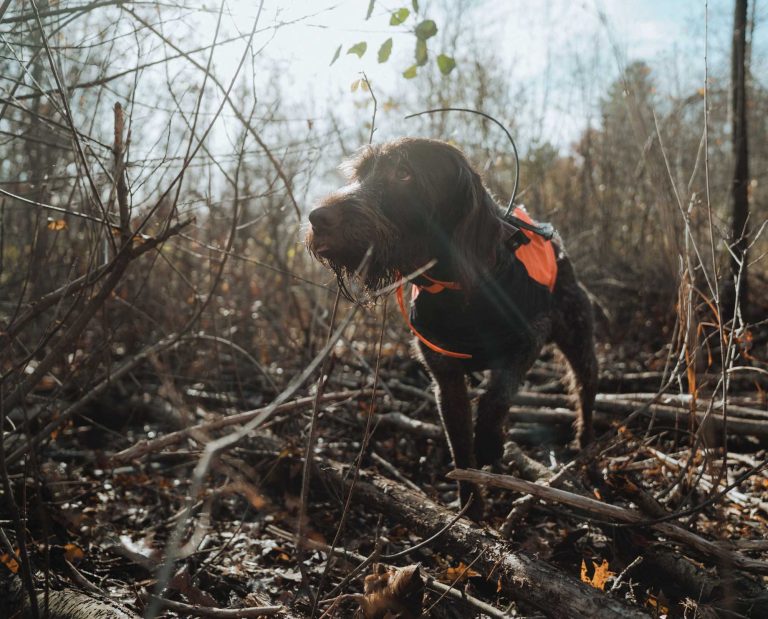
That’s not to say we must hunt with our versatile German breeds in America the same way German hunters would in Europe. These intelligent dogs are amazingly adaptable. When I hunt the open ridges of the Cascade Mountains, my dogs comfortably lope along hundreds of yards away while maintaining a connection with me. The same dogs pull back to a conservative 30 to 40-yard range in thick grouse cover. My dogs’ littermates hunt ruffed grouse and American woodcock in the East, pheasants in the Great Plains, and quail in the Southwest, while their German cousins drive wild boar and roe deer out of the forest. German breeds are remarkably capable in a wide variety of contexts, but understanding their homeland surely sheds light on their genetics and original purpose.
These facts can all be read in a book or heard on a podcast. However, until you’re ankle-deep in sugar beets, watching a dog that looks familiar yet understands a different language, and attempting a bilingual conversation with the hunting lease owner, it doesn’t truly click. There’s a level of understanding and, more importantly, human connection that can only be found after hours on an airplane and immersion in a foreign culture.
How Hunting Dogs Create International Connections
Five thousand miles is a long way to travel to learn more about a dog breed. The knowledge gained is interesting, of course, but it pales in comparison to the social bonds formed on a trip like this. Anyone immersed in the hunting dog world wouldn’t be surprised to learn that dogs are a touchpoint for human connections. The universality of loving a dog translates into any language and provides a foundation for building real relationships.
Case in point: my German conversational skills are pretty terrible. Duolingo helped me read signs and understand a few words, but speaking was a whole other problem. I made a number of red-faced blunders when talking about the dogs we met, including asking an older gentleman which hotel room he was staying in. (I swear, I was trying to ask which kennel name he operated—my brain malfunctioned on the vocabulary.) But the very fact that I was there, at a niche event for an uncommon dog breed, made it clear that I was every bit as passionate about these dogs as the German handlers were. That was the language that transcended everything else—unfortunate innuendos included.
What stood out most about our second trip was the genuine sense of belonging. The first time around, everything about the experience was brand new. We didn’t know what to expect from the Schorlemer event, the people we met there, or the etiquette around attending a dog test as spectators. We engaged in polite conversation as much as the language barriers allowed but felt acutely aware of the burden of obliging folks to recall their English studies to engage with us.
The return trip, however, was so warm. Our new friends welcomed us back with open arms and an unspoken understanding that we were truly dedicated to supporting these dogs. Familiar faces greeted us, and we enjoyed the generous hospitality of dear friends. Friendships born via technology crystallized over morning tea and evening laughter. Friends and experiences (and food, of course) shaped our itinerary, not a travel guide. Our inevitable tear-filled departure was lined with promises to set a return date sooner rather than later.
We made real friends overseas. But this is a story about dogs, and how people and their dogs will forever be intertwined. Ultimately, dogs are at the mercy of our ability to forge connections and use them to serve these hunting partners we love so fiercely.
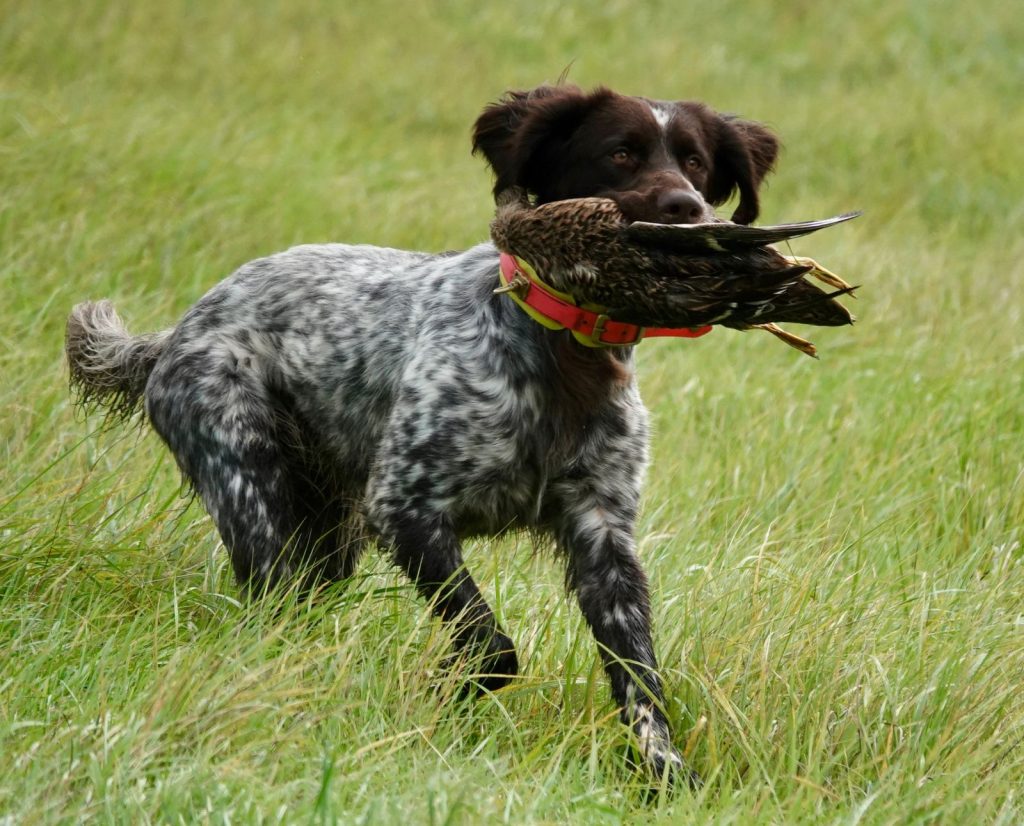
The Future of the Deutsch Langhaar in North America
Here in North America, the Deutsch Langhaar is facing some serious challenges. Our small population creates genetic bottlenecks, which are further complicated when health concerns arise. Recent changes to canine import rules via the Centers for Disease Control and Prevention have severely hampered our ability to bring in puppies from outside the United States. In short, Deutsch Langhaars in North America have reached a time of reckoning.
Comparatively, in Germany, the breed is thriving. There, genetic diversity remains strong; the well is deep and full. Thanks to the dedicated efforts of those who established our breed club in North America and ensured full alignment with the German hunting dog association, we are organizationally positioned to take advantage of this deep well of genetic diversity. The only problem is, those genetics can’t put themselves on an airplane. They need people.
Our breed club is investing in a few strategies to save the breed in North America, but none of it would be possible without the support of our German friends. One part of the strategy is our special permission to conduct certain artificial insemination (AI) breedings. The Deutsch Langhaar Verband does not normally allow AI breeding, but permission can be granted under exceptional circumstances. Another part involves identifying a source of breed-certified females that have completed all their performance, health, and temperament evaluations prior to arriving in America. This approach eliminates the risk of investing time and money into a young puppy, only to have it develop a health issue or breeding fault upon reaching adulthood—a risk our club has unfortunately experienced several times.
It’s no small task to find someone willing to raise a puppy and train her for two years as if she were a family dog. Adding to this challenge is the common assumption that exported puppies aren’t likely to be the top prospects from the litter. That is, of course, unless you’ve established personal connections to bring a human element to the transaction. Which is exactly what we did.
After the Schorlemer concluded, our good friends arranged a dog tour for us. We met with a trainer who understood the genetic predicament we face and agreed to train some prospective breeding dogs for us. We spent the better part of the day together as he introduced us to his dogs and demonstrated their hunting skills. On another day, we met a stud dog who is part of our AI program. Seeing him in person and experiencing his personality was a genuine treat that will greatly inform our breeding decisions. I suspect it was also meaningful for his owner to meet us and hear about the impact his dog will have on generations of dogs he’ll likely never meet.
As our plane lifted off from Frankfurt, my exhausted mind replayed the events of the visit. I couldn’t help but laugh at myself. Not long ago, I was flipping through the pages of Craig Koshyk’s book on continental pointing dogs, imagining my future hunting dog and what it would be like to meet all these breeds in person. Never in my wildest dreams did I think I’d be traveling to Europe to meet dogs in their homeland and discuss plans to protect and advance one of those breeds in North America. Nor did I imagine I’d cry over leaving lifelong friends—people I’d only met because we owned the same kind of brown dog.
As it turns out, the love of a dog is truly universal. Dogs can connect us in ways that language, customs, and politics often cannot.
And yes, our next trip is already on the books.