


German Hunting Dogs: Understanding Breed Clubs and Testing Systems in North America
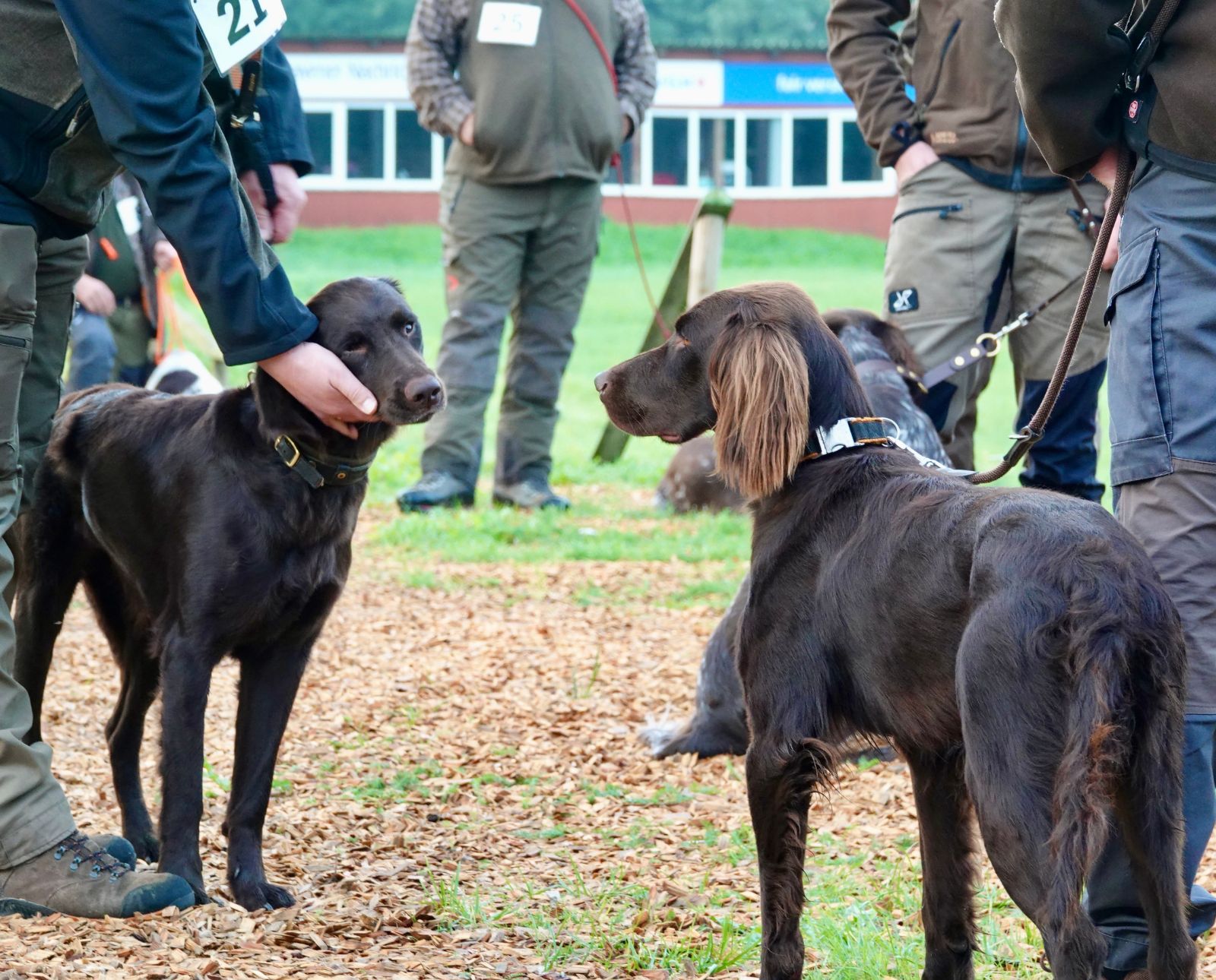
The German system of testing and breeding hunting dogs has shaped some of the world’s most versatile breeds. Here’s how it works in North America
German hunting dogs have become increasingly popular among North American hunters because of their versatility and regulated testing and breeding programs. Ask someone about the difference between a Deutsch Drahthaar and a German Wirehaired Pointer and you’re liable to start an argument—been there, done that. Regardless of your position on the dogs, though, their associated breed clubs in North America have very different origins, structures, and philosophies. These clubs are the basis from which German hunting dogs are tested, evaluated, bred, and registered.
What Are German Versatile Hunting Dogs?
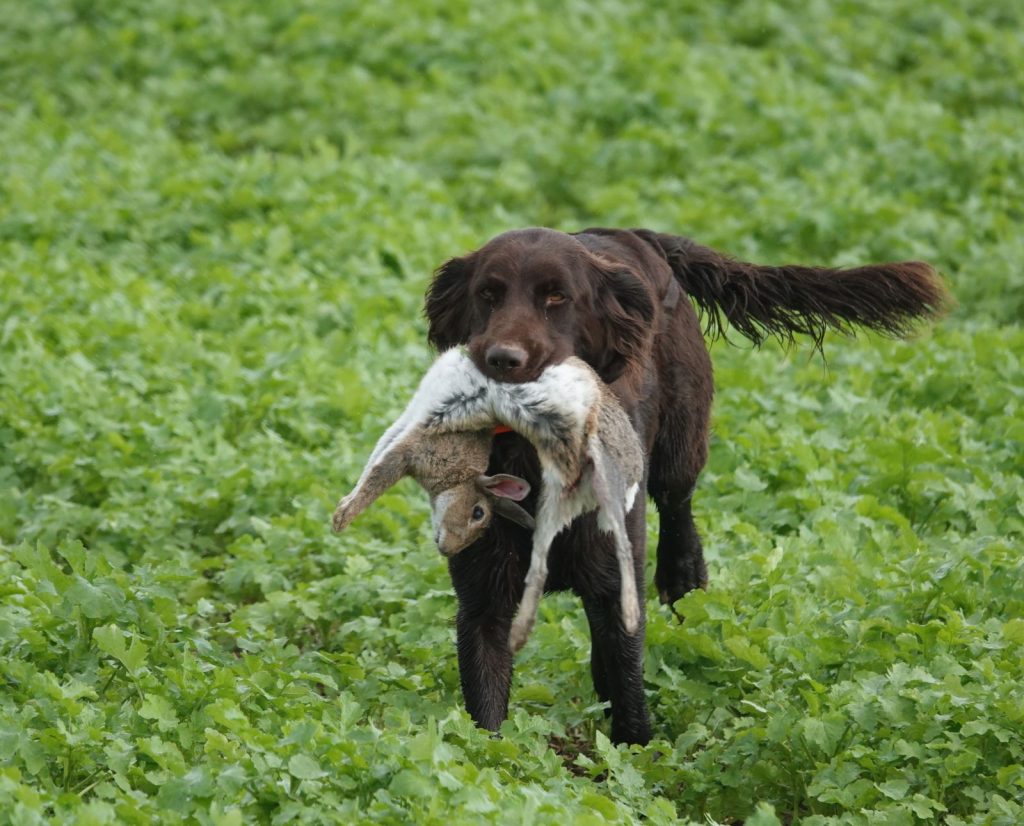
Unlike many sporting breeds that were developed to specialize in specific skills such as pointing, retrieving, or flushing game, German versatile hunting dogs were bred to perform a wide range of hunting tasks. They are expected to point upland birds, retrieve waterfowl, track wounded game, and hunt furred game.
German versatile hunting dogs are known for their adaptability, trainability, and strong hunting drive, making them popular among hunters who pursue multiple species in a variety of hunting styles throughout the season. In America, many of the German hunting dog breeds are also supported by breed clubs that emphasize standardized testing and breeding programs designed to preserve hunting ability and versatility across generations.
What are the German Pointing Dog Breeds?
The Fédération Cynologique Internationale (FCI) recognizes eight German pointing dog breeds. Of those eight breeds, five have recognized chapters of their German parent club organized in North America: Deutsch Drahthaar, Deutsch Kurzhaar, Deutsch Langhaar, Kleine Münsterländer, and Pudelpointer (note: the Deutscher Wachtelhund also has a North American chapter of the German breed club, but it is a flushing dog). These clubs use the German-language name of the breed in order to differentiate from the American-registered dogs.
The other three German pointing dog breeds are the Deutsch Stichelhaar, Weimaraner, and Grosser Münsterländer. Of course these breeds are still found in North America, but without the organizational structure described here.
How Breed Clubs in Germany Differ from American Breed Clubs
It’s important to note here that there’s a major cultural difference between the role of breed clubs in North America and those in Germany. In the U.S., breeders and/or owners can choose whether they want to register their dogs with the American Kennel Club (AKC), United Kennel Club (UKC), North American Versatile Hunting Dog Association (NAVHDA), or none of the above. Breed clubs organized under one of those registries may have guidelines for breeding, but there’s no single source of rules and they are largely unenforceable. Essentially, a person can breed any two purebred dogs together and apply for their paperwork from the registry of their choice. There is no requirement for the parents to meet a breed standard or a working standard; registration is done strictly by pedigree. There may be an agreement among groups of breeders to adhere to certain testing or conformation requirements, but those requirements are not tied to the registry organization itself.
In Germany, there is a single, federal kennel club that governs the various breed clubs; there is also a hunting dog association that provides additional oversight for the hunting breeds. The breed clubs establish the conformation and working standards along with breeding regulations. If a breeder does not follow the regulations, they will not be able to fully register the litter or get appropriate paperwork. In other words, there’s no way to interface with the kennel club and registry without going through the breed club. It functions far more like a government than a recreational society.
Is one system inherently better than the other? No. There are pros and cons to both approaches, and both have very strong cultural influences that reflect attitudes in their country of origin. Anecdotally, whenever I describe the foreign system to either an American or a German, I’m met with matching looks of horror. The Germans struggle to wrap their minds around the free-for-all system in North America, while Americans cannot fathom a system with so much governance and so many rules and processes. To each their own, right?
The German Testing System in America
When Bodo Winterhelt introduced the idea of hunt testing to North America—which eventually became NAVHDA—he brought the German concept of evaluating hunting dogs against a performance standard rather than a competitive trial. This philosophy still aligns with the way dogs are evaluated in Germany today. However, the testing has never been a compulsory step for American hunting dogs.
For owners and breeders who wanted to require testing and other minimum standards, the best option was to import the entire German system, registry and all.
The Drahthaar club pioneered this effort and, in 1971, established the Verein Deutsch Drahthaar-Gruppe Nordamerika (VDD-GNA). This is a fully-recognized chapter of the Verein Deutsch Drahthaar (VDD) in Germany, and dogs born under the VDD-GNA are issued FCI pedigrees with full approval and privileges of the VDD. You can think of the puppies as ex-pats who are whelped in America but retain their German citizenship.
Read: Comparing NAVHDA, JGHV, and AKC Hunting Dog Tests
Importing the system into North America meant that the testing had to come, too. NAVHDA may have had its origins in the German hunt test system, but it was adapted to fit more typical American-style hunting—for example, by eliminating all furred game from testing. In order to play by the German rules, the Jagdgebrauchshundverband (JGHV) tests needed to be replicated in their entirety. This was no small feat, but as interest began to grow, JGHV tests were eventually held across North America.
Today, there are three different testing associations that hold JGHV tests in America (NA-JGV, JGV-USA, and JGV-Rocky Mountain) along with the breed clubs who frequently organize their own tests. All of these are held under the strict governance and oversight of the German hunting dog association.
German Hunting Dog Breeds with North American Clubs
After the Drahthaar, the next breed to recognize the demand for German-bred dogs in North America was the Deutsch Kurzhaar. The North American Deutsch Kurzhaar Club (NADKC) was established in 1993 under the umbrella of the Deutsch Kurzhaar Verband (DKV) in Germany. Using the German breed name was important in order to differentiate from the large population of German Shorthaired Pointers in North America.
The Deutsch Langhaar followed when the Deutsch Langhaar-Gruppe Nordamerika (DL-GNA) was established in 2008. Unlike its predecessors with large populations of German Wirehaired Pointers and German Shorthaired Pointers already well-established in America, the German Longhaired Pointer was relatively unknown outside of niche groups. The formation of the DL-GNA effectively represented a major split in the breed due to the differing philosophies.
Around the same time, also in 2008, Pudelpointer enthusiasts established the Verein Pudelpointer Group North America (VPP-GNA) to bring the Verein Pudelpointer (VPP) standards into North America. Even though the breed was associated with Bodo Winterhelt and the formation of NAVHDA, there was a strong desire among enthusiasts to return to the German registry and testing system.
The Kleine Münsterländer followed suit in 2013 with the formation of the Kleine Münsterländer-Gruppe Nordamerika (KlM-GNA). Like many of the other clubs, KlM-GNA is the first recognized chapter of their parent organization, the Verband für Kleine Münsterländer (KlM-D), outside of Germany.
Most recently, a second Kurzhaar club was established to better address regional needs. The Deutsch Kurzhaar Gruppe Nordamerika (DKGNA) was officially recognized by the DKV in 2018, bringing the total number of North American pointing breed clubs organized under the German kennel club and versatile hunting dog association to six.
The act of forming each of these clubs was no small task. Each required—and continues to require—a close working relationship with breed enthusiasts in Germany as well as a dedicated group in North America willing to overcome language and geographic barriers to follow this system of testing and breeding dogs. Travel across the Atlantic in both directions was not only critical for the initial formation, but also for the continued success of the clubs. Managing the breed across continents requires a considerable amount of trust and communication, which is often easier with face-to-face interactions.
The NADKC reflects the sentiments of all the clubs when they write, “We embrace the German breeding regulations and realize that their testing system is the most consistent and best method to predict and measure the breeding worth and usefulness of a practical, versatile gun dog—and that is what we strive for.”
Why Hunters Choose German-bred Hunting Dogs
For the average puppy buyer looking for a hunting companion, the foreign language alphabet soup may initially be a turnoff or at least overwhelming to wade through. So, too, are the well-meaning but slightly unhinged breed enthusiasts. I know, because I’ve been on both sides of the table.
The standardization of the German testing combined with the strict regulations creates consistency above all else. If someone is looking for a “sure thing,” then a German-bred dog has a lot to offer. It requires less combing through pedigrees and less insider knowledge because the dogs are largely being bred to perform the same tasks in the same way across the breed. Variations exist, of course, but to a much lesser degree than in breeds with looser breeding regulations that allow for more personal preference on the part of the breeder. The natural abilities of German-bred dogs are quite consistent. Versatility is expected and delivered.
Read: How Versatile Hunting Dogs Are Used Around the World
But that consistency may not include traits that you’re looking for in your next hunting dog. A good first step would be to gain an understanding of hunting culture in Germany and how the dogs are used. For example, if the idea of hunting furred game is a nonstarter for you, then you’ll find yourself in an uphill battle with a German dog’s innate fur drive. Additionally, every one of these breeds touts their versatility in a variety of contexts, including water work and tracking. Versatility is the opposite of specialty. If you only ever hunt upland birds, you may be more satisfied with the out-of-the-box performance of an upland specialist. Versatile dogs are truly at their best when they are paired with versatile hunters that enjoy using the full suite of the dog’s skills over the course of the season.
Expectations of German Breed Club Members
Members of the German breed clubs in America are expected to abide by the club rules, which includes a commitment to observing the breeding regulations. The continued success of these clubs depends upon the foundation on which they were built: the regulated German system. If members circumvent that system, then the very foundation for the breed is lost. Intentionally breeding a dog outside of the regulations is a sure way to find yourself out of the club.
Members are also expected to be hunters. All of these breed clubs feel strongly that the dogs belong in the hands of hunters. For example, hunting licenses are required for handlers to participate in the performance tests. In Germany, there is a strong aversion to hunt tests becoming dog sports; on the contrary, the tests are meant to evaluate dogs for the skills required to perform their job.
When speaking with a breeder about a German puppy, they will likely ask you to make a reasonable effort to run the dog in one or more of the performance tests. Even if you have no intentions of breeding, the test outcomes are valued in order to ensure that breeding decisions are continuing to produce capable hunting dogs. This is not an empty commitment, and it’s important to understand what that will mean for you and your new dog.
One of the problems facing the German clubs in America is the sheer size of the continent. While each breed in Germany may have a dozen or more regional clubs covering the country, there is only one or two clubs for each breed that covers the entire landmass of North America. This introduces logistical challenges such as test availability, attendance at annual meetings, accessibility of breed shows, arrangements for breedings, and even just social opportunities. For that reason, it takes an extra level of commitment—including a commitment to travel long distances—to actively participate in these clubs.
—
I’ve been teased about being in a dog cult, and while I have no plans to hop a starship to another dimension, I understand the jab about the zeal. It takes a specific kind of person to believe in something so much that you think nothing of driving thousands of miles for a hunt test or to have a judge evaluate your dog in the ring for a few minutes. It’s not until you look a customs officer in the eye and declare the purpose of your visit to be “to visit some dogs” that you really start to wonder how your life got to this point.
But on the flip side, the community of fellow zealots—and, of course, the dogs—make it all worthwhile.


I am one of the founding members of the German Longhaired Pointer Club of North America. We are not associated with the Deutch Langhaar Club. We were founded in 1989 many years before the American chapter of the Deutch Langhaar Club was established. We are still a small group of dedicated hunters who will only sell puppies to other hunters. We strongly encourage all puppy buyers to test in the NAVHDA system. We also test every breeding dog for hip soundness. We admittedly have a much looser set of standards than the German club, but we feel that the structure that we use is more compatible with the American character and the American hunting culture. We are interested in bird dogs that perform on land and water, but we have no interest in furred game. We continue to have relationships with some of the top kennels in Europe and have continued to import semen from outstanding European stud dogs. In short, our dogs are outstanding bird dogs, and our “looser system” has served us well for the past 37 years. One other note is that we avoid owners whose primary goal is to make money from the breed. We want to stay in the circle of dedicated hunters who want to put great hunting dogs in the hands of other avid hunters.
Hi Mitch, thanks for sharing about GLPCNA! When you compare to GSPs or GWPs in North America, the formation of the German-associated club represented a far more significant split in the GLP/DL breed simply due to relative population sizes and familiarity across North America. But of course GLPs existed both before and after DLs were established here.
As I said in the article, one system is not better than the other – just different. I agree that both align with the cultures and hunting styles of their country of origin, which is why NAVHDA looks the way it does today when compared with JGHV.