

Hunting the Arizona Quail Slam: Mearns, Scaled, and Gambel’s Quail
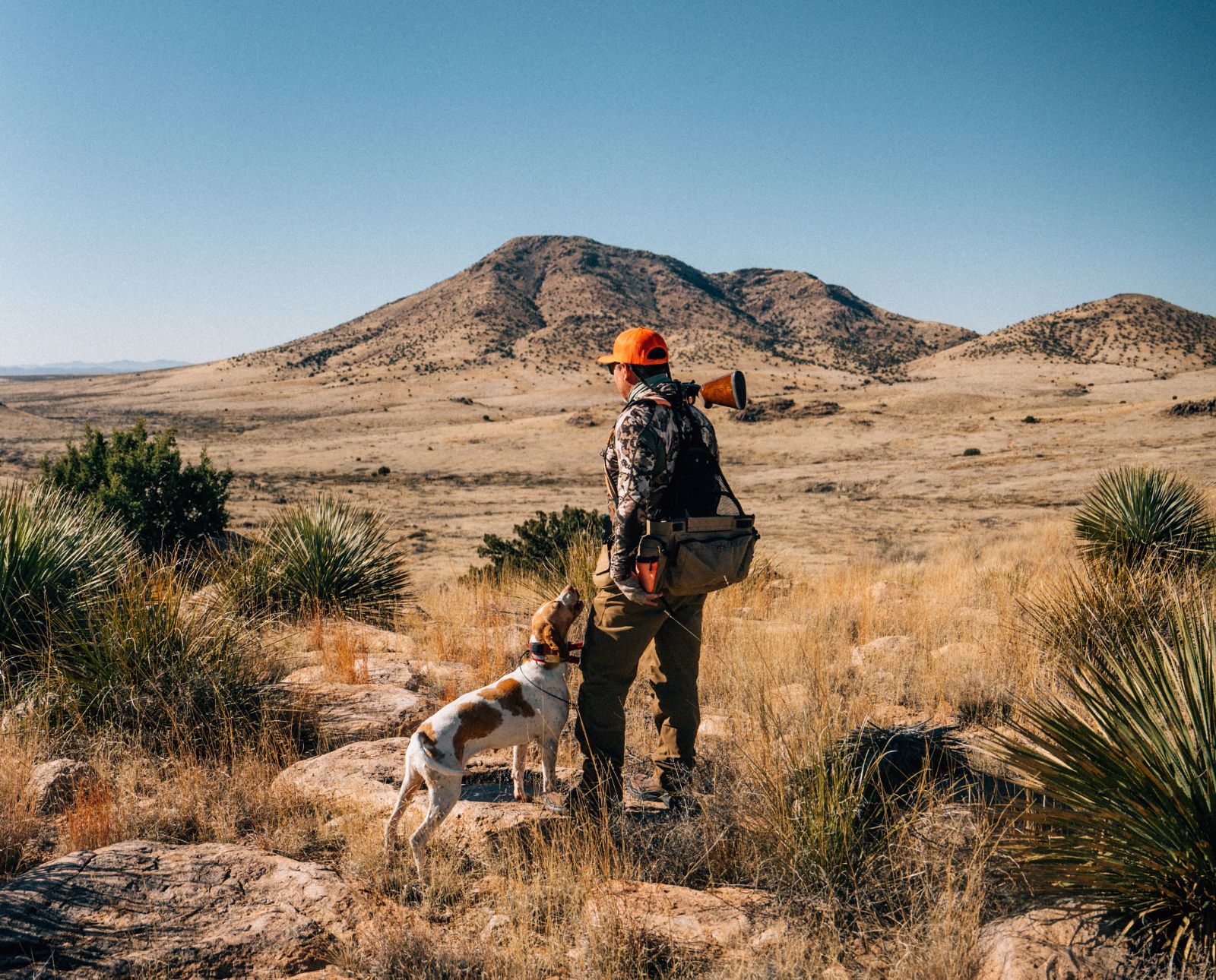
Three species, three distinct habitats, and one ambitious hunt. Learn where to find Mearns, scaled, and Gambel’s quail and how to plan an Arizona quail slam.
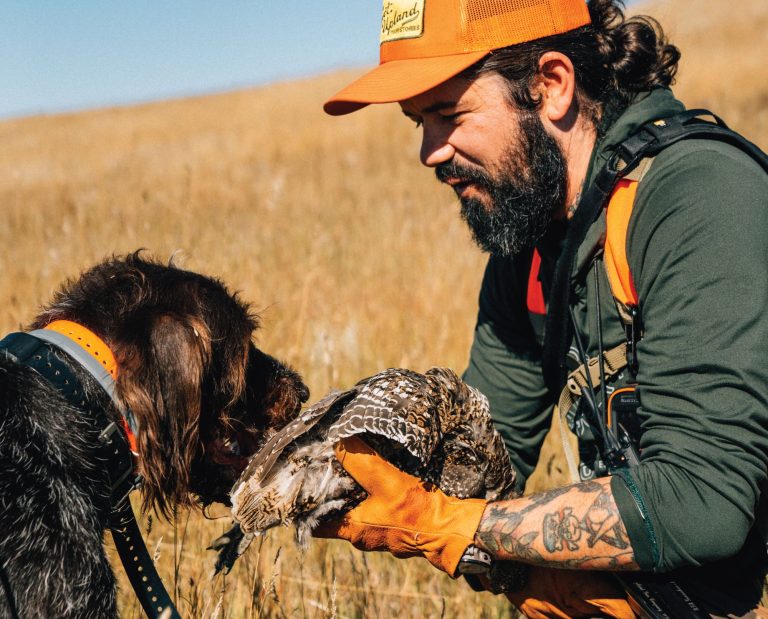
Penny was on point 280 yards ahead of me in the oak-covered mountains of southern Arizona. As I scrambled up the rocky slope, I spotted a covey of Mearns quail walking through the grass just beyond my young Pointer’s nose. The covey erupted, and two shots brought down two mature roosters. It was the kind of moment with a bird dog that I’ll remember for years.
But Mearns quail are only one part of an Arizona quail slam. The challenge is to harvest all three species: Mearns, scaled, and Gambel’s quail, ideally in a single day. Each occupies different habitat, from oak-covered mountains to open grasslands and desert washes. Successfully harvesting an Arizona quail slam requires understanding where to find each species, how to hunt them, and how to plan a trip that puts all three within reach.
Hunting Mearns Quail in Arizona
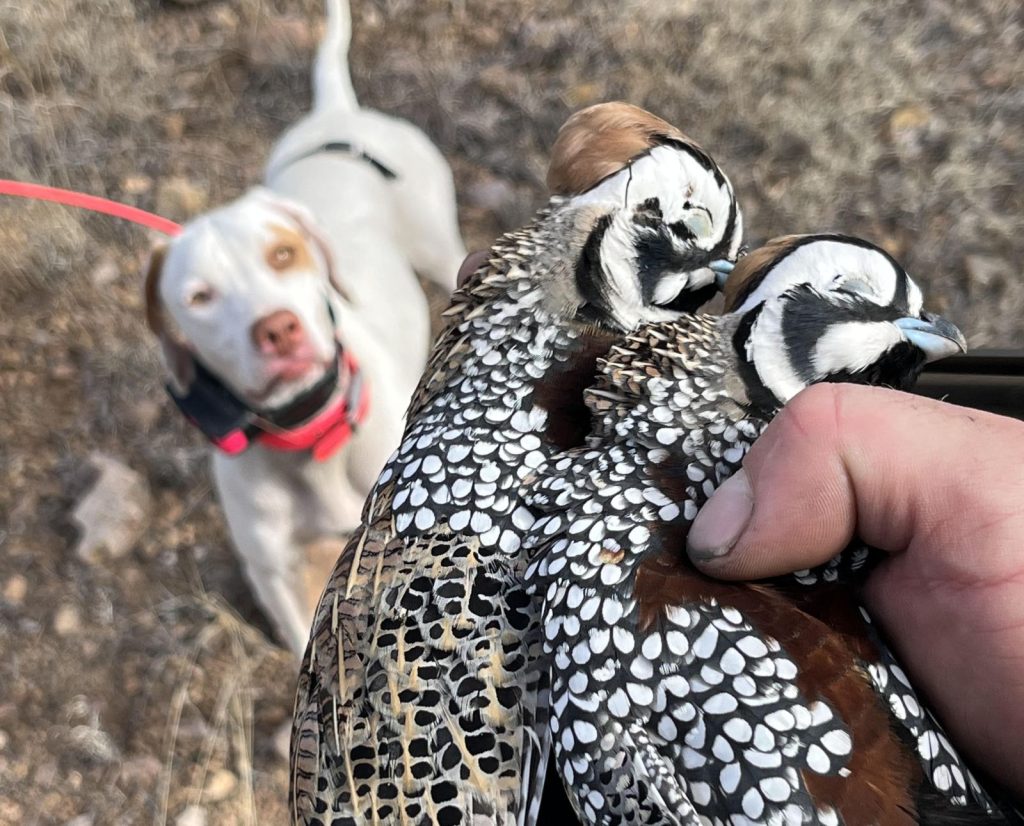
Known as Mearns, Montezuma, or fool quail, these birds are, by all standards, amazing. Pointing dog owners love to pursue Mearns quail because they hold incredibly well for a dog, often flushing like popcorn from beneath a hunter’s feet. They inhabit the beautiful oak-covered ridges of southern Arizona and are incredibly striking birds. Males possess vibrant colors on their faces and chests, while females have similar patterns but more subdued colors.
Mearns quail are by far my favorite bird to hunt in Arizona. In recent years, they’ve had a tough go of it. A lack of monsoon moisture has resulted in poor hatches, but there are still areas worth targeting in pursuit of these beautiful birds.
Mearns quail can be found throughout the mountain ranges of southeastern Arizona, although some areas hold more birds than others. This can change from year to year because monsoon rainfall is often localized. Some mountain ranges receive significantly more rain than others, resulting in better hatches and survival rates.
These wetter areas are where I recommend focusing your efforts. Use a rainfall map to determine which mountain ranges received the most precipitation during monsoon season (June through early September). Once you’ve identified promising mountain ranges, narrow your search to individual canyons. To set yourself up for success, even in a down year, look for the following habitat features:
- Elevations between 4,500 and 6,500 feet
- North-facing slopes
- Oak trees and native grasses
- Water sources can be helpful but aren’t necessary
These habitat features are just a starting point. As you spend more time in Mearns quail country and locate birds, you’ll begin to notice small nuances around each covey find. For me, this often means finding benches, or small, relatively flat areas along ridgetops or midslopes. You may also notice signs of Mearns quail digging in the soil. These birds scratch the ground to access tubers for food.
As hunters, we should be responsible during years when Mearns quail populations are struggling. Try to harvest male birds on the covey rise and take fewer birds than the legal limit. Mearns quail really are a trophy bird. They inhabit a very small part of the country, and their future depends on ethical harvest.
Hunting Scaled Quail in Arizona
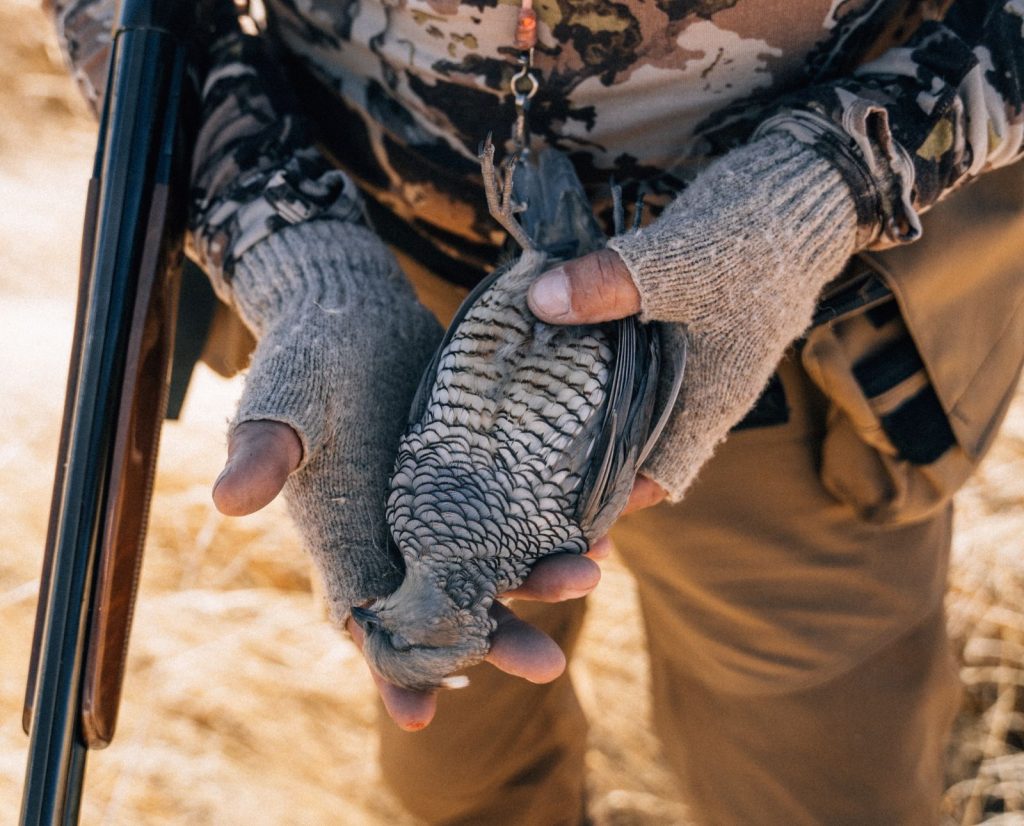
Whether you call them scaled quail, blues, cottontops, or scalies, these are very special birds. Although they can be incredibly frustrating to hunt with a dog, they’re also very rewarding when they decide to cooperate. Scalies are known to be runners, much like rooster pheasants. They’ll trick a dog unfamiliar with their behavior and cover a football field before the hunter catches up. However, once a dog figures out the game, it can learn to pin down a covey using topography or cover to its advantage. Scalies also provide great dog work when a covey breaks up into singles, as these birds tend to hold tighter.
I may be biased, but I think every upland bird is a thing of beauty, and scaled quail are no different. Their nicknames are fitting, with bluish-gray bodies and a tuft of cotton-colored feathers atop their heads. They may not be as vibrant as Mearns quail or a rooster pheasant, but they’re still beautiful birds.
Watch: All Wild – An Arizona Mearns, Scaled, and Gambel’s Quail Hunting Film
Southeastern Arizona marks the western edge of the scaled quail’s range, but they can still be abundant in the right habitat. Scaled quail are grassland birds, so they don’t typically inhabit the desert landscape you might envision when you think of Arizona. It’s still desert country, but it looks much different from the stereotypical saguaro-covered Sonoran Desert.
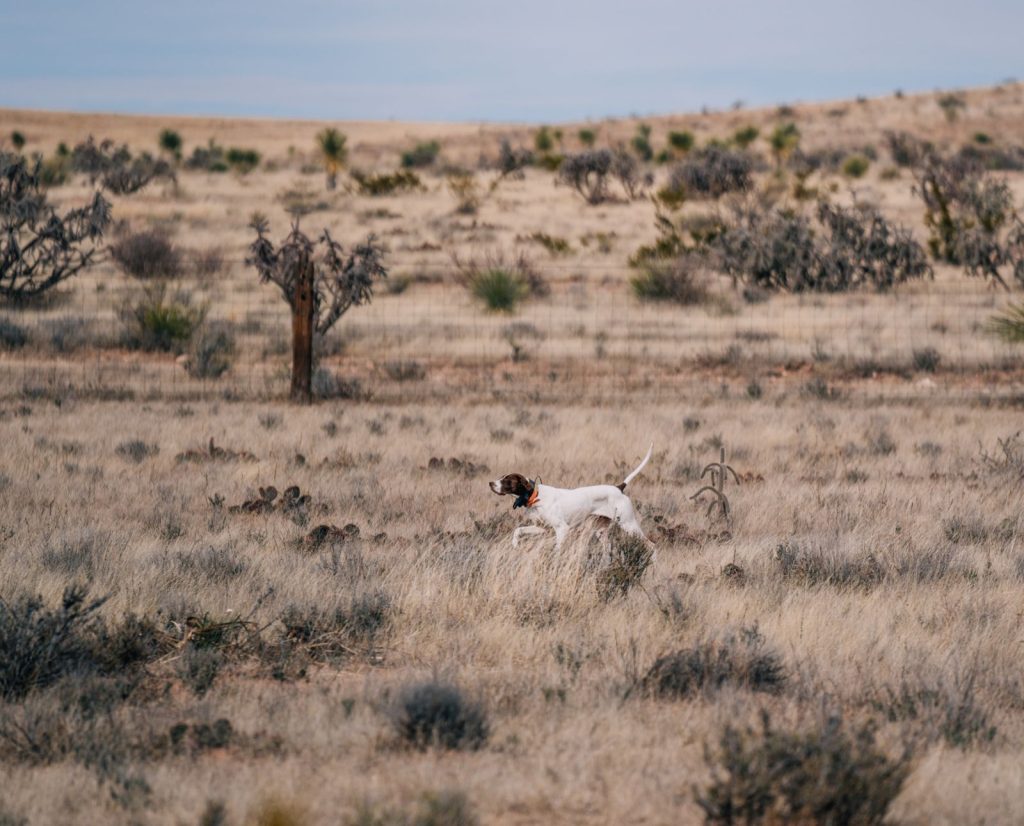
Scalies prefer open grasslands at moderate elevations. They thrive in areas with scattered mesquite, cholla, rocks, and ocotillos. Mesquite with thick underbrush provides valuable cover from avian predators. When searching for scaled quail, I’ve found it best to focus on areas with the following features:
- Foothills and lower mountain slopes
- Open grasslands with scattered vegetation and other cover
- Nearby water sources
- Areas that receive higher winter precipitation
Hunting Gambel’s Quail in Arizona
Gambel’s quail are among the most abundant game birds in Arizona and are even featured on the Arizona Game and Fish logo. Unlike the other quail species mentioned above, you can often determine whether Gambel’s quail are present without walking the area. Their loud locating calls, which sound something like “CHI-CAAA-GOO, CHI-CAAA-GOO,” can be heard throughout much of the morning. As a hunter, it’s useful to stop the truck and listen at dawn in areas likely to hold birds. Quail calls can also help you locate coveys.
Like scaled quail, Gambel’s are known to run, especially when ground cover is sparse. The jury is still out on whether scalies or Gambel’s would win a race, but both can be frustrating at times. Once a covey breaks up into singles, however, Gambel’s will often hold tight. This is when our pointing dogs thrive.
Read: Guide to Hunting Gambel’s and Scaled Quail In Arizona
Gambel’s quail inhabit a variety of landscapes throughout Arizona, but for hunters pursuing an Arizona quail slam, southern Arizona is the best place to focus. Here, Gambel’s can be found from the stereotypical Sonoran Desert landscape to pinyon-juniper ridges dotted with prickly pear cactus. As true desert birds, they inhabit some incredibly dry country, but I’ve encountered the highest populations in areas with plenty of cattle tanks and washes.
When searching for Gambel’s quail, I’ve found it best to focus on areas with the following habitat features:
- Stock tanks, windmills, or other water sources
- Thick, mesquite-covered washes
- Cholla cactus
- Prickly pear cactus
- Desert grasses
Gambel’s quail look a lot like valley quail, sharing a similar topknot and coloration, although their colors are slightly more muted. Males have longer topknots than females and a copper-colored patch beneath them, which is fitting considering Arizona is known for its rich copper deposits.
Arizona Quail Hunting Seasons and Public Land Access
Traditionally, the quail season for scaled and Gambel’s quail starts on the third Friday of October. Mearns quail season opens on the first Friday of December, and all quail seasons in Arizona close on the second Sunday of February. January is the best month to plan a hunt with the intent of harvesting all three species of quail. This allows Mearns quail to develop full plumage without giving the desert birds too much time to get wise to hunters.
Read: Arizona Game and Fish’s 2026-2027 Hunting Regulations
Access is not a problem in most of Arizona. Approximately 67 percent of the state is public land, so almost every mountain range in southern Arizona has very good access. As in any Western state, some of the terrain can be challenging to walk, but it’s rewarding.
How to Plan an Arizona Quail Slam
In theory, harvesting the Arizona Quail Slam means taking a Mearns, Gambel’s, and scaled quail in a single day. This is an incredibly challenging task, so if it takes you a week to complete it, I won’t tell anyone.
When planning a hunt for the slam, it’s important to do your research. Look for areas that offer habitat for all three quail species mentioned above. Gambel’s will likely be at lower elevations than scaled quail, while scaled quail will typically be found below Mearns. It’s unlikely you’ll harvest all three species on the same walk, but they could be within a short drive of each other.
When looking for an area that could hold all three species relatively close together, I start by finding large, mesquite-covered washes at lower elevations. Then I locate a nearby stock tank, which would make for prime Gambel’s quail habitat. From there, I move closer to the mountains and look for open grasslands that could hold scaled quail. Finally, I search for a beautiful, north-facing slope covered in oak trees to hunt Mearns quail. All three habitats can be identified using onX Hunt.
In reality, successfully harvesting an Arizona quail slam will take some practice. But one thing is for sure: In attempting this challenge, you’ll experience the beautiful landscapes that all three species call home and learn a lot as an upland hunter.