

It is Time to Reinvigorate America’s Hunting Heritage
America’s hunting heritage was built by hunters willing to follow science, confront uncomfortable truths, and put wildlife conservation ahead of self-interest and political agendas.
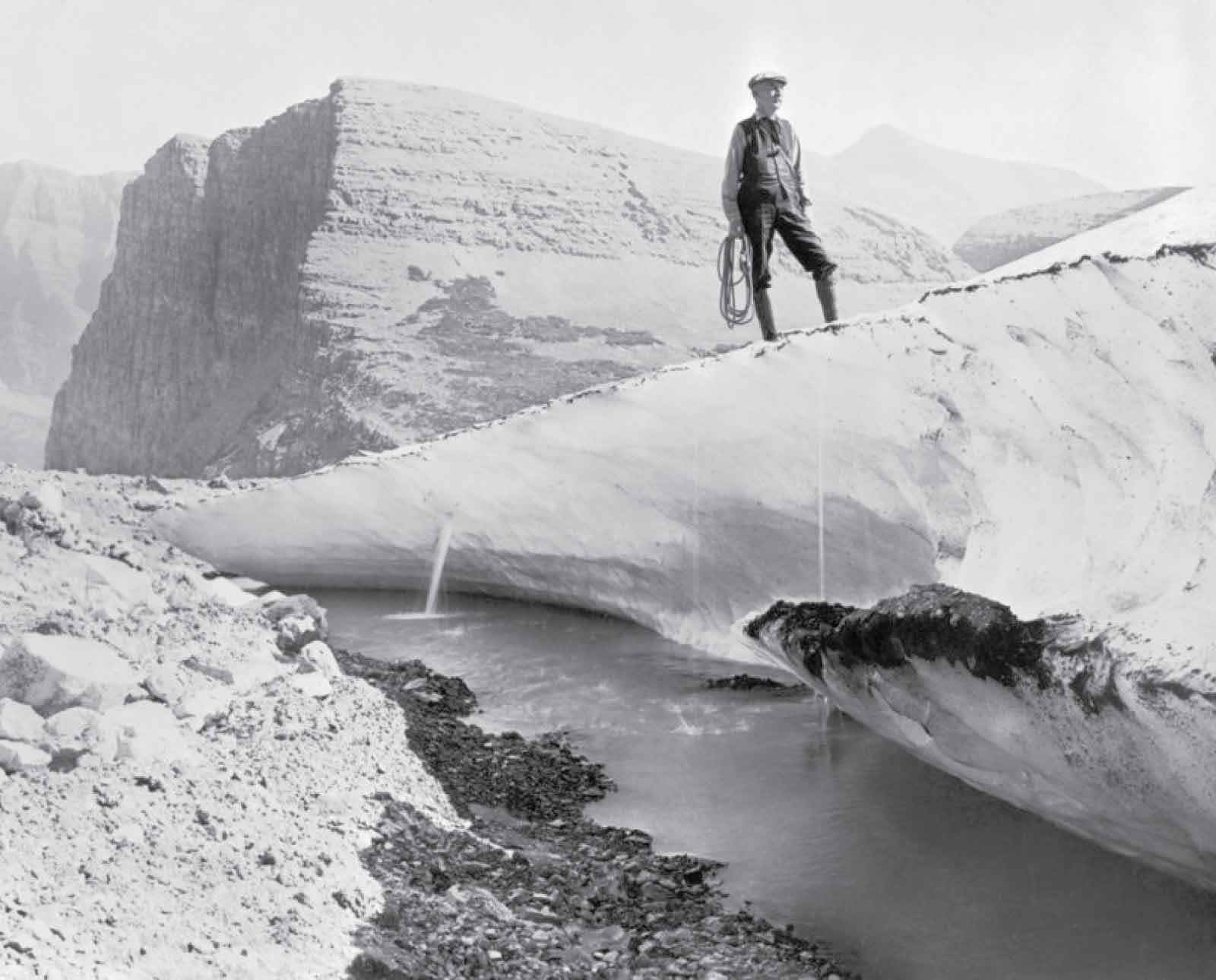
The first president in history to call together leaders of the hunting community was President Franklin Roosevelt at the 1936 North American Wildlife Conference, which was led by the National Wildlife Federation. A couple of years prior, in 1934, he appointed a special Committee on Wildlife Restoration that included Aldo Leopold and J. N. “Ding” Darling. Under the leadership of these hunters, they began laying the groundwork for what would become one of the most influential eras of wildlife conservation, including these conferences.
The results were undeniable, and the New Deal was a boon for hunters. The Duck Stamp Act came soon after these meetings, followed by the Pittman-Robertson Act, also known as the Wildlife Restoration Act, which remains a primary funding mechanism for state agencies to manage game species. As we progressed through the decades, some of the most iconic conservation policies that have protected our hunting heritage were modeled on those progressive, socialized policies.
I admit that that is a tough lead to follow. The most recent meeting of hunting leadership was to celebrate President Trump’s executive order entitled “Reinvigorating America’s Hunting Heritage.” In one example, the Congressional Sportsmen’s Foundation (CSF) proudly posted a photo of its leadership having dinner with Trump and the words “America’s outdoor heritage is one of our nation’s greatest traditions, and today’s event demonstrates the President’s continued commitment to ensuring these traditions remain strong for generations to come.”
So what was the result of the most recent meeting of hunting leaders with a president? It was to unveil this strategically worded document that makes it seem as if the Trump administration opened 92 million acres of land to hunting and fishing, and hunting nonprofits and companies fell over themselves to praise the administration while remaining silent on the gutting of our American hunting heritage on almost all fronts in plain sight, any claim of neutrality by these organizations left at the door. Tracing our real hunting heritage actually takes us on a different path that doesn’t simply generate headlines for attention, but rather addresses hard truths and puts hunters on the front lines of conservation.
The thing is, all that acreage was already open to some form of hunting. And perhaps the most telling part of this whole story is the old trick of turning non-lead hunting opportunities into lead opportunities that tied the government up in legal battles from Trump’s first-term needlessly costing tax pays millions of dollars in a losing battle of lawsuits.
I know some folks reading this will celebrate that. But if we are serious about reinvigorating America’s hunting heritage, then we should remember what that heritage actually is. American hunters have a long tradition of confronting uncomfortable truths, following the science, and changing our practices when the well-being of wildlife demands it–but in 2026 that feels hard to believe. That willingness to put wildlife ahead of ourselves is not an attack on hunting—it is one of the things that has defined American hunting for generations. And when it comes to the use of lead, it was hunters who pushed for its eventual ban 1991 for waterfowl hunting.
In February of 1892, the publication Field and Forests wrote of the dangers of lead poisoning: “Each season great quantities of shot are fired on the waters of this sound, and much of it falls on the feeding grounds of the wildfowl. In feeding, the geese, ducks and swans take into the stomach more or less of this shot either by accident or in the belief that it is sand or gravel. When the shot has passed into the gizzard it is subjected to the same grinding process as the grass, grain or other food, and being softer than the sand it is ground into minute particles, which at once set up an acute inflammation throughout the whole alimentary tract into which they pass. The result is that the bird dies from a poisoning which is partly mechanical and partly corrosive.”
This was not written by some random hunter or contributor, but by the publication’s editor at the time, George Bird Grinnell—as in the founder of the Boone and Crockett Club. He would go on to sound the alarm about the dangers of lead and urge the community not just to study the issue, but to find a solution. His iconic 1901 book, American Duck Shooting, included an entire section titled “Lead-Poisoning,” in which he discussed the known issues to inform his fellow hunters.
It would take a mass die-off of mallards in 1948 on the lower Illinois River for the issue to receive the kind of rigorous scientific attention it deserved. Frank Bellrose, a hunter and waterfowl biologist with the Illinois Natural History Survey (INHS), spent years studying the problem before publishing his landmark 1959 paper, “Lead Poisoning as a Mortality Factor in Waterfowl Populations.” And there is an important detail in that history that should not be overlooked: Winchester Arms helped fund Bellrose’s research. Hunters, wildlife scientists, and the firearms industry were working together to understand a problem caused by our own ammunition and asking what could be done about it.
Ducks Unlimited itself preserves this history on its website in a tribute titled “Bellrose – A Look Back at One of the Giants of Waterfowl Conservation.” And perhaps that is the part of our hunting heritage worth remembering most. Bellrose wasn’t celebrated for defending the status quo. He was celebrated because he followed the evidence, confronted a problem hunters were contributing to, and devoted his career to making things better for waterfowl. That is conservation. And that, too, is our hunting heritage.
Bellrose was hardly the end of the story. The hunting community, wildlife agencies, conservation organizations, and even ammunition manufacturers spent the following decades wrestling with what to do about the problem. The firearms industry worked on alternatives—Remington, Federal, and Winchester were already offering alternatives in the early 1970s. John Olin—then president of Olin Industries, Winchester’s parent company—began transforming about 650 acres near Brighton, Illinois, into his private hunting preserve, gun-dog facility, wildlife-management demonstration area, and ammunition testing ground. Called Nilo farms, it was ground zero for some of the most critical tests related to the advancement of steel shot.
In 1972, the hunter-founded conservation organization, the National Wildlife Federation formally petitioned the Department of the Interior to prohibit lead shot for migratory waterfowl. Researchers continued building the evidence, including a massive federal and state effort in the 1980s that examined thousands of birds harvested by hunters across all four flyways. The transition was contentious and took decades, but beginning with the 1987–88 season, non-toxic requirements were phased in across the country. By the 1991 waterfowl season, lead shot was prohibited for waterfowl hunting nationwide. It had taken nearly a century from Grinnell’s early warning, but it was hunters that carried his torch that had fundamentally changed and led the way we hunted to protect the birds we loved pursuing.
Living in the hunting community of 2026, it almost feels like complete culture shock to realize that hunters were those who pushed for the lead ban. In fact, that disconnect from our own history is exactly what allows the continued destruction of our heritage and contributes to the declining acceptance of hunting among the general public.
Republicans of the past did exceptional things for our American hunting heritage. Perhaps most notable was staunch conservative Republican Congressman John F. Lacey of Iowa, the architect of the Lacey Act of 1900—the nation’s first federal wildlife protection law. The law made it a federal crime to transport wildlife that had been illegally taken under state or territorial law, striking directly at the commercial market hunting and interstate wildlife trade that were devastating America’s game populations.
But Lacey’s position on wildlife stood in stark contrast to much of the Republican Party’s platform today. Lacey and the sportsmen-conservationists of his generation recognized something fundamental: wildlife could not survive if it was treated simply as a commercial commodity. Put simply, the Lacey Act was one of the most consequential efforts to insulate hunting and wildlife from commercial exploitation and privatization. Our hunting heritage—that distinctly American idea—is rooted in the principle that wildlife and our public lands exist for the benefit of all, not just the few. And just a year after the passage of the Lacey Act, we get perhaps the most iconic hunter-politician of all: President Theodore Roosevelt.
If the Republican Party wanted to truly honor the hunting heritage of Theodore Roosevelt, it would radically protect land—not do the opposite. In fact, Roosevelt did so in the face of big industry, and his belief in breaking up big business is a far cry from “drill, baby, drill.” In 1903, Roosevelt used executive authority in a highly controversial act to create Pelican Island Federal Bird Reservation, the first federal wildlife refuge, directly protecting birds from the commercial plume hunters who were slaughtering them for the fashion market. Roosevelt didn’t stop with Pelican Island. By the time he left office, he had created 51 federal bird reservations protecting millions of acres of habitat. By the end of his presidency he had put protections on over 290 million acres of Federal land.
We can put it in his own words: “Moreover, I believe that the natural resources must be used for the benefit of all our people, and not monopolized for the benefit of the few, and here again is another case in which I am accused of taking a revolutionary attitude.” He spoke those words as part of his famous “New Nationalism” speech, two years after leaving the presidency, as he increasingly broke with the Republican establishment and moved toward the progressive politics that would ultimately lead him to abandon the party altogether.
The creation of national monuments by recent Democratic administrations is mere child’s play compared with the scale at which Theodore Roosevelt did it at the turn of the century. And it was long understood that the power to undo a national monument rested only with Congress because, as Americans, we once believed strongly in the separation of powers. There is no doubt that Trump’s roll back of Bears Ears National Monument and Grand Staircase–Escalante National Monument by 2.93 million acres or 91% will be fought in legal battles and potentially all the way to the Supreme Court.
This just further illustrates the truth that Roosevelt was ultimately driven away from his own party and went on to become a founding member of the Progressive Party—a part of our hunting heritage story that is conveniently left out and the modern Republican party does not want you to remember your real histories.
It pains me to have to write about the indiscretions of hunting nonprofits and companies in 2026. These iconic organizations are part of the very fabric of how many of us identify as hunters as evident of the history laid out above. In fact, we owe so much of our heritage to these organizations for their hard work, funding of scientific research, habitat creation, and even lobbying. But that is precisely why accountability for these organizations—our organizations—is more important than ever.
The uncomfortable truth is our hunting heritage does not need sycophants; we need a resistance, true leadership in the face of hard realities, and in the past, these organizations were just that. We do not need the status quo but as Theodore Roosvelt said in his speech, “revolutionary attitude.” We should be reaching out to these organizations and demanding strong leadership, demanding they truly represent our interests, and if they do not change we simply adapt to those organizations who truly will represent the best interests of hunters–this is not a moment for compliance, it is a moment that will define us.
So, as American hunters, what else can we do to reinvigorate our hunting heritage? First and foremost, vet the information written here. Do not blindly follow the word of any organization or person—not even mine. Form your own opinion. Do the work of learning our true and complicated history.
We vote, run for office, campaign, work to influence party policy–we use our voices as Americans. Regardless of your party, left or right, we come from the bottom up and demand that our heritage be held as a sacred American tradition. But we earn that claim by our actions as hunters, defined by sacrifice, hard work, and strong leadership just like those hunters before us and truly reinvigorating our hunting heritage. We need to acknowledge science, fund the science, even when it restricts us, not only when we agree with it. Advocate to protect land, endangered species, non-game wildlife, and strong conservation ethics. That’s the heritage of the hunters who came before us. We must be directly involved in both parties to advocate and educate on our REAL histories because our real legacy is in the fabrics of the past and it must be who we are in the present.
We as hunters owe no allegiance to a president or political party. We owe allegiance to generations that have yet to come. We are reaping the benefits of those who worked hard before us, and it has made us soft and spoiled by the sheer abundance of our game animals today. Our modern hunting culture is desecrating that legacy by both forgetting the truth of their plight and ignoring the successful socialized policies, anti-commercialization, and public ownership that created this hunting heritage we enjoy today. We are allowing Project 2025 and this administration to dismantle one of America’s greatest traditions simply because their actions have been dressed in the flag, not because they hold merit, or address real problems, but simply mimic a fake idea of what our hunting heritage is.
It’s time for us, as hunters, to once again lead when it comes to our wild spaces. That’s how we reinvigorate our hunting heritage.




“The Party told you to reject the evidence of your eyes and ears. It was their final, most essential command”
Another important piece, at a critical time. Science based wildlife management should not be a partisan issue, but we live in strange times. Vocal and action based devotion to the land ethic needs to be at the forefront of each conversation. I’ve given up on most of the leadership and membership of highly partisan, yet ironically still qualified as non-profit, organizations like RMEF, NWTF, BHA, and DU.
Project Upland is showing the courage to speak up in dark times. Appreciate the efforts.
Yes, A. J. you are absolutely correct,(and maybe the NRA will wake up). I believe our mid-term election vote shows that “thinking US voters” have clearly rejected the current “Nazi-like, trump-itler” administration. Hopefully, the newest legislators will provide corrections to all of the MAGA policies that have been forced upon all Americans — and our neighbors to the north and south.
You seem to bash President Trump at every turn. There’s a lot to be said about hunting and all the factors involved. I for one will never vote for a party who supports abortion, open borders or any of the other stupid and evil ideas of the left to save hunting or anything else for that matter. Maybe you’ll have your chance to change all this when your “socialists” take office. I, however, will always vote my morals!
The present day Dems, especially the Democrstic Socialists of America are not pro-hunting even without firearms. We are fighting a different fight than back in FDR’s day. When i was kid, I worked for a cabinet member of Harry Truman and all of these Democrats were hunters and fishermen. Not so today.
Thank you, A.J., for another thoughtfully written piece, backed by historical facts and context. Project Upland is not just another mouthpiece.
My Irish ancestors were sent to Van Diemen’s Land by the Brtits for poaching on Crown land-game was owned and managed by the land owner I always thought it ironic that, in the US, the Federal and State governments became the owners of the game and fish and landowners could be procescuted for violations.
The issue today is that the Democrat Party has made public hunting land into National Monuments and National Parks (Katahdin), thus banning hunting on these lands without input from local people. On tbe other hand, Republicans have, or would like to open public lands to development, which could or would degrade wildlife. Therefore, both sides (it is really a Uniparty) have policies which can destroy hunting on public lands.
Note that the 11/3/26 ballot referendum to protect hunting and fishing heritage in Colorado failed. Our hunting and fishing heritage is at risk. It is one of the culture wars.
The main issues that have degraded upland hunting since I began hunting in the 70s are agricultural practices-no hedgerows and no weeds, and housing development of once huntable areas. In PA, I could walk 100 yards and be in a pheasant field. Here in NC, every upland hunter I know travels to the West for bird hunting.
Thank you A.J. for your researched narrative on the topic!
For me “it’s about the journey and not the bounty!” The journey is always directed towards the assessment of the habitat and human impact in regard to the population of the upland birds. It’s pedantic to not realize the importance of the value of scientific research on public land habitat improvement. Follow the science/research and not the uninformed on public land and upland bird population issues.
It’s unfortunate that even on this issue Americans seems unable to put aside partisan bickering and simply look at the facts. This does not bode well for successfully advocating for science in the preservation of our hunting legacy. This saddens me greatly.