


How FDR’s New Deal Transformed Waterfowl Conservation
Franklin D. Roosevelt’s New Deal helped rescue declining waterfowl populations through the Duck Stamp Act, wildlife refuges, habitat restoration, and a new era of science-based conservation
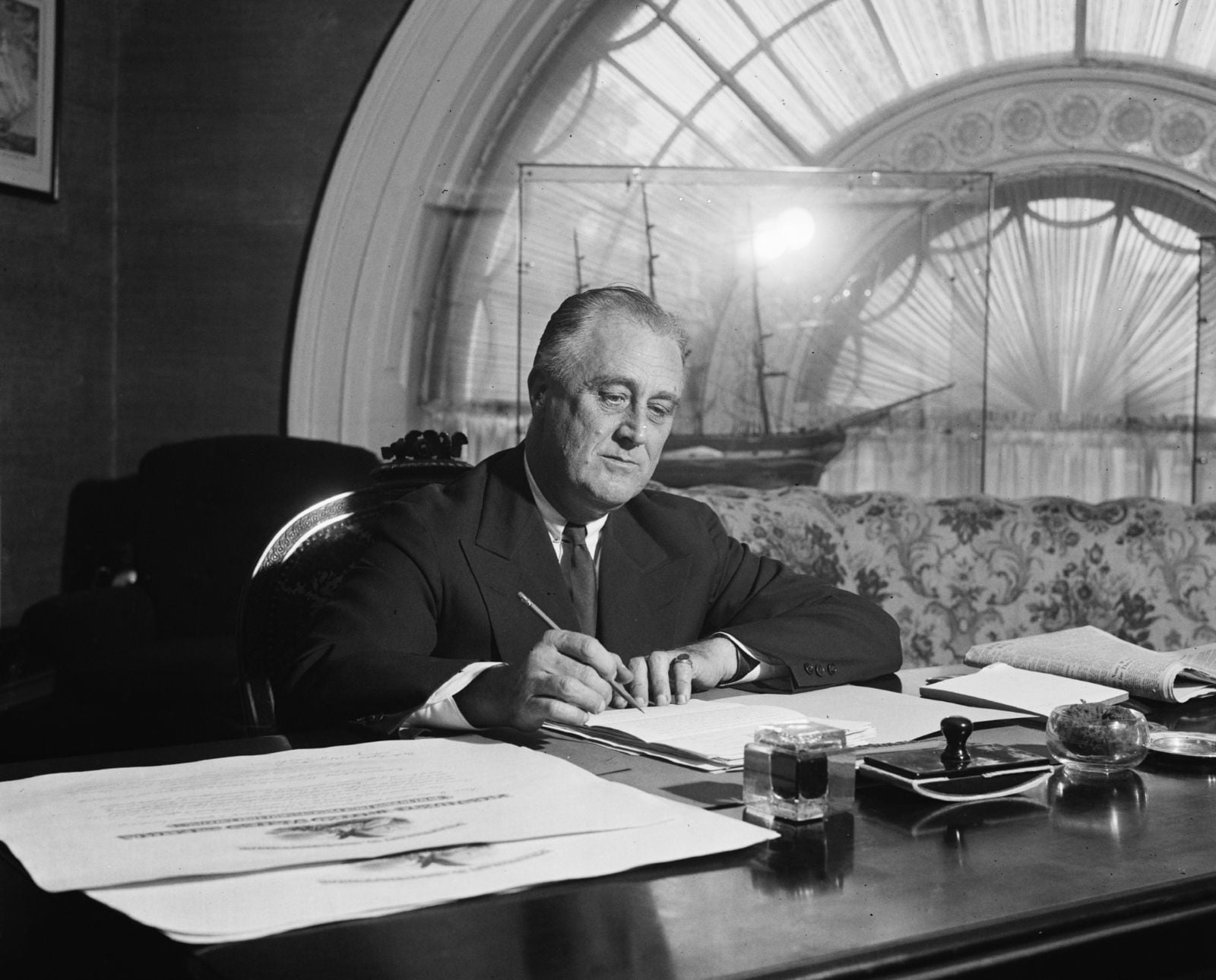
Franklin Delano Roosevelt considered habitat destruction and declining migratory bird populations a national conservation emergency, and despite an overwhelming economic and social agenda during his presidency, he orchestrated the recovery. When he took office, America was in the throes of the Great Depression, the Dust Bowl, and warily watching the initial saber-rattling of Japan and Germany. Ducks? Most politicians couldn’t be blamed if they delayed action until they fixed all the other stuff.
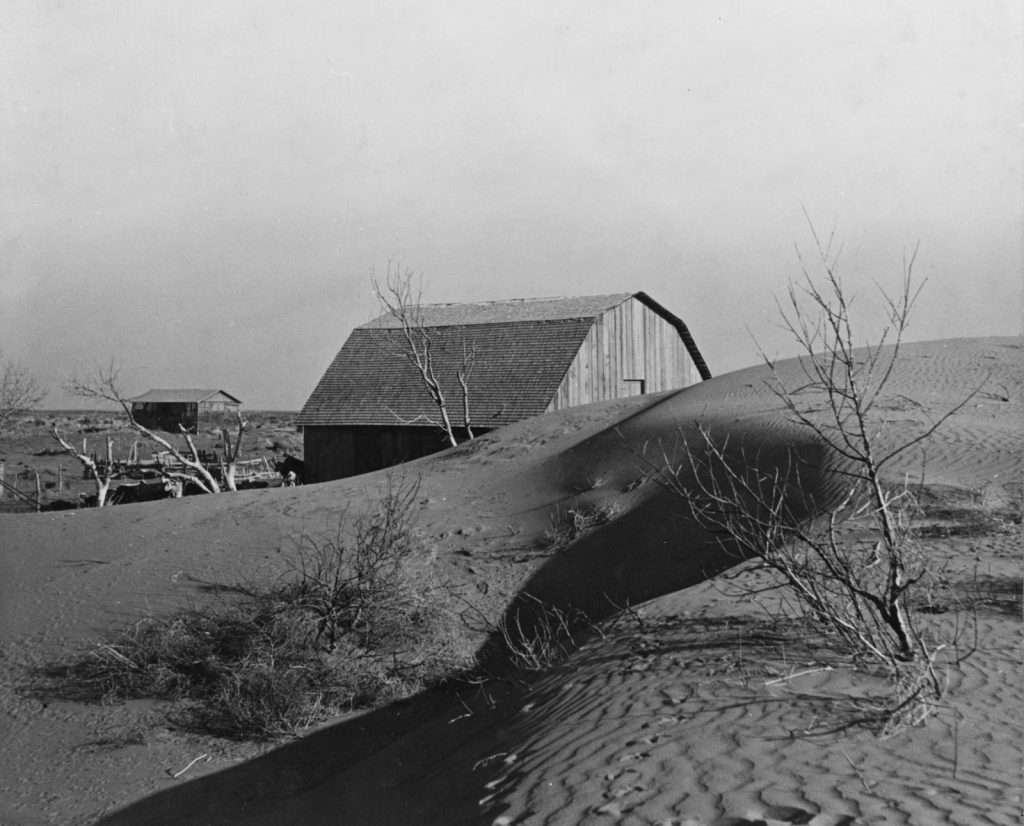
US and Canadian waterfowl populations in the mid-1930s dropped so precipitously that there was a concern certain duck species were headed toward extinction. Duck numbers were estimated at over 150 million in 1900, shrinking to as low as 30 million by 1934 from over-hunting, drainage of shallow wetlands in the Prairie Pothole Region (PPR), and a prolonged drought that imperiled summer breeding success and wintering migration habitat. The latter, called the Dust Bowl, was manifested as “black blizzards” of airborne topsoil that crossed the country, at times reaching as far as the East Coast.
Herbert Hoover was president when duck production tanked along with the stock market at the start of the Great Depression in 1929. The following year, US Biological Survey (USBS) and American Waterfowlers Association (AWA) biologists estimated that duck numbers were down by 50 percent from previous counts. One biologist was serious when he suggested that Gulf Coast waterfowlers target coots to give ducks a respite and even offered his favorite coot recipes. By 1931, the USBS reported that 90 percent of PPR wetlands were dry and the breeding season “a complete failure.” The duck season was slashed to just 30 days.
Opinions differed on 1932 nesting success, with only the American Game Association (AGA) optimistic. Pressured by the Department of Agriculture and sportsmen, a hundred “authorities” were invited to the Capitol to testify on declining waterfowl numbers. Called the “1932 Special Senate Committee on the Conservation of Migratory Birds,” Hoover mostly ignored its recommendations. The same year, AGA introduced a bill to establish a $1 federal hunting license, the proceeds earmarked for conservation. It also failed, just as it had a half dozen times since it was introduced in 1921.
Franklin Roosevelt took the Oath of Office in March 1933. That summer, More Game Birds in America (MGBA) biologists traversed 3,400 PPR miles and reported that 80 percent of the small prairie potholes in the US had been drained for crops, mainly wheat, and of the remainder, half were dry. Roosevelt was convinced of the urgency of the waterfowl population collapse. His response begs the question—why? FDR was not a hunter, yet as president, he prioritized waterfowl and poured enormous energy into conservation.
FDR’s Conservation Record Before the New Deal
FDR’s was not a sudden awakening to birds and beasts. He was a lifelong bird watcher, a member of the American Ornithologists’ Union and, as an accomplished taxidermist, donated specimens to the American Museum of Natural History. As a politician, he championed conservation causes, beginning in 1911-13 as a New York Senator and chair of the Forest, Fish and Game Committee, delivering addresses on topics such as game laws and the science of game management.
FDR came into the 1920s with polio and by its end as New York governor. His correspondence and speeches that decade foretold the future, covering issues like wetlands loss, declining game bird populations, and the importance of expanding federal refuges. In a 1926 speech to the American Game and Propagation Association (AGPA), for example, he outlined the need for federal migratory bird oversight and called wildlife a national responsibility. He founded the Temporary Emergency Relief Administration as New York Governor from 1929 to 1932, a state program that provided the unemployed with conservation work that became the model for his Civilian Conservation Corps (CCC).
FDR’s New Deal for Waterfowl Conservation
As president, FDR selected like-minded politicians and the best-known names in wildlife conservation for his inner circle of advisors and leaders. In policy, he relied on Secretary of Agriculture Henry A. Wallace; Harold L. Ickes as Secretary of Interior, who controlled the Public Works Administration (PWA); and Carl Shoemaker, legislative strategist for the Senate’s Special Committee on Conservation of Wildlife Resources. For the conservation blueprint, he eschewed bureaucrats, choosing conservation advocate and magazine editor Thomas H. Beck, Wisconsin science and game management apostle Aldo Leopold, and Pulitzer Prize-winning conservation cartoonist J.N. “Ding” Darling. In the USBS, he trusted the wildlife expertise of Clarence Cottam and administrator Ira Gabrielson. For refuge acquisition, he turned to Darling and J. Clark Salyer. Robert Fechner, Director of the CCC, was given responsibility for refuge infrastructure and habitat improvements.
In the fall of 1933, FDR ordered the founding of a “Special Duck Committee”—formally titled the “President’s Committee on Wildlife Restoration”—its composition consisting of Beck, Leopold, and Darling. Appointed on a temporary basis, they held their first meeting in early January 1934 and submitted their findings, called the Beck Report, just a month later. Their findings covered big game and fur-bearing mammals, upland game, songbirds, and migratory waterfowl.
The Beck committee considered the future of waterfowl a dire emergency, outlining a recovery plan based on habitat reclamation of marginal agricultural land acquired as wildlife refuges and administered by a single federal agency. They recommended using Public Works (PWA) emergency funds for land purchase and hiring New Deal CCC workers, proposing a $25 million budget for refuge purchase and a similar amount for restoration. The Beck Report’s call to action received an immediate response from the president.
The Migratory Bird Hunting Stamp Act of 1934
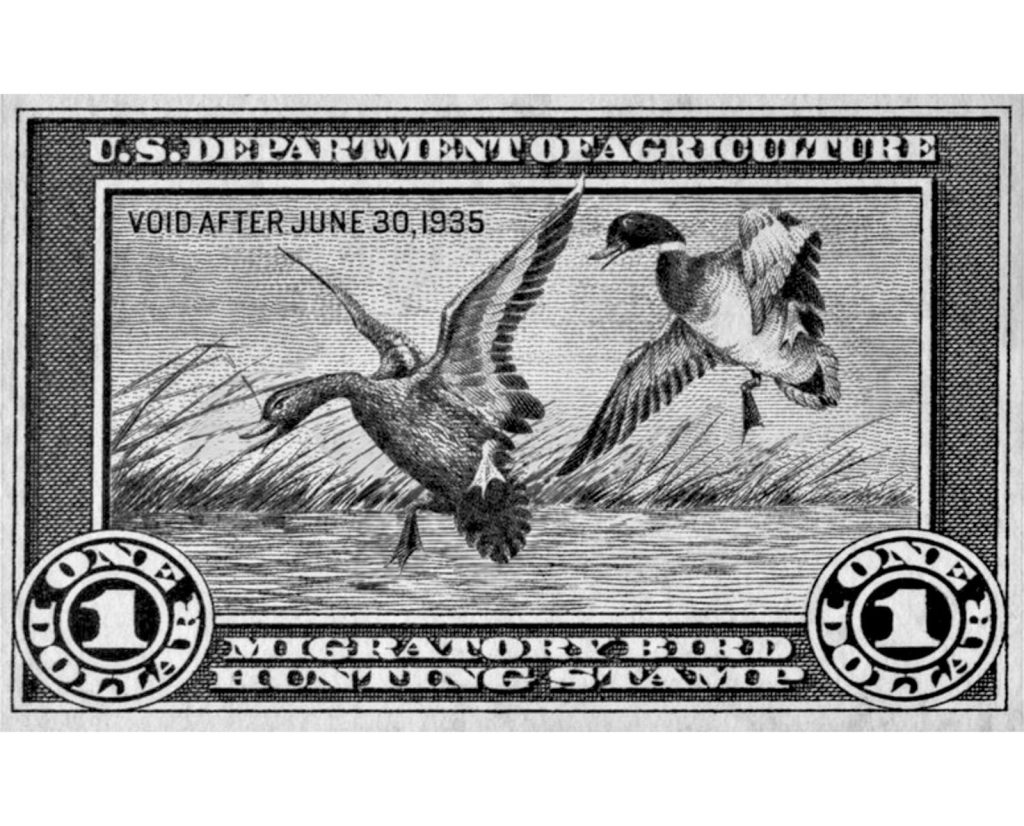
Passage of the Migratory Bird Hunting Stamp Act of 1934, commonly known as the Duck Stamp Act, a permanent, long-term funding tool to buy and preserve waterfowl habitat, was another early triumph. Credit for the concept goes to Darling, who proposed a $1 stamp instead of a license, the latter long intolerable to lawmakers opposed to federal authority. Darling sketched a pair of mallards for the first stamp, with their sale encouraged by pitches such as “the kids will get a kick out of these new stamps,” and “hunters will get some valuable aid in identifying wildlife species.” The president, an avid stamp collector who designed several US postage stamps, thought the idea was brilliant.
Support: 2026 Sharp-tailed Grouse Stamp – 100% to Scientific Research
March 1934. In that one month, the Duck Stamp Bill passed both houses and was signed into law, the Beck Report was released, and Harold Ickes named J.N. “Ding” Darling chief of the USBS. Before the funding ink was even dry, Darling put in place two cornerstones of modern conservation: refuge purchase of marginal farmlands for restoration and science-based waterfowl surveys.
Building the National Wildlife Refuge System
Darling initially envisioned the federal refuge system as a “duck flight safety corridor” containing “safety islands” from Canada to the Gulf Coast, calling them “duck sanctuaries” and “duck ports.” In May 1934, FDR approved allocating the first $8.5 million in emergency funds for refuge purchases. To head it, Darling hired wildlife biologist J. Clark Salyer who, according to author George Laycock, drove 18,000 miles and completed plans for 600,000 acres of new refuge sites in just six weeks. By December, Darling and Salyer acquired 12 National Wildlife Refuges dedicated to duck production encompassing 300,000 acres.
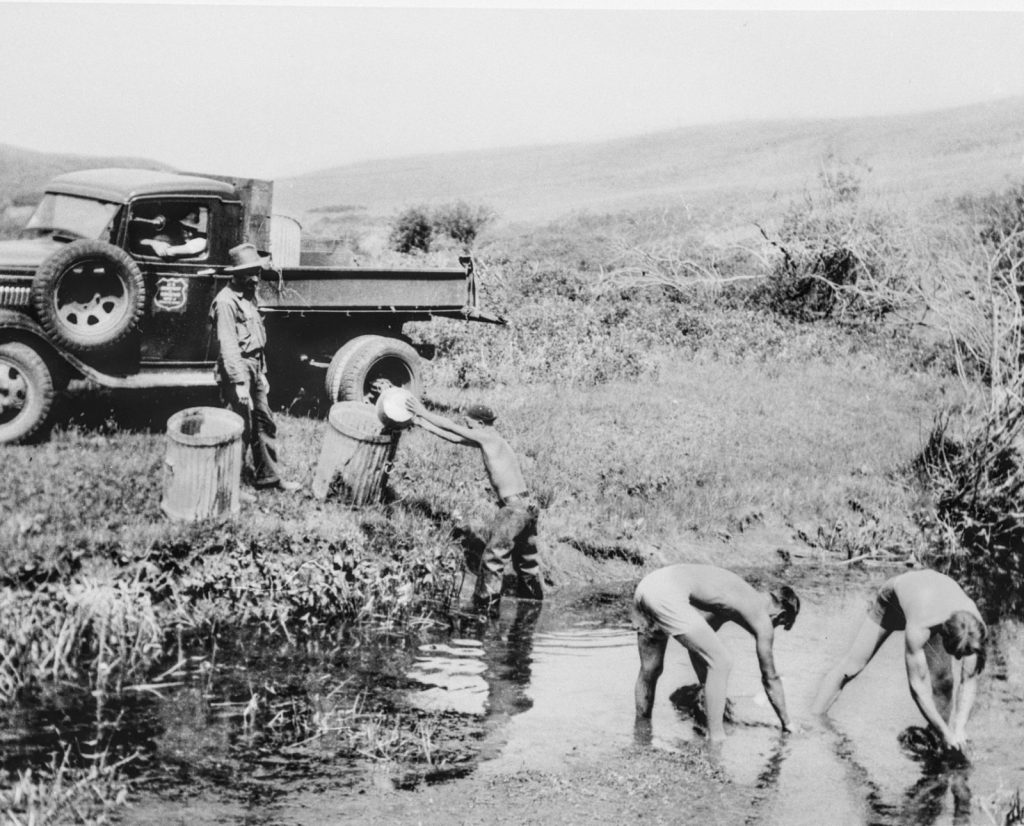
The USBS developed refuge infrastructure plans and priorities implemented by engineers, architects, and construction supervisors. CCC chief Robert Fechner organized the workforce with field camp supervisors and local refuge officials as men and machines took to the landscape to build roads, buildings, dams, spillways, diversion canals, dikes, and water control structures. Aquatic vegetation, native seed grasses, and emergency grain crop plantings enhanced habitat productivity. It was the first large-scale federal wetland restoration in American history.
By 1935, Salyer added another 223 waterfowl sanctuaries in 43 states. These were not designated as production refuges, but instead smaller parcels intended as migration stopovers for winter resting and feeding. MGBA was enlisted to help restore the properties. That year, Congress approved another $6 million that Salyer used to add 55 new breeding refuges and wintering sanctuaries, with 29 CCC camps responsible for infrastructure improvements.
How Waterfowl Surveys Changed Wildlife Conservation
Science-based waterfowl survey methods were another Darling initiative. Before the New Deal, different organizations performed population surveys using a myriad of methods. In the continental US, the USBS had the authority but not always the resources, relying on sportsman-founded conservation groups such as AGPA, AGA, AWA, and MGBA. Canadian biologists and foresters also executed local waterfowl counts and regional surveys, but like the US, its work was not yet based on statistically rigorous methods.
AGPA was the first sportsmen-conservationist organization to assist in duck counts. Founded in New York in 1911, its leadership and advisory board included notables such as John B. Burnham, Theodore Roosevelt, and George Bird Grinnell. New York surgeon John Hartwell started AWFA in 1927 to initiate migratory waterfowl banding surveys and fund study of summer breeding grounds before it disbanded in 1931. In 1929, New York City publishing mogul Joseph P. Knapp founded MGBA to promote “the science and conservation of game birds and waterfowls.”
Read: Why Biologists Band Waterfowl
In the summer of 1934, Darling and the USBS sent “150 trained investigators” to the PPR nesting grounds. Embracing the best-known science-based survey methods of the era, surveyor teams crossed a mostly scorched landscape. The USBS announced that duck numbers were just 20 percent of what they were in 1929, their dismal findings announced to the public through radio broadcasts and publications complete with breeding ground maps. MGBA later reported that 1934’s estimate of 30 million ducks was the low point in Dust Bowl duck numbers.
The 1935 USBS breeding survey was again a partnership with MGBA in what was called the first “International Wild Duck Census.” Thousands of volunteers traversed nesting areas across the US and Canada by foot, car, and by the first aerial waterfowl surveys. A lot was riding on their results—that year the National Audubon Society and other organizations had recommended a one-year ban on duck hunting. MGBA estimated the North American duck population at 42.7 million birds, their data sufficiently convincing that hunters were allowed a 30-day waterfowl season with a daily bag limit of 10 ducks. Wood ducks, buffleheads, Ross’s geese, swans, canvasbacks, and redheads were protected, however, and except for wood ducks, 1935 was the first year the killing of certain duck species was prohibited.
Sportsmen had already witnessed the end of legal market hunting, spring shooting, crane, swan, and shorebird hunting, and declining daily bag limits. Roosevelt’s wise men, fearing they would lose hunter support for conservation’s New Deal, delayed rolling out further restrictions until 1935. Their new regulations were punitive. Sportsmen could no longer hunt over live decoys, shoot from sinkboxes, or use bait. A three-shell restriction was placed on repeating shotguns, and guns larger than a 10-gauge were prohibited. The framer’s logic was that habitat creation was useless if there weren’t enough ducks returning in spring to nest and propagate.
In the mid-1930s, wildlife science thinking evolved from augmenting populations by raising and releasing game birds to a realization that habitat was more important to sustaining breeding numbers. The word “propagation” in the AGPA organization title was dropped in 1930, and was modernized again when the AGA became the American Wildlife Institute (AWI) in 1935. Former President’s Committee on Wildlife Restoration chair Thomas H. Beck was AWI’s first president, and USBS chief Ding Darling a founding member. One of its vice presidents was General Mills founder James Ford Bell of Delta Marsh in Manitoba.
More than a few eyebrows were raised by the appointment of Darling, a Republican newspaper cartoonist, as a Washington bureaucrat in a Democratic administration. Although supporters appreciated his “keen, alert thinking” and ability to make an instant appraisal of a problem, insiders feared that “a heck of a good fellow [was] being led in among the wolves to be turned over a sadder but wiser person.” The latter proved true, in part.
Despite the president’s influence, the USBS chief was “hampered and hindered” at nearly every turn, his proposals often met “with hostility, ignorance, and indifference.” But he had also acted “fast, loudly, and with a level of energy that irritated nearly everyone in Washington except Roosevelt,” and his “bulldog tactics” made enemies. Still, he succeeded in drafting and shepherding the Duck Stamp Act, reorganizing the USBS and its annual duck counts, and putting refuges on the map before he resigned after just 20 months.
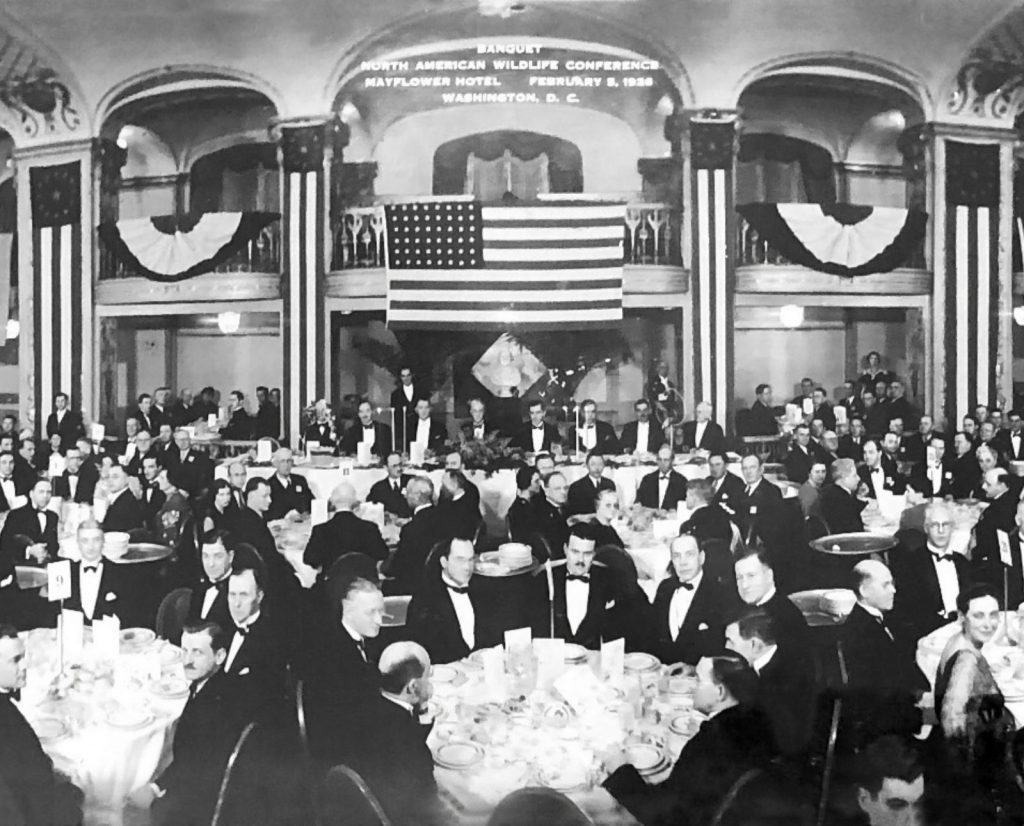
Darling resumed his cartoon career in Iowa and maintained his Washington ties as founder of the National Wildlife Federation. Initially conceived as a “federation of sportsmen,” Darling was convinced that hunters, anglers, farmers, birders, and other conservationists could increase their political influence by working together under the umbrella of a single national organization. He was the featured speaker at the organization’s first North American Wildlife Conference in February 1936 and remained active in the AWI.
Waterfowl Recovery After the Duck Stamp Act
In January 1936, USBS and Canada midwinter survey findings showed a 20 percent increase in waterfowl populations over 1935. Most thought the improvement had more to do with hunting restrictions and increased enforcement than breeding success. Their optimism, however, was tempered by one of the driest summers in PPR history with persistent, record-breaking heat. US flyway states mobilized survey biologists, automobiles, airplanes, and even an Army blimp that summer, and MGBA extended its summer survey into the Canadian boreal forest region for the first time in 1937.
1937 was a good year for migratory birds. The Dust Bowl drought eased in some parts of the PPR, and the continental duck population remained above 40 million. On the funding side, Ding Darling and Carl Shoemaker cajoled the firearms and ammunition industry to support a permanent, federally managed funding system through a dedicated excise tax on sporting goods. Passed by Congress in 1937 as the Pittman-Robertson Federal Aid in Wildlife Restoration Act, it raised $3 million for wildlife habitat, research, and surveys in its first year.
Ducks Unlimited (DU) sprouted from the roots of MGBA in 1937. MGBA was known for operating with razor-sharp efficiency and a science-based approach to decision-making. Its problem, though, wasn’t how it worked, but where it worked. At least 85 percent of North America’s waterfowl were hatched in the Canadian PPR and boreal forest, called North America’s “duck factory.” Conservationists were keenly aware that refuge and restoration programs underway in the States were needed across the border. But neither MGBA nor the USBS had jurisdiction outside the US, and dollars raised by Duck Stamp sales could not be spent in Canada. DU provided that opportunity, and put its first water on the ground in May 1938 in Manitoba.
That summer, the USBS reported the combined US and Canadian breeding population reached about 51 million birds, and the fall flight was predicted to be the best in 10 years. 1938 also marked the partnership between Delta Marsh’s James Ford Bell and AWI. Bell built a hatchery at Delta Marsh with the vision to create a leading waterfowl research program. With Aldo Leopold’s student Hans Albert Hochbaum, who became Delta’s scientific director, Bell built the Delta Waterfowl Research Station into arguably North America’s most influential research facility.
The 1939 midwinter survey was promising, with USBS observers reporting a 14 percent increase in ducks compared to 1938, and the summer PPR survey yielded an estimated 59 million birds. According to DU co-founder Ray E. Benson, the strong showing was due to “a lucky series of June rains in the Canadian PPR breeding grounds [that] left enough moisture to carry broods through the July and August arid period.” Duck Stamp sales in 1939 exceeded one million for the first time.
Under the auspices of the USBS and DU, a “vast corps” of more than 3,000 observers took to the field for the 1940 midwinter survey using blimps, airplanes, boats, automobiles, snowshoes, and a flying “autogiro” contraption. According to the USBS, winter duck populations were about double those in 1935. Still stinging from the long-term drought, biologists worried about the low winter snowmelt, but the PPR received timely widespread rainfall in spring. DU reported that the Canadian portion of the PPR held 69 million birds. Sportsmen were ecstatic when the USBS, reorganized and renamed that year as the US Fish & Wildlife Service, approved a 60-day hunting season.
The increase in migratory bird numbers from 30 million in 1934 to 100 million by 1941 resulted from a combination of nature and government. Nothing, it seemed, was on the horizon to derail conservation’s rising tide. Then the rising sun of Japan’s military appeared in the skies above the Pacific and Pearl Harbor.
FDR’s Legacy in American Wildlife Conservation
Many of the conservation initiatives credited to FDR and his New Deal wise men were not new. Their gift was figuring out how to get them done. AGPA principals recommended similar concepts as early as 1911, with AGPA’s Frederic C. Walcott shaping them into federal legislation in 1921. His proposals included a $1 federal license to fund land purchase for public hunting and game refuges, wildlife science, and federal game wardens to uphold game laws—essentially the same tenets as FDR’s New Deal in Conservation. But for over 12 years, the various iterations introduced before Congress failed. The single victory was the 1929 Norbeck–Andresen Migratory Bird Conservation Act authorizing the federal government to acquire land for migratory bird refuges. But even that was not much of a win—no money was allocated.
Legislative failures were a result of states, particularly in the West, that objected to federal oversight. An early opponent was Utah Fish and Game Commissioner D.H. Madsen, who rallied to “protect the heritage of Western wildlife against threatened encroachment of Eastern interests.” Madsen built a strong legislative coalition that challenged “government control” over state fish and game resources, the $1 federal license fee that could be expended however “Congress sees fit,” and the role of federal game wardens, which he characterized as “federal police.” He convinced his supporters that the edicts were “an invasion of state rights by the federal government” and only benefitted “the interests of wealthy sportsmen.” As duck numbers crashed, bills for their relief wallowed in a political mire.
Roosevelt’s wise men of conservation quickly proved they could dance across slippery legislative rocks without getting wet. Their Duck Stamp strategy, for example, achieved the same goals as a federal license but sidestepped the controversial “federal” wording. They dangled the carrot of government funding for university wildlife research departments in every flyway state. Compensation was offered to offset state tax losses from federal refuge acquisitions, and they proposed some refuges purchased with federal money be administered by the states. The wise men’s wildlife statutes mostly soared through the halls of power, and it suddenly seemed as if every state was thrusting out a hand for university dollars and refuges.
Roosevelt treated the collapse of waterfowl populations during the Dust Bowl drought as a national conservation emergency, ushering in a New Deal in Conservation. The president was not hands-off, personally selecting the manpower for top government agencies, directing funding mechanisms, using executive orders and agency authority to set aside federal land for wildlife, and framing conservation labor as a tool for economic recovery. America’s migratory waterfowl resource exists today because of a long list of conservation heroes like Franklin Delano Roosevelt and his wise men of conservation’s New Deal.




Excellent piece. A historical reminder that once ethical and moral American politicians were able to address National level problems (even self inflicted ones) and make the world a better place. As organizations like DU, RMEF, and NWTF have devolved into mere office cubicles at the NRA, we’ll need a fresh generation of vibrant and conservation focused organizations to clean up after western states’ septic and emboldened grifters.