

Dove Hunting Tips and Tactics for the Entire Season
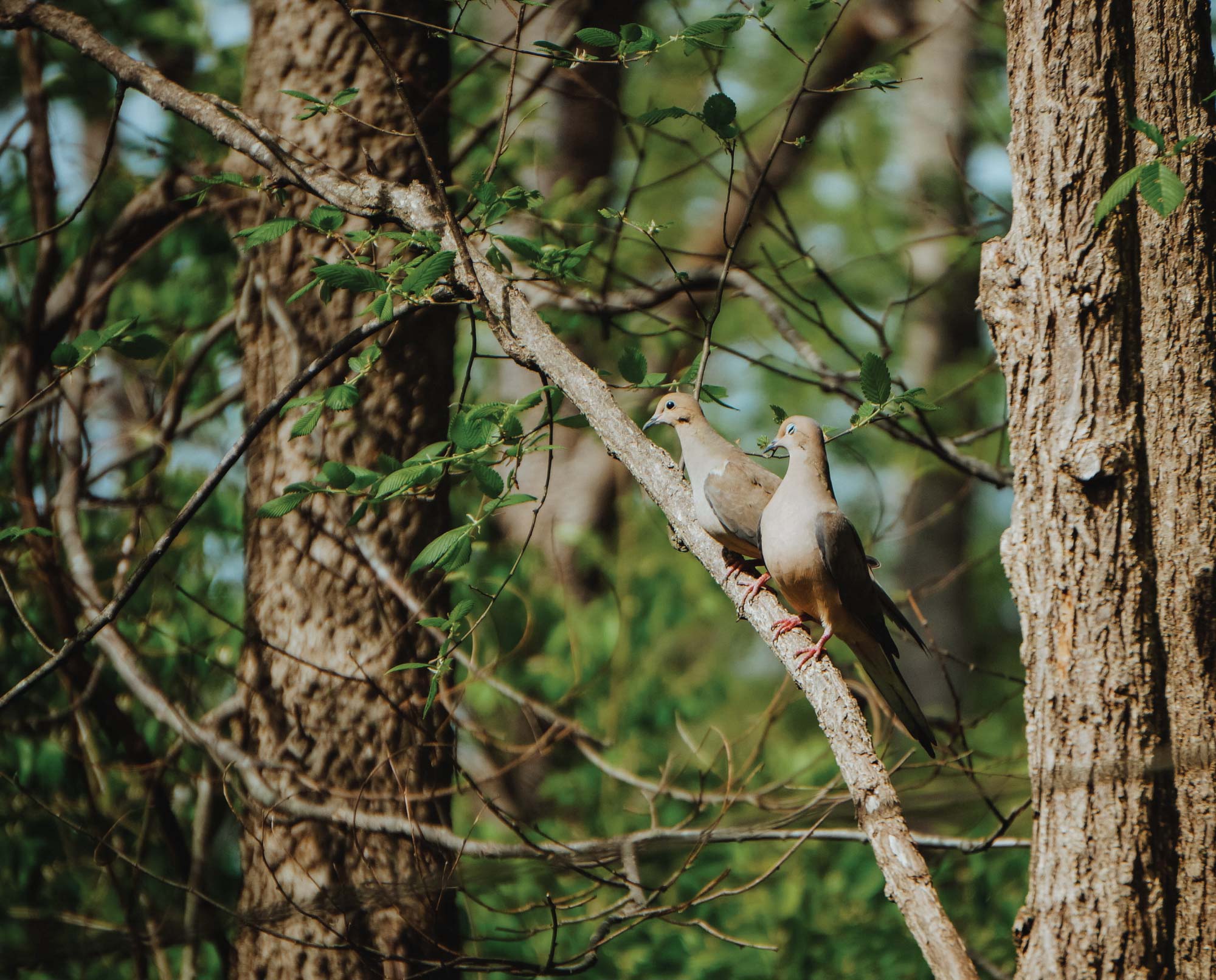
Tips for finding mourning doves from opening day through the final week of the season
Dove season is typically the first wingshooting opportunity to open in the fall for hunters across much of the country. Millions of hunters head afield on opening day hoping to bag a few mourning doves, many of which eventually become a plate of jalapeño dove poppers.
For many hunters, though, dove hunting ends almost as quickly as it begins. Most of their effort is concentrated in the opening days of September, even though dove seasons can extend for months.
Mourning dove behavior, food sources, and flock sizes change as the season progresses, creating new hunting opportunities well after opening day. Knowing where to find doves during the early, middle, and late portions of the season can provide quality wingshooting from September into winter.
How Long Is Dove Hunting Season?
Because doves are a migratory bird species, the United States Fish and Wildlife Service (USFWS) sets the criteria for season dates and bag limits. States are allowed to select their seasons within the date ranges the USFWS offers. September 1 is the earliest the USFWS allows states to open their season. Depending on the flyway, the latest hunting date a state can select is January 15 or 31. With an annual estimated population exceeding 325 million birds, the USFWS also offers many states the opportunity to select up to 90 days of hunting.
Seasonal Dove Hunting Tactics
| Season | Where To Look For Doves | What Changes |
| Early Season | Sunflowers, wheat stubble, silage corn, weed fields, water sources | Birds often travel in singles and small groups between feeding and watering areas |
| Mid-Season | Newly planted winter wheat, harvested corn, milo, field edges | Early food sources disappear and agricultural activity redistributes birds |
| Late Season | Corn stubble, managed millet, late-planted wheat | Doves often concentrate into larger flocks around dependable food sources |
Early Season Dove Hunting
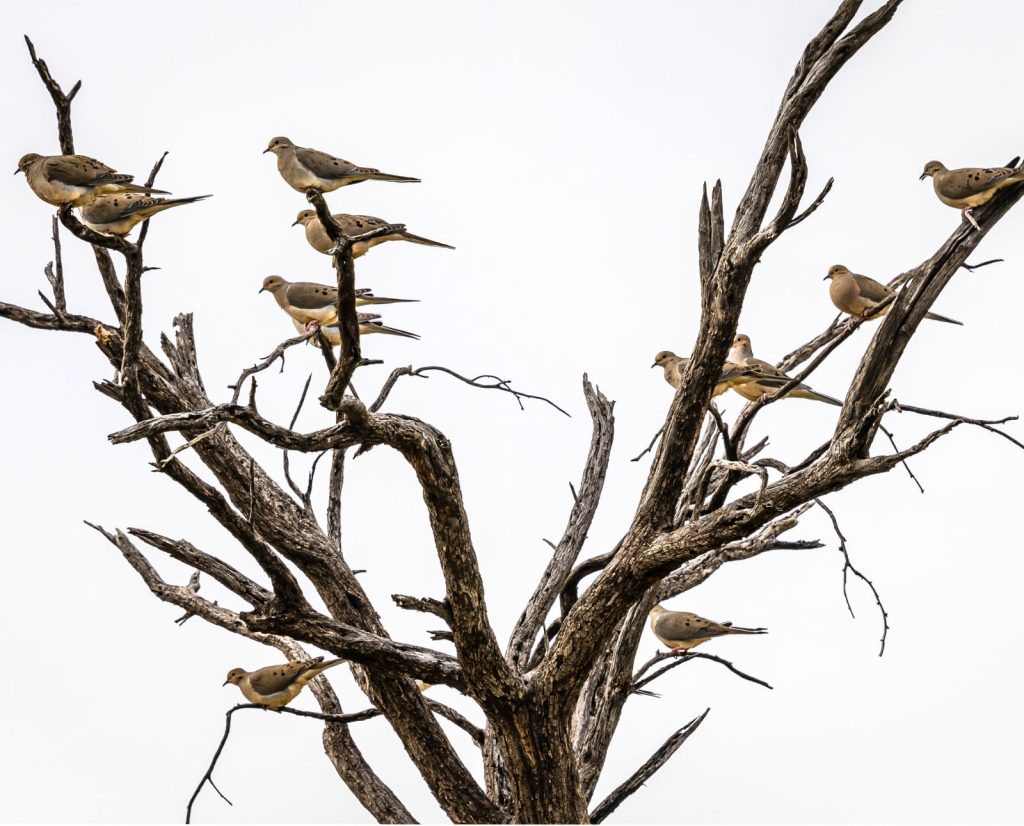
Food sources and water are the two most productive places to hunt early season mourning doves. Doves nearly exclusively eat seeds and are readily attracted to agricultural fields where waste grain provides an easy meal. Wheat stubble, sunflower fields, sesame fields, and corn fields harvested early for silage are good places to scout. Recently hayed Korean lespedeza fields also attract birds and provide quality hunting. Hay fields full of crabgrass or foxtail have provided me with several good hunts over the years as well. Look for doves loafing on nearby power lines or dead trees to get an idea which fields birds are using the most.
Other areas with an abundance of weed seeds like ragweed, pigweed, croton, foxtail, and wild marijuana, among others, can be hot spots for an evening hunt as well. Identifying the preferred flight path can take some time to discern, particularly on large fields. In many cases a motion wing decoy can help attract doves into shooting range in these situations. Additionally, hunting large crop or weedy fields can be more successful with several hunters rather than alone when doves are landing throughout the field, rather than in a specific portion of the field. Don’t be afraid to set up near dead trees on the edge of a food source when they are present. As birds flutter in to land and loaf on the dead limbs, they provide a much slower target, offering easier shots.
Cook: Project Upland’s Dove Recipes
Water sources provide a smaller area, making solo hunts much easier. Look for cattle ponds with bare soil surrounding the water’s edge or artificial features like windmills or stock tanks. Doves often get a drink after an evening feeding, prior to going to their roost site. Water source hunts can provide some fast action and often difficult shots. Doves settling to land appear to be moving in slow motion, but their descent can create non-typical, challenging shot opportunities of a falling target, as opposed to the typical rising bird. Water sources often have dove food as well in the form of weed seeds. Disturbance from cattle helps spur annual plants that create an abundance of seeds. Ragweed, foxtail, pigweed and barnyard grass are all species that may be found near watering areas.
Mid-Season Dove Hunting
The previously described feed fields that provide early season success eventually give way to farming practices, sprouting waste grain or a myriad of other things that make them less attractive to doves. Some fields get disced under in preparation for the next crop. Others turn green from sprouting grain or weed growth. Doves are sight feeders, so as soon as seeds are no longer laying on the surface, they will move onto another area where seeds are more easily accessible.
Crop fields remain an important focus for all portions of dove season; it’s just a matter of which types of crop fields hunters should focus their efforts on during the mid-season. Newly planted winter wheat fields can be a gold mine, but this opportunity disappears fast since the wheat seed will sprout within a week if adequate moisture is present in the soil. Farmers in many areas of the country plant winter wheat in late September or early October, providing some great shooting opportunities.
Traditionally harvested corn fields also attract birds during the mid-season. Typically, there is much more waste grain left behind from a traditional harvest as compared to an early season silage corn field harvest. Milo fields are almost never harvested prior to opening day, but when the harvest begins later in the season, these can be magnets for doves.
I often flush doves from food plots, ragweed patches, tree rows, and plum thickets during the mid-season while quail hunting. In Missouri, our dove season overlaps the early portions of bobwhite quail season, allowing me to harvest doves during quail hunts in early November.
Even if you aren’t pursuing another species, looking for doves in these types of locations can provide some opportunities to shoot flushing birds. Pairing up with a partner and walking either side of a tree row is an effective way to flush doves within shooting range, a tactic I have employed many times over the years. Doves flushing from the ground or trees can be much easier to hit with a load of pellets than the more common pass shooting most hunters experience.
Late Season Dove Hunting
In the Midwest, harvested cornfields are among the best places to find late season mourning doves. During this time of the year, flocks can get quite large. Groups of fifty or more can be seen sailing into a field to feed, as opposed to the singles and small groups seen earlier in the season. These large groups make it imperative to be in the right flight path, which means scouting is critical for a successful hunt. Bagging multiple birds out of each passing flock is not uncommon with such large flocks cruising in to feed.
Read: How and Why You Should Age Your Doves
Further south, hunters can also have success in corn stubble similar to the Midwest. December-planted wheat will also attract doves, but as described earlier, when the wheat sprouts, the attraction for doves wanes.
Many of the late season opportunities in the South are associated with intentional management efforts for dove hunting. Brown top millet fields that have been hayed several times during the fall offer easily accessible seeds immediately after a cutting occurs. Dove managers will time cuttings to coincide with some late season dates when hunts are planned. Some late mowed dove food plots are also managed to align with hunts around Christmas and New Year’s. For many families, these hunts are a long-standing tradition where family and friends go afield while kids are out of school and parents are off work for a few days.
If you are only hunting doves on opening day, you are missing out on some great opportunities later in the season. Not only is there some quality hunting to enjoy throughout the season, mid-season and late season hunts can be much more comfortable, as early season outings often see temperatures in the 90s. Although other upland bird seasons, waterfowl, and deer hunting compete for our time, don’t pass up a chance for some additional dove hunting. Besides, an extra meal or two of dove poppers never disappoints.