

Rare Itinerant Breeders: How Researchers Discovered the Woodcock’s Unique Breeding Strategy
GPS tracking reveals American woodcock re-nesting movements across the Atlantic Flyway
In this episode, AJ and Gabby talk with Colby Slezak, a recent PhD graduate from the University of Rhode Island, about a surprising breakthrough in American woodcock ecology: evidence that female woodcock can be itinerant breeders.
Colby explains how new GPS tracking technology, combined with on-the-ground nest checks through the Eastern Woodcock Migration Research Cooperative, helped confirm a behavior that had long been suspected but rarely documented. When nests fail, some female woodcock will travel long distances and attempt to nest again elsewhere, sometimes multiple times in a single spring.
We unpack why woodcock have such an extended breeding season, what low nest success looks like on the ground, and how constraints like GPS tag size and battery life shape what researchers can learn about breeding ecology. Colby also reflects on the moment he and his colleagues realized their data supported this long-standing theory, an unexpected discovery that reshaped how researchers understand woodcock breeding behavior.
The conversation then shifts to Colby’s brief time with the U.S. Fish and Wildlife Service and what federal workforce reductions and buyouts may mean for conservation capacity, long-term partnerships, and the institutional knowledge behind migratory bird research.
To learn more about the Eastern Woodcock Migration Research Cooperative, visit woodcockmigration.org.
Get access to behind-the-scenes content and full, unedited guest interviews while supporting independent storytelling.
Podcast Episode Transcript
AJ: When most female game birds experience a nest failure, they will try to nest again a few more times. Attempting to renest after experiencing a nest failure isn’t uncommon. However, woodcock are doing something different—they actually nest and migrate at the same time, and can even build multiple nests in one spring. For example, if one nest fails, they will continue north and then nest again.
Gabby: This is a very rare breeding strategy called “itinerant breeding.” According to the University of Rhode Island, less than 0.1%, or only about a dozen species of birds use this breeding strategy. Even crazier is that they might travel anywhere between 500 to 1,000 miles between nests.
AJ: Itinerant breeding is defined as nesting while migrating in the spring, so woodcock keep moving north and trying to nest. That is different from a bird trying to renest in a general location, like a duck trying to move to another nearby wetland. Itinerant breeding can also mean that birds could raise more than one successful brood, however, recent research does not prove that this is the case with woodcock, but sets up some evidence that they might.
Gabby: Only within the last few years have researchers discovered the fact that woodcock are itinerant breeders. Other shorebirds in North America only breed after migration is complete, and they have very strong site fidelity related to breeding grounds, meaning they always breed in the same general area. A lack of site fidelity is unique to woodcock.
AJ: When it comes to landmark moments in ornithological research, this is one of them. In fact, the research conducted to make this discovery is now considered the gold standard for documenting itinerant breeding behavior. As if you needed another reason to believe that woodcock are a special bird, here it is.
Gabby: AJ and I talked to Colby Slezak, a recent PhD graduate from the University of Rhode Island, to learn more about this scientific breakthrough.
“Although a friend some few years ago told me that he had seen an American Woodcock with small young, about twenty-five miles from here on the Satilla River, I have found the bird so rare, even during winter, that I had about decided that he was mistaken. I was therefore both surprised and pleased on the morning of March 9, 1908, to flush a bird from a set of four eggs while riding through a thicket of bushes about three feet high in a rather low place on the edge of a swamp. I was riding slowly at the time, trying to identify a small bird, and my horse’s feet were almost in the nest before the bird quit it, rose above the bushes and settled down again about twenty feet away. The nest was of leaves and a little pine straw, and I found that incubation would have been over in a few days, but managed to save the eggs. The nest was about four miles from Saint Marys, Georgia, and the Florida line, which I believe is the most southerly breeding record for the bird. Have only seen one other bird this year.” — Isaac F. Arnow, The Auk, April 1908.
AJ: For over a century, observations like this raised questions no one could answer. When Isaac Arnow collected those four woodcock eggs near the Florida-Georgia line back in 1908, little did he know that there was a chance the female he flushed would relocate farther north and attempt to nest again. In fact, no one could’ve even guessed that if it weren’t for the project that Colby Slezak contributed to during his PhD research.
Colby Slezak: So my name is Colby Slezak. I finished my PhD at the University of Rhode Island this past August 2024, and I was studying the habitat selection and breeding ecology of American woodcock in Rhode Island and the Atlantic Flyway. We found that woodcock are itinerant breeders, which essentially means that they will nest and then migrate between their nesting attempts if that nest fails.
So most birds will go back to similar breeding grounds each year. There’s this advantage to going back to a place—you know the predators there, you know where the food resources are—and so you have this advantage. But woodcock are more flexible, and they can move between their nesting attempts if they fail.
Gabby: Another bird that is known to be an itinerant breeder is the phainopepla. It is believed that this bird, which resembles a totally black northern cardinal, follows seasonal mistletoe abundance within its range in southwestern North America. However, the American woodcock is the first bird that scientists have direct evidence of itinerant breeding because they’ve been able to track individual female birds during their spring migration. And this is exactly what Colby was working on while he was earning his PhD.
Colby Slezak: A new tracking technology is really what’s allowed us to figure out this itinerant breeding mystery with American woodcock. So we were using these Low Tech GPS transmitters—Low Tech is the company, not the quality of the transmitter.
We were able to attach these small tags and actually track the migratory movements for many tagged woodcock over the past five years. And that’s part of the Eastern Woodcock Migration Research Cooperative that’s being led by Eric Blomberg at the University of Maine. Eric has a bunch of grad students, as well as my advisor, Scott McWilliams, and I was able to track females.
So one of the things I wanted to do as part of my PhD was try and locate nests throughout the Atlantic Flyway. Originally, I was just focused on trying to figure out where these birds are nesting outside of Rhode Island, because we had our local studies in Rhode Island, but I wanted to know what was happening at a larger scale.
I was sending people out when it looked like the GPS movements were suggesting a nesting attempt—so really small movements between subsequent GPS points. These tags were taking about a hundred points per spring, and so then I would send someone out, one of the biologists that was cooperating on our Flyway project, and they would try to locate the nest for me.
Being completely honest, I wasn’t as impressed as I could have been until my advisor and Eric Blomberg had looked at the data, and they were like, “Wow, this is something really crazy they had never seen before.” Then I got all excited about it. I started looking into itinerant breeding, and there are many species that this has been suspected in, but this was really the first direct evidence of someone actually going out and finding a nest of a tagged bird in the south, and then finding another nest in another location farther north that same spring.
I was mostly tagging females and trying to find nests so I could look at habitat associations, but we ended up finding this really cool behavior that we had not set out to look for.
The most exciting thing was that we found something cooler than what we expected.
AJ: So Colby mentioned the Eastern Woodcock Migration Research Cooperative, or the EWMRC. This cooperative is an international, multi-state collaboration project between universities, nonprofits, and wildlife agencies. Its goal is to specifically learn as much about the woodcock migration in North America’s eastern flyway as possible.
Gabby: The EWMRC has tagged over 500 woodcock with GPS transmitters. They want to learn more about the specific types of habitats used by migrating woodcock, what time migration begins and ends, verify that male movements line up with singing bird surveys each spring, calculate survival rates, and much more.
AJ: Its website is woodcockmigration.org, and if you want to check it out, you can follow along with the woodcock migration, learn about their research objectives, and support their research.
“Males establish and maintain breeding territories called ‘singing grounds’ on old fields or forest openings and perform crepuscular aerial displays for the purpose of attracting females for copulation. The display begins after the male alights in an open area of his singing ground. It is initiated on the ground with the male walking around in a small area (usually only a few square meters) uttering a loud, nasal, insect-like sound described as a ‘peent’ approximately every 20 seconds. Preceding each peent is a soft gulp or ‘tuko’ that can be heard only up to 20 to 30 m. This ground display may last 5 minutes or more, although periods of approximately 2 minutes are more common. After peenting ceases, the bird flushes and begins a slow spiraling climb to a height of 60 to 150 m. The area encompassed by the spiral is approximately 2.7 acres. During the ascent there is a constant twittering sound made by the wings. The descent is much quicker than the ascent and follows more of a zigzag pattern than a spiral. During the descent, the twittering ceases and is replaced by a series of chirps that sounds like a ‘liquid warble.’ At 15 to 30 meters, this sound stops, and the remainder of the descent is silent.” – Department of Defense Natural Resources Program: American Woodcock (Scolopax minor), Section 4.1.2. US Army Corps of Engineers Wildlife Resources Management Manual. April 1, 1989.
AJ: Although hard science hasn’t always been there to support our suspicions, hunters and wildlife managers have suspected that woodcock might be itinerant breeders before. And until now, no one could follow a single bird through multiple nesting attempts.
Colby Slezak: So woodcock will nest anywhere from January into July in some cases, which is really unusual for birds.
But also, in the 1980s, there’s some anecdotal evidence in the literature from Eugene Wiley and Keith Cozy. They were studying American woodcock down in Alabama, looking at chick survival, and they banded this female woodcock with chicks that was later shot that fall in Michigan. So it kind of puzzled them, because how did this woodcock that was raising chicks down in Alabama end up in Michigan that fall?
And so at the time, they thought that maybe woodcock were having two broods per year. So maybe they were having a brood in Alabama, then going north and having another brood again, which is why that female was there and got shot there by a hunter. But now we know that maybe that woodcock female had a brood, it failed, the chicks got eaten, and then she probably migrated north and potentially nested again, which is how it got shot there.
So you can use those little pieces of evidence, and it’s like this long mystery that we solved with these newer tags.
Gabby: American woodcock are known for their abnormally long breeding season. Some of Colby’s research from Rhode Island showed that the rate of nest success, or nests that fledged at least one chick, was about 10%. Similarly, his research also showed that some female woodcock nest up to 6 times each spring. While that research isn’t reflective of the entire eastern woodcock population, it does suggest that perhaps it takes several attempts for woodcock to successfully raise a brood.
AJ: What I found the most interesting is just how much distance one female woodcock can travel between each nest attempt. Say a female woodcock is living in Florida at the beginning of the breeding season. If that bird attempts to nest in Florida and the nest fails for whatever reason, she might travel hundreds of miles north before attempting to raise another brood. She could experience another nesting failure in North Carolina, then New York, and ultimately land in southeastern Canada and nest again.
Gabby: At this point, this GPS research is limited by the battery life of each tag. Every transmitter planted on a bird can only record about 100 GPS points, after which point the battery dies. Because transmitters must weigh 3% or less of a bird’s body weight, the ones that woodcock wear are very small, and it takes a lot of battery power to send data points to a satellite.
AJ: However, if scientists and engineers create an ultralight battery that can last longer, people like Colby and the EWMRC can start to collect even more long term data, things like whether females continue north after her chicks fledge, their daily movements, how often individual birds revisit the same potential nesting locations year after year, and even if woodcock ever raise two broods in one year.
Gabby: Let’s bring it back to that low nesting success rate for a minute. What exactly is contributing to nesting failures? Is it weather events, predation, food availability, or something else?
AJ: According to Colby, in Rhode Island predation is the number one thing negatively impacting nesting success.
Colby Slezak: We didn’t find any nests, out of about 50, that looked like they had failed from anything related to weather events or food or anything like that.
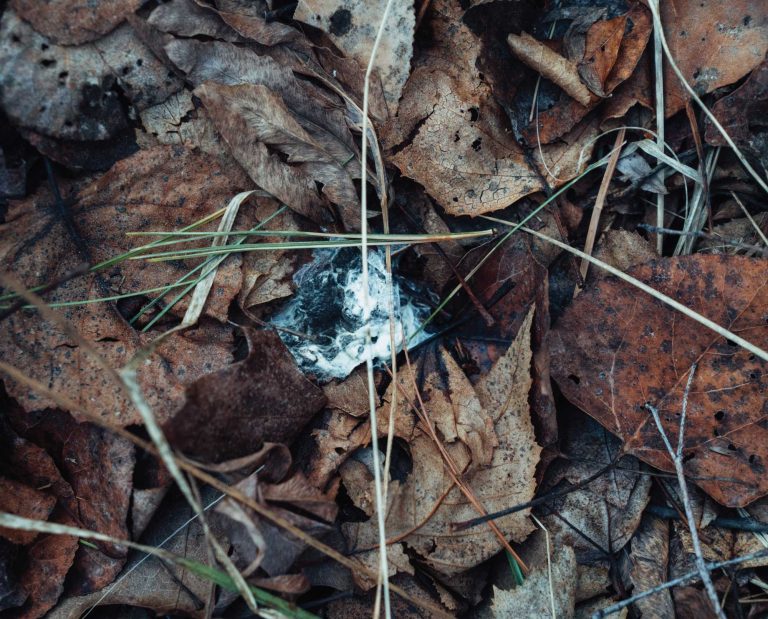
They all seemed to have been predated, based on evidence from us monitoring them and looking at the eggshells. Most of them were completely crushed or gone, so likely mesopredators getting at these nests. Woodcock typically nest on forest edges, so usually at that interface between forest and field—that’s a great corridor for mesocarnivores to actually move along.
And so we think that’s part of the problem, at least in Rhode Island, with the low nest success, is these hard edges where woodcock are nesting.
AJ: The Audubon Society has published one theory as to why woodcock are itinerant breeders:
“One likely explanation has to do with the harsh realities of the American Woodcock’s reproductive timing: Among the earliest North American species to breed each spring, some individuals begin nesting as early as January and travel northward just as winter snows are melting, exposing the birds to nasty weather that can lead to nest failure. As ground nesters, their eggs are also vulnerable to predators. Through itinerant breeding, females can nest multiple times with multiple males—the birds do not form pair bonds—for a better chance at success.”
Gabby: Something that Dr. Eric Blomberg’s woodcock research has shown is the difference between how male and female woodcock migrate. But why males sing while migrating has been a mystery. Colby thinks it may have to do with their breeding strategy.
Colby Slezak: Another mystery in the woodcock literature is why males sing along their migration routes. When you observe males in the spring, as early as January, you’ll hear males singing down in the South. During that time, researchers have noted that these birds are migrating, because they’ll be singing there one night and then gone the next.
What we think is happening there—although a lot of people speculated that maybe these males were practicing before they got to their breeding grounds in the spring—is that these males are probably opportunistically breeding with females who are also passing through.
Because if the females are migrating and nesting along the way, the males are probably going to take breeding opportunities on their way to the breeding grounds. We do think that males have a more set migratory path. So from the Flyway Cooperative, some of the tags have been scheduled to take data over more than one spring migration, and we’ve been able to find that males do follow, in some cases, a similar migratory path between breeding seasons, and they do seem to have more of a final stop.
More likely than not, the males are probably just breeding as they can with females that are passing through—doing a similar strategy to the females—but then ending up at a more stationary breeding ground.
AJ: At the same time we’re learning more about woodcock than ever before, the people and systems that made that discovery possible are under pressure.
Gabby: Researchers are solving mysteries about woodcock that have lingered for over a century, and they are doing it at a moment when the future of that kind of research is uncertain. That tension became real in 2025, when Colby took a new federal job in Utah and the Trump administration started offering federal employees buyouts.
AJ: The very people who spend so much time researching birds found themselves at a crossroads: take the buyout, or risk getting cut in federal workforce reductions.
Colby Slezak: I started with the US Fish and Wildlife Service directly. After finishing my PhD in August, I moved to Salt Lake City to work as a fish and wildlife biologist, working on endangered species and migratory bird policy in Utah. Then, with the new administration, many people working in policy positions and in natural resources in general were faced with this really hard decision to either take the federal buyout or risk getting cut in a reduction in force.
So I was advised to—and I think it was the best option for me, at least—to take the federal buyout. They pretty much gave us severance pay to leave our jobs and those roles. And now the government has been recently rolling out these reductions in force, so people are losing their jobs or are at risk of losing their jobs, especially in conservation.
Many of these federal employees are really dedicated to their jobs and have been working with states and nonprofits for a long time, in some cases. So you’re losing a lot of these people suddenly, and these partnerships will just go away in some cases without much transfer of knowledge. So it’s putting people under a lot of stress.
And quite honestly, I think it’s making the government more inefficient in how it’s working with these new directives. With so much energy development on the Trump administration’s agenda, I think it puts a lot of that critical habitat at risk. On the East Coast, we have so many national wildlife refuges and migratory bird biologists working to conserve these species and these really important critical stopover sites for species like American woodcock in those highly developed areas.
If we lose those, it will have cascading effects for a lot of these different species that are already in decline. So not only are you going to lose that land that those wildlife need, you’re losing a lot of institutional knowledge from these biologists who are no longer in these roles.
But we hope that we don’t get policies on that administration’s agenda that are more focused on development than actual conservation of species, because that could really be the downfall for some of these more imperiled species that are out there.
Unless you have heard it yourself you may find it hard to believe that the woodcock, that long-billed, bug-eyed eater of earthworms, can sing a song as sweet as a nightingale’s. Yet a singer he is, and anyone who lives away from the city almost anywhere in the northeastern quarter of the country can hear him trill any evening in the early spring when he performs his antic mating dance. Look—no, listen—for him in a grassy clearing hard by a fringe of alder or aspen, just as the light begins to fade…he fills the air with joyful chirpings, an aria of soft, liquid, musical notes that seem to gush out of him as an expression of utter ecstasy, and as sweet and melodic as any bird song man has ever heard. —H.G. Tapply, “The Song of the Woodcock,” The Best of Field and Stream, April 1972.
AJ: What reads like pure poetry here is actually an account of one of the most unusual breeding displays in North American birds. And while Tapply could describe what he heard and saw in detail, we’re still, even today, trying to fully understand what drives that behavior.
Gabby: It’s amazing to me that we are still learning new things about the American woodcock. The itinerant breeding discovery is a major step forward in understanding how this bird actually reproduces at all. Similarly, it’s a testament to how adaptable this bird truly is.
Colby Slezak: I’m just, I guess, really grateful to all the woodcock researchers out there who have given us this knowledge. I had mentioned earlier these more basic ecological questions that they’ve asked, and just the questions they pose in their literature and research papers that they’ve written that made this research possible, but also allowed us to expand upon and answer these long-term questions.
Because if it wasn’t for their research, we really wouldn’t have been able to uncover this or realize just how rare it is among birds and things like that. I’m just really grateful to all those people out there who have put in the hard work studying woodcock over the years.
AJ: Their ability to travel to places they’ve never been before and experiment with nest success is very unique. Given the state of earth’s climate, it gives me hope to think that the woodcock could be a species that thrives for decades to come.
Gabby: But whether we’re able to continue researching the adaptability of the American woodcock will depend on if we continue to invest in the people studying it.
Colby Slezak: I think American woodcock are just super quirky. They’re really strange-looking. I think their dances are just really cool to watch—if you bring out anyone to watch a male woodcock display in the spring, they can’t help but smile.
And so I got to experience that many times throughout this research, just bringing technicians and undergraduates out in the field with me. It was really exciting to see their excitement with these birds.
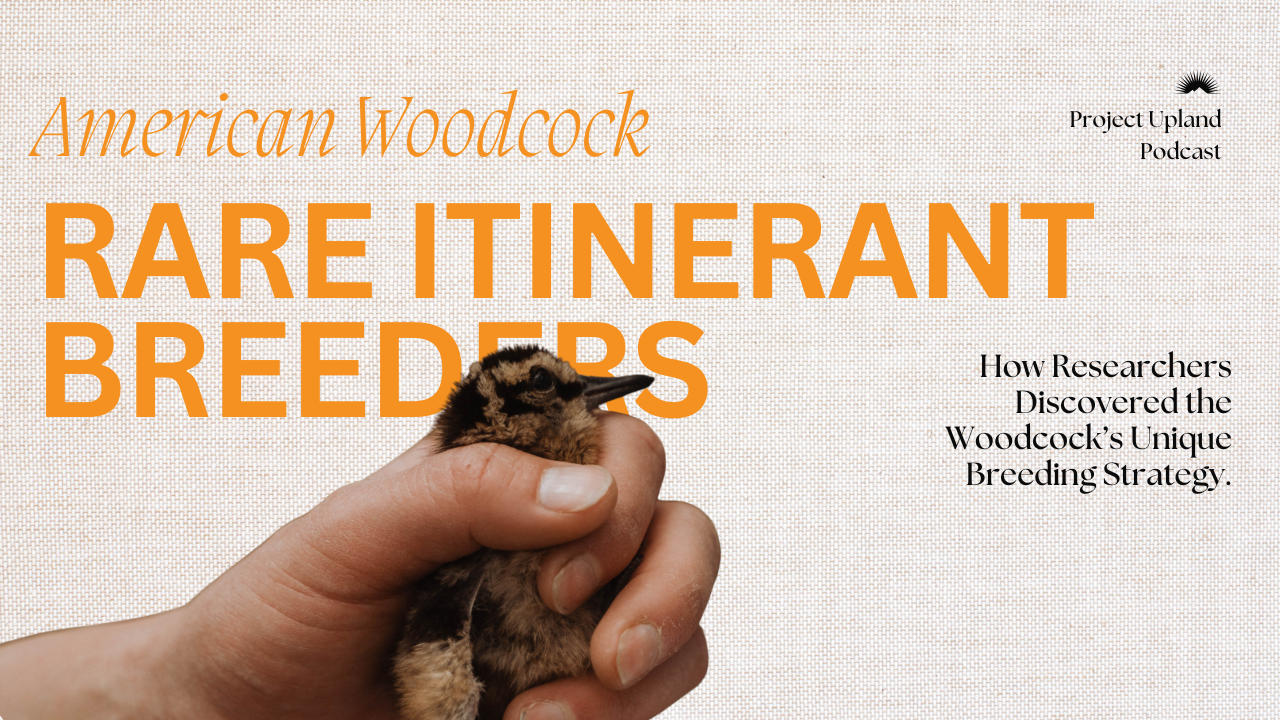
And if you ever get to hold a woodcock chick, it’s pretty amazing. They’re just about the cutest, weirdest-looking birds you’ll ever see.