

Hunting Sharp-tailed Grouse in Hot Weather: Where to Find Birds
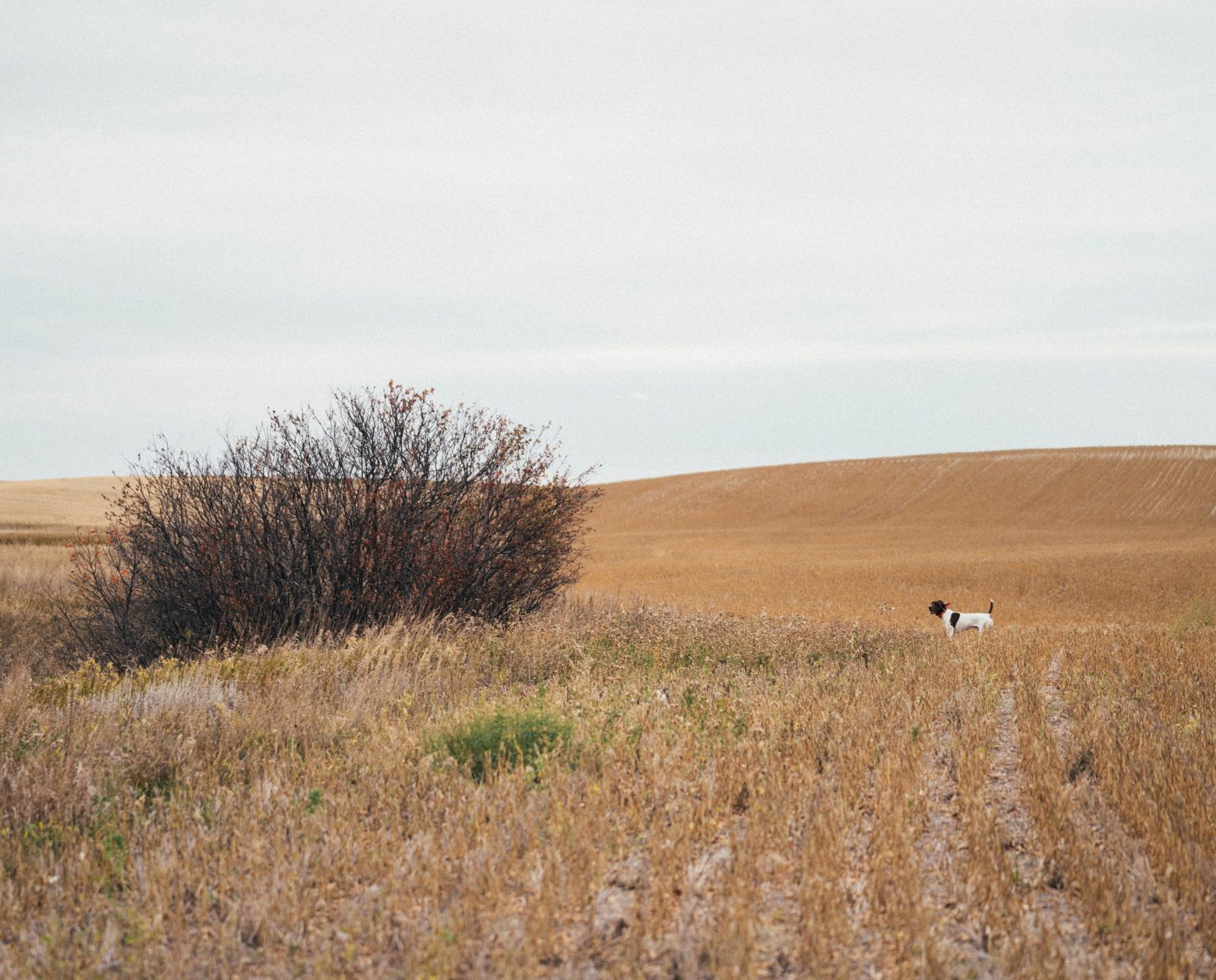
Hunting when it’s hot is hard on dogs, humans, and birds alike, but it does narrow down where sharptails are found on the landscape
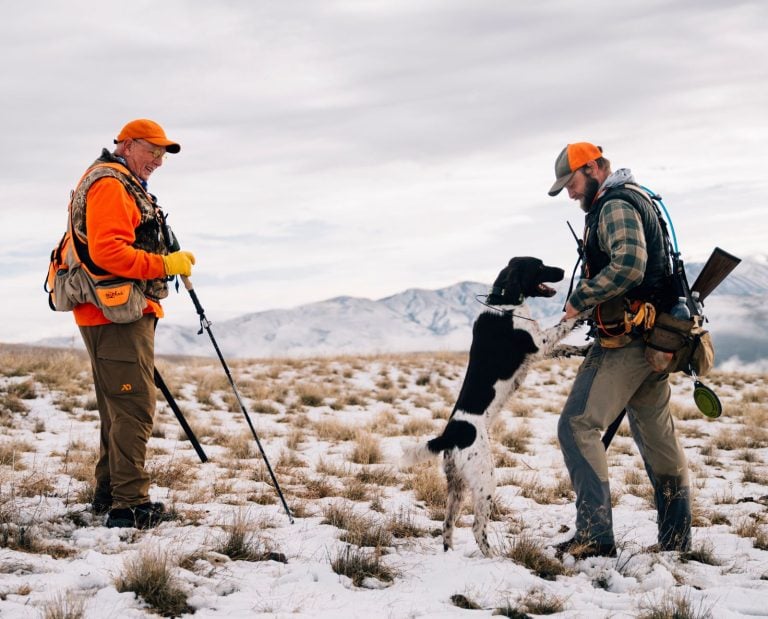
After a day-and-a-half drive in late September, we pulled into our first hunting spot just before noon. The temperature on the dash read 89 degrees. I had never hunted that state, let alone that exact spot, but an acquaintance was kind enough to share a few hunting locations with me. Our dogs were desperate to stretch their legs, as were we. There were four of us in our hunting party, so we agreed to split into two groups in an effort to cover more ground. We decided to make a short loop, hunting for an hour or less. This would allow the dogs time in the field without wiping them out for the remainder of the day.
Aaron, an old college buddy, and I headed down the drainage, where we had intentionally parked due to the appearance of a pond on onX Hunt. Hunting within a half-mile of water is usually critical in western states, especially during hot, dry weather, which were the exact conditions we were facing.
We each took a side of the drainage, staying on the top of our respective sides. After a mere 15 minutes of hunting, we came upon an intersection of a larger drainage. Aaron’s side of our original drainage had one lone, very large juniper growing majestically at the point where the two draws intersected. I began to cross the intersecting draw, eyeing several junipers that dotted the side slope. The distinct “giggle” sound that sharp-tailed grouse make while in flight perked my ears. I turned to see a flock of ten sharpies heading down the draw, well out of range. As my gaze shifted toward Aaron, I saw fifteen more flush from the shady side of the juniper Aaron was approaching. The first group had apparently been seeking refuge there as well.
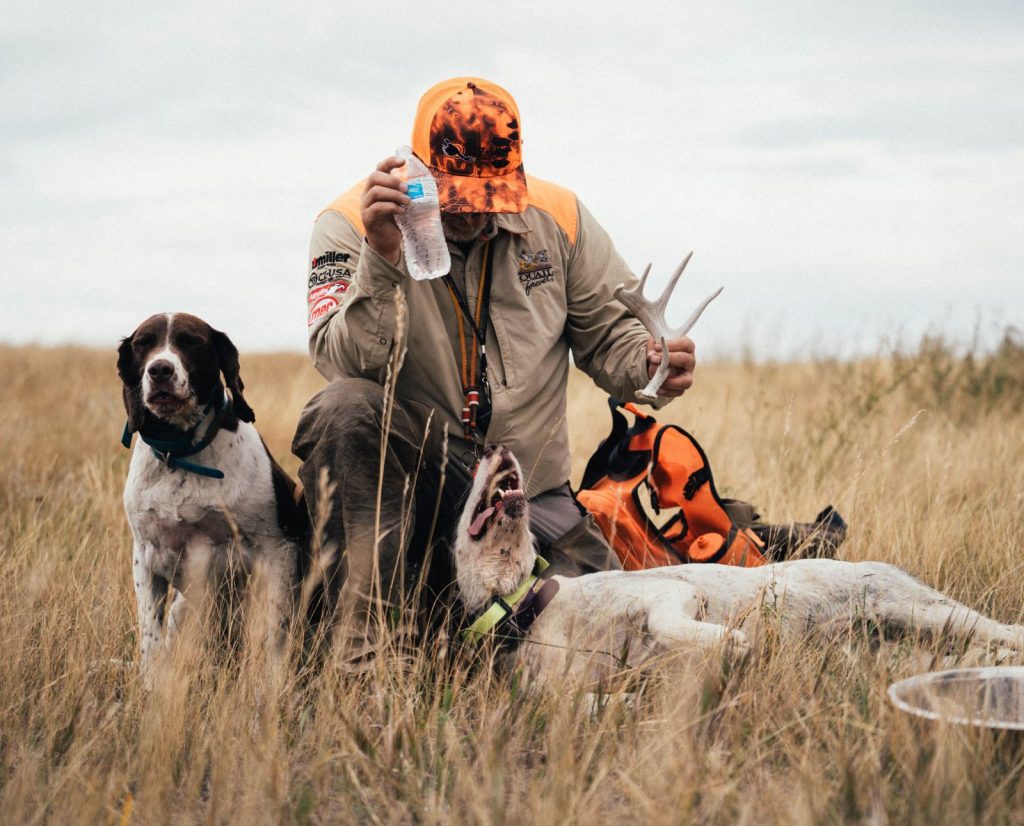
Read: Protect Your Dog from Overheating and Heat-Related Illness
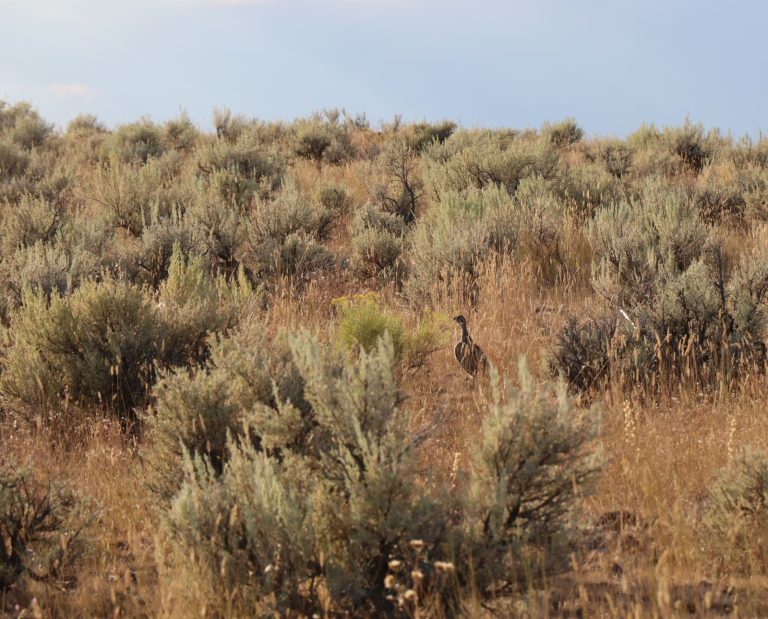
I scampered toward a juniper ahead of me and a pair of birds broke from the right side. After whiffing my first shot, I settled the 20-gauge on the gray figure and the shot stream found its mark. Pepper, my German Shorthair, hustled over and brought my prize back to me. I looked ahead and could see at least another dozen junipers scattered across the landscape within 400 yards of my position. As I worked up to the top of the slope, the plateau not only had a few more scattered junipers, but some large clumps of sage that looked promising as well. We continued our pursuit, simply hunting past each shady evergreen.
Not every tree held birds, but many did. We flushed several others from the sage thickets as we moved between evergreens. A few snowberry thickets on steeper side hills also held some birds. We circled back to the truck and met up with our hunting companions. Upon comparing notes, they had quickly encountered the same pattern and all four of us had a bird or two in our vests.
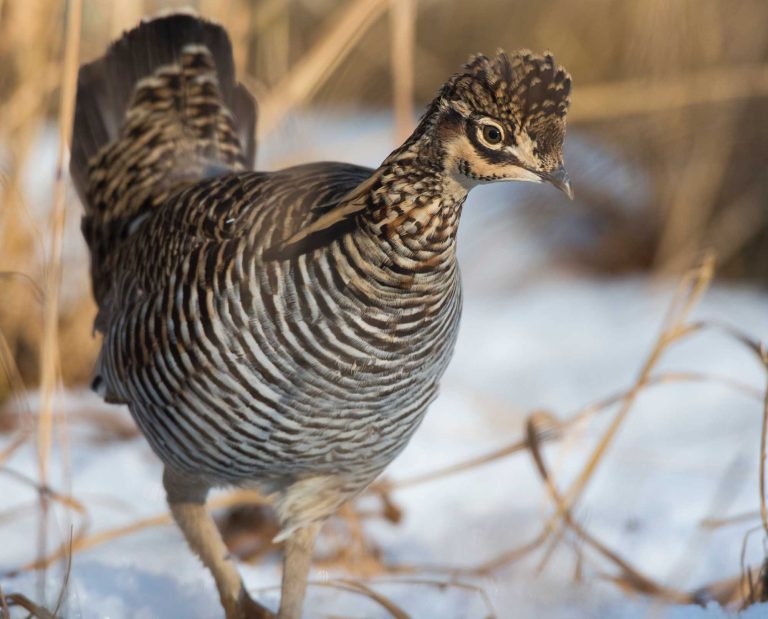
During hot, early season sharp-tailed grouse hunts, finding birds often comes down to finding shade. Shelterbelts, scattered junipers, woodland edges, snowberry thickets, and other pockets of woody cover can concentrate sharptails during the heat of the day, making the prairie much easier to hunt.
Where to Find Sharp-tailed Grouse in Hot Weather
Many western rangelands not only have scattered junipers, but small pine woodlands can often be found on the upper slope near a ridgetop. These woodlands are usually just a few acres in size, but they provide quality shade in scorching temperatures.
Woodland Edges
During our second walk of the aforementioned hunt, we came across two different pine woodlands. The interior of these areas was closed enough to have nothing but pine needles on the ground, while the edges had a nice mix of grass, forbs, and sagebrush. As we entered the first woodland, we could actually see a couple of sharptails standing in the pine needles, enjoying the break from the sun. The visible birds obviously saw our approach and flushed long. However, hunters on the outside edges were able to get some shot opportunities as those interior birds sailed overhead. Additionally, other birds were found loafing on the edge where more cover obscured their view. These edge sharpies held tight enough for some easy dog work, resulting in chip shots.
The entirety of our four-day hunt had high temperatures in the upper 80s and low 90s. We had intentions of covering lots of ground and seeing new places every day. This meant even though we had developed a solid pattern on the first day, we wouldn’t be hunting this same spot again. That didn’t matter. The pattern was more important, not the exact hunting spot.
Shelterbelts and Shrubs
The next day we found ourselves nearly two hours north and looking at new ground. We decided to hunt Hungarian partridge in the morning, then use our shade tactics for sharptails in the afternoon.
After chasing a few coveys of Huns, the late morning heat was upon us, and our dog power was limited. We began scouting various tracts of public land, looking for shady sharptail spots. We quickly stumbled upon a shelterbelt that had grouse standing between the tree and shrub rows as we drove by. A short walk yielded several birds in the bag for each of us. We loaded up and traveled less than a mile and observed a pasture with scattered junipers. Many of these junipers held birds as well, much like the day before.
We continued to replicate these same patterns each day and were met with very predictable success.
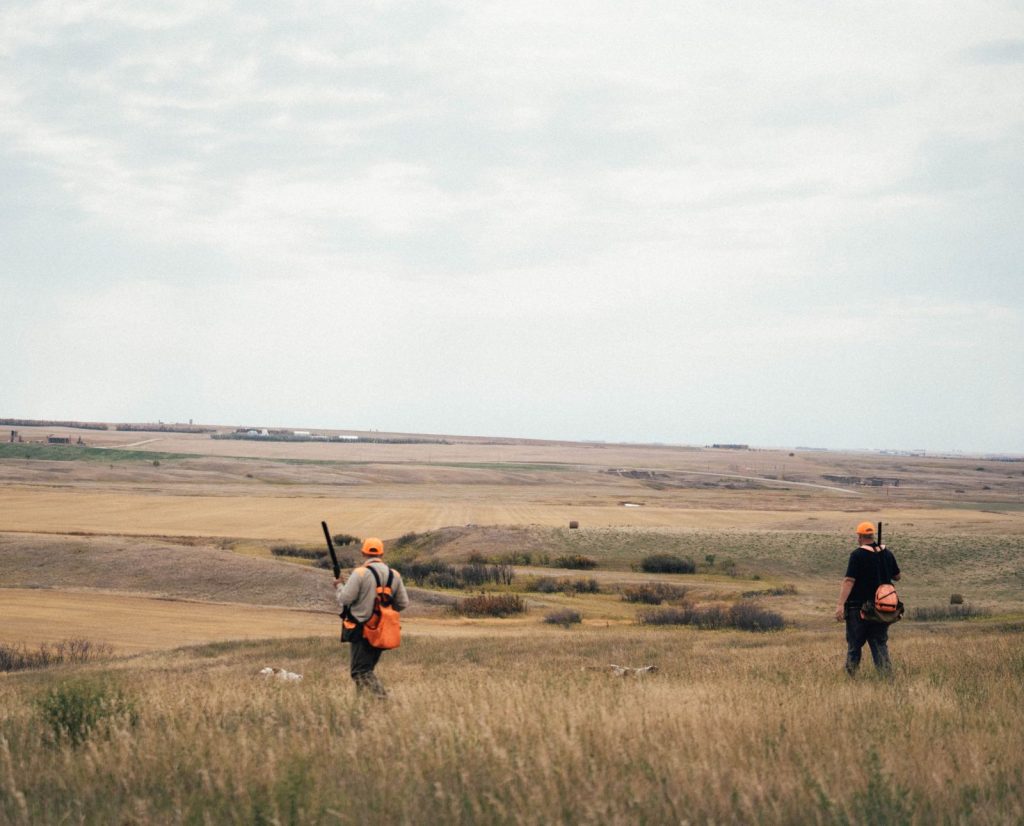
Best Time of Day to Hunt Sharp-tailed Grouse in Hot Weather
Sharp-tailed grouse obviously don’t spend all day in the shade just because it’s hot outside. They roost in grassland vegetation and feed on forbs and invertebrates first thing after breaking roost. Hunters pursuing these prairie grouse during the first hour or two of the morning during hot weather should focus on diverse herbaceous cover.
Although feeding areas may be scattered across the landscape, birds will likely be using sites close to the shade they will be seeking throughout most of the day. The bottom of drainages or grazed flats can all produce birds, but having shade nearby is the key. These same areas can be successful late in the afternoon as birds move away from the shade for their evening feeding.
Read: Season-long Strategies for Sharp-tailed Grouse Hunting
We elected to forego the morning pursuit for sharptails and just focus on midday hunts. Although a morning hunt scouring the grasslands with wide-ranging pointing dogs would have felt more “normal,” our midday pattern was so predictable, we decided to use the cooler mornings to continue chasing Huns. This strategy allowed us to rotate one dog at a time on our sharptail hunts since we didn’t need to cover hundreds of acres of ground. We made short walks each day, targeting shelterbelts, scattered junipers, and snowberry thickets, enjoying tremendous success.
Every state that harbors significant populations of sharp-tailed grouse has a season that opens in early fall. Early season sharp-tailed grouse hunts are almost always warm, but sometimes it can be downright hot outside. Next time you find yourself faced with brutal temperatures on a sharptail hunt, look for some shade. Not only do the birds like to loaf in the shade, your dogs and hunting companions will find the predictability of the hunt to their liking as well.