

The Elusive Legacy of Pennsylvania’s Sawtimber
Pennsylvania’s sawtimber history reveals how shifting forestry practices created, lost, and may yet restore ruffed grouse habitat
This article originally appeared in the winter 2022 issue of Project Upland Magazine.
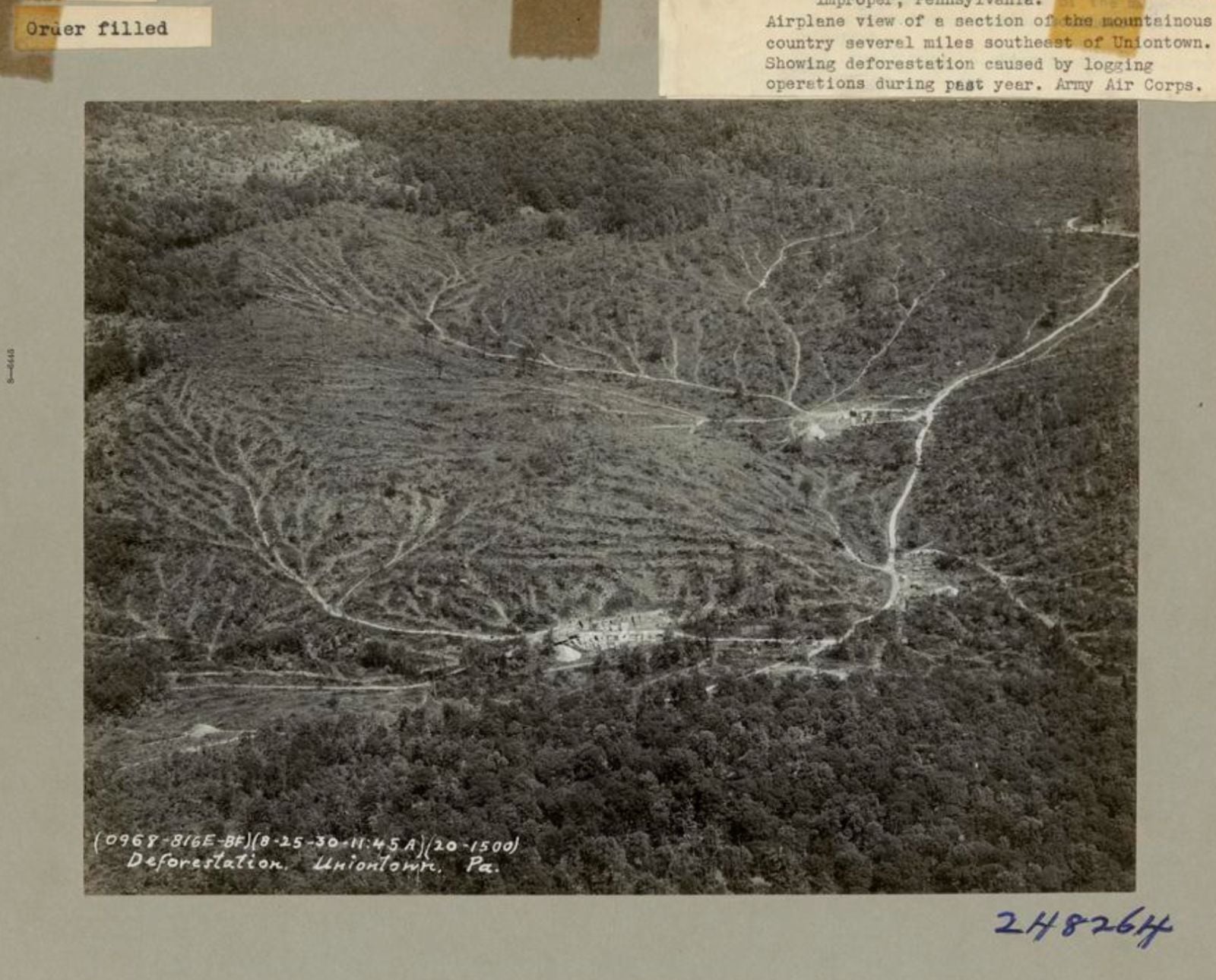
In life, it can be hard to see the forest for the trees. In my experience, drumming up Pennsylvania’s lumber and forestry history and its impacts on ruffed grouse over time is equally as difficult. In reality, that history is all around us. Pennsylvania’s past forest management practices feature what would now be considered irresponsible, large-scale cutting and staggered age classes of woody regeneration.
Getting one’s bearings on such a landscape is easier said than done.
The keystone state’s timber legacy eluded me for some time until I connected with a nonprofit, Pennsylvania Lumber Museum, and its site director, Joshua Roth. The museum is a publicly-owned historic site administered by the Pennsylvania Historical and Museum Commission. Joshua’s plethora of information enlightened me greatly.
Pre-20th Century Pennsylvanian Timber History
Both birds and people have always inhabited these eastern forests. Prior to the European colonization of North America, as much as 99 percent of what is now Pennsylvania was forested. Native Americans in the area used fire locally to maintain visibility and travel corridors, as well as provide grazing opportunities for livestock and wildlife. Fire was a tool by which communities would have been able to foster early-successional forests, which we know are beneficial to grouse.
Post-colonization, forestry as an industry came into existence on the continent. The earliest examples of the industry’s presence in Pennsylvania were community sawmills supplied by the surrounding forest. Pines were the most desirable trees at the time. They were valuable in the making of ship spar—the parts of sailing ships that support the sails—due to their long, straight growth.
Little thought was given to future harvests during that time. The forests seemed limitless in both their scope and value.
Moving Timber
In this early era of timber management, suitable trees were cut and hauled down to major rivers either in the round or square-hewn. Occasionally, raw lumber was processed at the mills. There they would be lashed into large rafts and floated down major rivers like the Susquehanna and Allegheny.
Moving lumber via rafting persisted in various forms on the Allegheny River until the turn of the 20th century. By the mid-19th century, however, rafting was phased out elsewhere in favor of log driving. This switch represented the arrival of industrial logging in Pennsylvania.
To put on a log drive, loggers would pile cut timber along the banks of tributaries of these major waterways. Again, during the spring thaw, the logs would be pushed into the streams to float downstream to the river and ultimately to a port along the river. At these ports, massive booms constructed in the river with systems of chains and logs would serve as nets to capture the timber. One of the largest of these booms was in Williamsport. It was in operation from the 1850s until the early 1900s and represented the pinnacle of lumber production in the state’s history. The Susquehanna Boom, as it would be called, would make Pennsylvania the number one producer of lumber in the nation.
By the 1830s, the stands north and west of, generally, the Allegheny Front remained in relatively pristine condition. This is not to say that cutting had not been happening beyond that geographical marker, but it was not nearly on the scale as in the other parts of the state to that point. By the 1880s, railroads had begun to replace the practice of log driving. Desirable timber, as fate would have it, was not necessarily close to navigable streams. Railroads provided more reliable access to these areas. Local mills began to pop up around these locations to process raw timber to be loaded on trains and transported to its destination.
The Championing of Pennsylvanian Forest Conservation
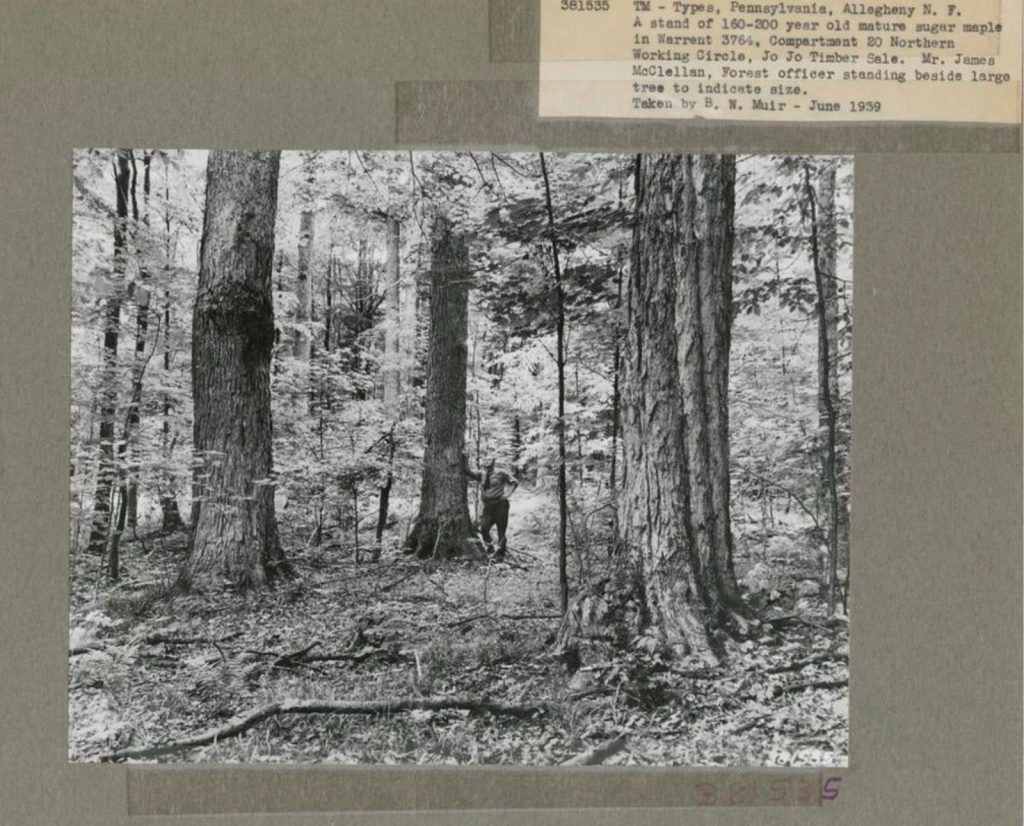
There had been rumblings that the forests were being used irresponsibly. After the Civil War, the harvest burgeoned on the back of increased development and population growth. Joseph Rothrock, a botanist and medical doctor, would champion the cause of forest conservation in Pennsylvania. General carelessness (not necessarily related to lumbering), according to Rothrock, caused uncontrolled fires, unrelated to management, to burn tens of thousands of acres a year.
A botanist by training, Rothrock is now considered the Father of Pennsylvania Forestry. He dedicated the last half of his life to advocacy of forest conservation legislation. Financed by a deathbed bequest from French botanist, F. André Michaux, Rothrock toured the state between 1877 and 1897, delivering educational speeches to rally public support for forest conservation that were known as the Michaux Lectures. Rothrock was pivotal in delivering to the state legislature, on behalf of the governor’s forestry commission, a 342-page report that not only fulfilled the assignment given, but also highlighted the persistent risk of fire and the forests’ effects on flooding. Because of his work, Rothrock was named as the first head of the newly-minted Department of Agriculture’s Division of Forestry.
Under his leadership, Pennsylvania acquired over 400,000 acres set aside as forest reservations by 1904. By 1973, that acreage rose to 1.6 million acres. Today, just over two million acres are overseen by the Bureau of Forestry; the Pennsylvania Game Commission oversees another 1.5 million acres.
Historical Forestry Impacts on Ruffed Grouse
The creation of the timber industry, historical management and misuse, and the conservation of previously harvested forests all affected Pennsylvanian ruffed grouse populations. In the December 1907 Wilson Bulletin, Frank Burns wrote that during the 1906 hunting season he believed that grouse achieved their “high water mark in point of abundance in recent years.” Burns indicated that grouse were taken in all counties aside from Philadelphia. He also reported that there were vast numbers of gray-phased birds, which he referred to as Canadian ruffed grouse. Pennsylvania, according to him, was something of a confluence of color phases. Even amidst such bounty, forest fires were cited as negatively impacting previous seasons’ grouse populations, in addition to rainy springs and possibly disease.
According to slightly later Game Commission reports, “in many regions where even so recently as during the 1923 hunting season dozens or hundreds of birds were seen, our game protectors have found but four or five birds.” In fact, during this time, Pennsylvania’s habitats supported large numbers of grouse as the areas disturbed prior to 1910 regenerated. As that habitat matured, however, grouse populations declined. George Sutton, the state ornithologist at the time, theorized that “lateness, chillness, and irregularity of the rearing season” led to nest loss and higher than expected mortality. Despite their hardiness, the birds still benefited from good habitat.
Read: What’s Limiting Eastern Ruffed Grouse Populations?
Even with the establishment of the ruffed grouse as the state game bird in 1931, in the mid-1930s, the enforcement of forestry laws aimed at habitat protection remained anything but stringent. Wildfires continued to run rampant due to historical mismanagement and lax law enforcement. Threats to the forest remained, but Rothrock’s Michaux Lectures were beginning to pay dividends. Because of Rothrock’s work and the contributions of others, forestry in Pennsylvania became a scientific pursuit, with professional programs being offered at post-secondary schools in Pennsylvania. Concurrently, as part of FDR’s New Deal (1933-1939), the Civilian Conservation Corps undertook the tasks of building roads, replanting trees, suppressing wildfires, building fire towers, and other conservation tasks.
By the mid-20th century, the rise of the modern chemical industry led to the decline of hardwood distillation. The waning need of leather belts for factories and tack for horses meant that the hemlock bark industry, traditionally used for tannins in the tanning process, was also on the way out. Although the next generation of trees were beginning to sprout, young forests had disappeared for decades as land management and use changed and natural disturbance was limited.

Modern Lumber Industry and Land Management Impacts on Ruffed Grouse
Grouse flush rates by the mid-1960s held steady at a respectable 1.62 an hour. Flush rates are calculated by aggregating reports from cooperating hunters in which hours spent hunting and numbers of flushes are recorded (among other details). That data is used to gain an understanding of bird populations in the different parts of the state as well as gauge hunter participation and success rates. Flush rates have ebbed and flowed, most recently due to West Nile Virus (WNV). According to Ken Duren, the Pennsylvania Game Commission’s (PGC) Game Bird Section Chief, WNV entered the state in 2002.
In 2018, the statewide flush rate was 0.7 birds an hour. According to Duren, that was a record low. While there has been some flush rate recovery over the past three years, there are still significant concerns.
A 2020 report prepared by the Eastern Grouse Working Group argues that the declines in flush rates may be even more dramatic than we can fully understand, as hunters are more likely to focus their efforts on habitat they know to be productive. These changes, combined with fragmentation and the decline in habitat quality, have resulted in ruffed grouse being identified in Pennsylvania’s state wildlife action plan as a species of greatest conservation need. The goal stated in the plan is to restore the birds to 1980 levels, which would be indicated by flush rates of around 1.25-1.75 an hour.
Lumber remains a huge part of Pennsylvania’s economy. According to 2019 United States Forest Service data, around 60 percent of the state is still forested. Around 30 percent is in the public trust through national forests (around 4 percent), state forests, state game lands (SGLs), or municipally owned lands. The remaining 70 percent of forested land is held privately. The land overseen by the Bureau of Forestry (DCNR) and the PGC are managed scientifically and sustainably not only to support lumber production, but also to create wildlife habitat and support clean water.
According to the Pennsylvania Hardwoods Development Council’s 2020 report, there are still around 121 billion board feet of “sawtimber” housed in Pennsylvania forests. These forests produce around one billion board feet of lumber per year. According to Roth, the country as a whole “has produced an average of only 35 to 45 billion board feet per year” over the last decade. This is a stark decrease from the 150 billion a year that the country was turning out in the early 1900s.
Emily Domoto, the Ecological Services Section Chief for the Bureau of Forestry, indicates that the Bureau’s goals “balance the age distribution of the forest” to benefit grouse and other wildlife. Currently the forest is “lacking in early successional forest,” but the allocation model that the Bureau utilizes ensures that the resource will “regenerate, regrow, and [be reharvested] in perpetuity.” That same model also assists the Bureau with distribution of cuts across the two million acres that they oversee to ensure there is a “mosaic” of forest age classes across the range.
Currently, DCNR cuts around 14,000 acres a year. In the last five years, they have engaged in 70 different projects specific to grouse resulting in 3,000 acres of habitat. While DCNR oversees two million acres, the PGC is responsible for another 1.5 million.

Read: Wild Turkeys in Pennsylvania: A Conservation Success
The PGC supports ruffed grouse populations on their swath of public land with management techniques, research, and timber sales. In a move that was initially unpopular, the PGC closed the “late season,” which was historically a post-New Year grouse season. Hunters were willing to take the hit to ensure that more birds made it into the breeding population when spring arrived. Additionally, they have been studying WNV to better understand its effects on the birds and their populations. Most importantly, they have worked steadily to increase timber sales on SGLs. Beyond that, however, they have engaged in non-timber-sale forest management with the goal of improving habitat. Ultimately, they aspire to hire even more foresters to ensure that the achievement of these goals can be maintained.
Our reality exists because of the foundation laid by Joseph Rothrock and his contemporaries. In the same way that Rothrock involved the public in his efforts, private citizens are still involved today. Opportunities exist to connect and volunteer with local state forest districts. Duren encourages hunters to become grouse cooperators. The data provided by participating hunters, he says, is “essential” to their work. Additionally, the Ruffed Grouse Society chapters in the state are always looking for individuals who will advocate for grouse and habitat work. According to Ben Jones, President and CEO of the Ruffed Grouse Society, the organization is constantly looking for avenues through which habitat work can be accomplished with both DCNR and the Game Commission.
Forest management professionals, whether employed by the Bureau of Forestry or the Game Commission, play on the same team as avid ruffed grouse hunters. Ensuring high quality habitat is the key to grouse recovery and it is a goal worth fighting for together.
Sutton’s closing remarks for his report capture the spirit in which grouse hunters and public servants will continue to work for the future of ruffed grouse in the Commonwealth: “Never, I believe, will the men of this Commonwealth permit this magnificent bird to join the phantom ranks of the Passenger Pigeon, Labrador Duck, and Eskimo Curlew.”
A debt of gratitude is owed to Josh Roth and the staff of the Pennsylvania Lumber Museum in Ulysses, Pennsylvania without whom this article would not have been possible and the preservation of our timbering legacy left rudderless in the flow.