

Ruddy Duck: The Blue-Billed Diver Duck Most Hunters Overlook
Learn how to identify a ruddy duck, where it lives, how to hunt it, and how to prepare it for the table
The ruddy duck (Oxyura jamaicensis) is one of the strangest diving duck species in North America and perhaps the least revered in the waterfowl hunting community. Known for its stand-up tail and bright blue bill, ruddy ducks also may be the easiest to identify simply because there are no other North American ducks that look like them. This might also be a clue as to why so few of these little birds get shot each season, too.
In my area, we don’t tend to see too many ruddy ducks, perhaps because of their secretive nature. While they may not appeal to waterfowlers in the same way as more sought-after species, the ruddy duck remains a fascinating bird.
Ruddy Duck Quick Facts
| Characteristic | Details |
| Scientific Name | Oxyura jamaicensis |
| Taxonomic Order and Family | Order: Anseriformes Family: Anatidae |
| Average Length | 13.5 inches |
| Average Wingspan | 23 inches |
| Average Weight | 1.25 pounds |
| Habitat | Lakes, marshes, wetlands, and potholes with dense vegetation |
| Range | Central Canada to the Pacific and Atlantic coasts, down to the Caribbean islands, Guatemala, and El Salvador |
| Conservation Status | Low conservation concern |
| Conservation Concerns | Poor water quality, oil spills, pollution, proliferation of nonnative plant species, conversions of wetlands to other land uses |
| Similar Species | Other Oxyura ducks, including the masked duck, white-headed duck, blue billed duck, and Andean duck. Bears some resemblance to some scoters. |
How to Identify a Ruddy Duck
To identify a ruddy duck, look for:
- The males’ bright blue bills, black and white faces, and reddish-brown bodies
- The females’ black bills, dark brown head cap, and overall mottled brown bodies
- A stick-straight tail
- A small body size relative to other ducks
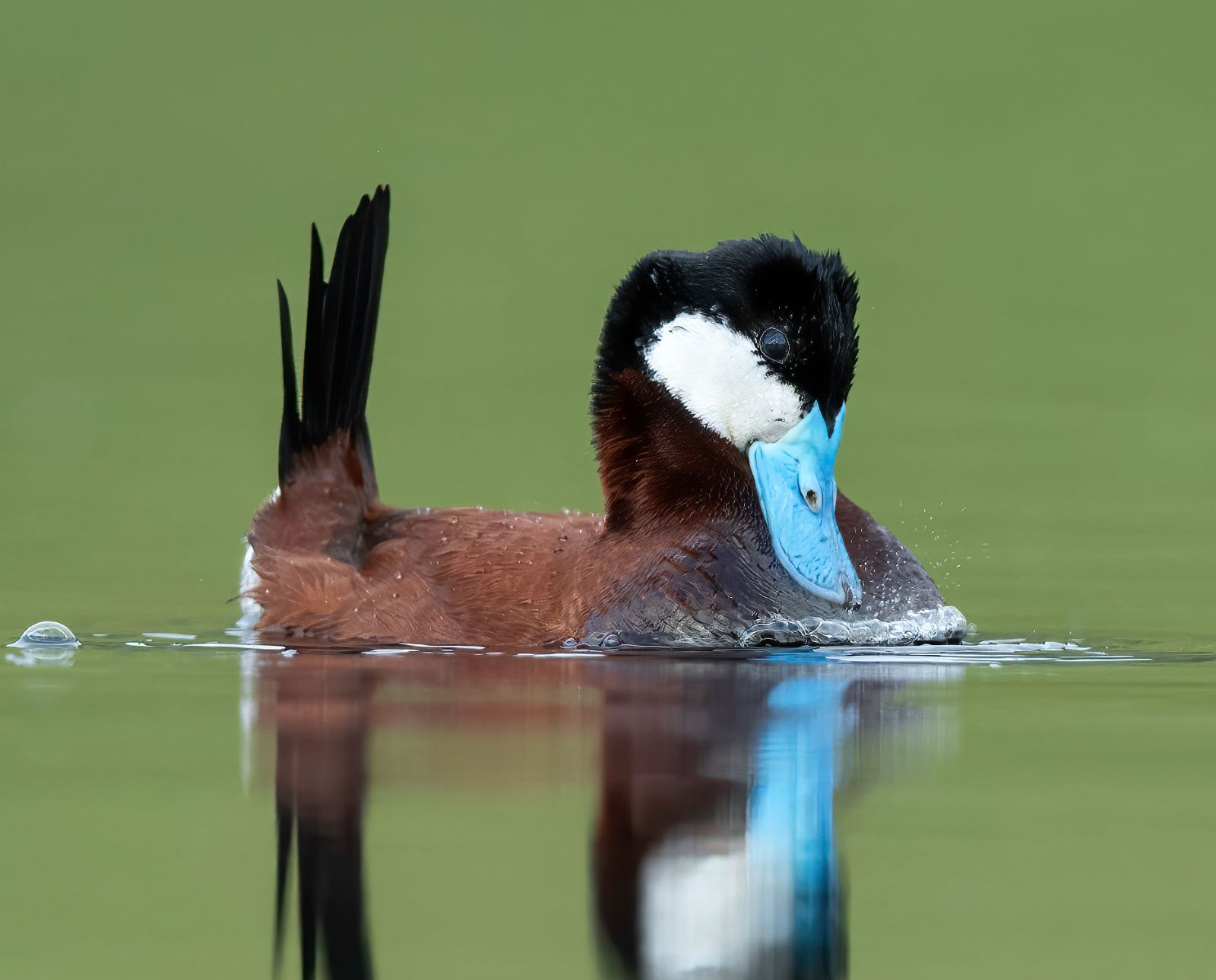
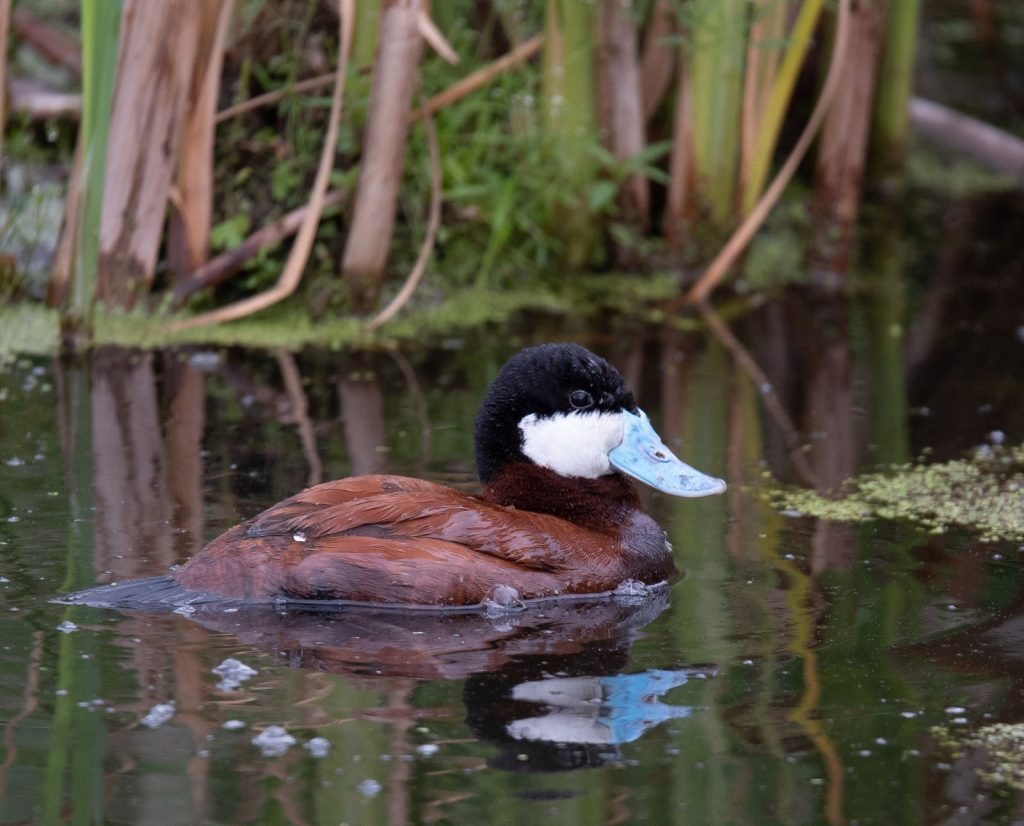
The ruddy duck is a small, compact diving duck known for its stiff upright tail, bright blue bill in males, and secretive behavior. These small ducks average 12 to 15 inches in length. Males have a black-capped head with white mask around the lower half of it and a blue bill tipped with black. Their body is a light mahogany with that straight-edged tail completely black.
Females are relatively drab with a slate grey colouration. They are often darker on the back and lighter on the bottom throughout most of their body. Even their black-capped head piece is more subtle, as though it’s faded over time. Male ruddy ducks bear a striking resemblance to another duck species called a masked duck, however, masked ducks are smaller than ruddies and are mainly found in Central America, South America, and the Caribbean.
These ducks have an average lifespan of about two to three years, though the oldest ruddy duck ever recorded was 13 years old. According to the Cornell Lab of Ornithology (CLO), this drake was found in Oregon in 1964 and had been banded in British Columbia in 1951.
Despite their small size, ruddy ducks are known to be outwardly aggressive toward other ducks, especially during breeding season. They have also been observed chasing small mammals that come near the shoreline (CLO).
Where Do Ruddy Ducks Live?
Within their range in North America, ruddy ducks live in a wide range of habitats including coastal bays, inland lakes, reservoirs, marshes, wetlands, and throughout smaller waters in the Prairie Pothole region, according to Ducks Unlimited (DU). They prefer freshwater areas containing dense vegetation.
Ruddy Duck Breeding and Nesting
Ruddy ducks participate in seasonal migrations that start in autumn when they leave their breeding grounds. They summer in and around the Great Lakes region as well as the Prairie Pothole Region and migrate as far south as Mexico and some Caribbean islands each fall (DU, CLO). Ruddy ducks migrate in small groups compared to other species of waterfowl.
According to DU, male ruddy ducks tend to migrate to breeding grounds before hens and they pair up shortly afterwards. Drakes begin to court hens in the spring, where a drake bobs his head up and down repeatedly, smacking his bill against his neck which creates a swirl of bubbles in the water (CLO). For the most part, ruddy ducks engage in monogamous behaviour, choosing one female during breeding season and staying paired with her for the entirety of it, though some males take on a more polygamous behaviour (DU).
Nests are built out of living and dead plant material over the surface of the water. Ruddy duck nests are a deep bowl shape, and the parents will often conceal the nest by weaving vegetation over top of it. The parents defend their nests aggressively. Female ruddy ducks lay a clutch of three to 10 large, white-yellowish eggs. Incubation takes roughly 20 to 25 days (DU, CLO). Ruddy ducks are also known to lay eggs in each others’ nests as well as the nests of other waterfowl nearby. According to the Audubon Society, this behavior is often called egg dumping or nest parasitism.
Ducklings are well developed immediately after hatching and take to the water soon after with their mother where they are able to dive and feed themselves. Often the drake is present as well, though they have almost no parental authority when it comes to raising the ducklings.
Ruddy ducks are inherently shy, and while there are plenty of them, it’s difficult to get a glimpse of this species due to their relatively secretive nature. Mother ruddy ducks tend to hide their ducklings away from view in and around cattails (CLO, Audubon Society). In most cases, ducklings are fully capable of flying by 45 days of age (DU).
What Do Ruddy Ducks Eat?
During the breeding season, ruddy ducks are prone to a more carnivorous diet consisting of aquatic invertebrates as well as midge larvae. During the autumn migration, they are known to have a more omnivorous diet, though they prefer only certain parts of aquatic vegetation (DU). Ruddy ducks are diving ducks that feed underwater by using their feet to propel themselves to the bottom, where they filter food through their bills (Audubon Society).
It’s not uncommon for ruddy ducks to bully other species of waterfowl out of a feeding area, especially while they are migrating from their breeding grounds to their wintering grounds.
Ruddy Duck Conservation Concerns
It is assumed that populations are much lower now than historical records prior to the twentieth century due to several factors including but not limited to overharvest, water pollution that can affect their food supply, as well as the destruction of nesting and breeding habitat. With that being said, ruddy ducks are considered a species of least concern and are protected by The Migratory Birds Convention Act in Canada as well as the United States Migratory Bird Treaty Act (Nature Canada).
According to Nature Canada, approximately 86 percent of the breeding population of the ruddy duck is located in the Prairie Pothole Region. The overall conservation of the Prairie Pothole Region’s unique habitat is a fundamental necessity to ensuring healthy ruddy duck populations continue to thrive.

Hunting Ruddy Ducks
There’s not one particular dedicated tactic for hunting ruddy ducks. However, if you can find where American coots hang out, there’s a good chance that you will eventually run into a few ruddies in the same location. The fact that ruddy ducks are renowned for being overly aggressive toward other waterfowl species has, in my experience, held true through personal observation.
Read: Decoying Diver Ducks On A Budget
Unlike species such as American wigeon or black ducks, ruddy ducks are relatively impartial to what species of decoys are deployed. However, something worth noting is that I’ve never had them show interest when I use a spread of several dozen decoys. My theory is that they don’t like to compete with other larger ducks for food if they don’t have to.
Don’t expect big flocks of ruddy ducks to come into your decoys. More often than not, encounters with ruddy ducks are incidental rather than intentional, making them a species most hunters take opportunistically rather than target directly. These ducks tend to appear in pairs during the migration and seem to be exceptionally predisposed to landing on the outskirts of a small spread of puddle duck decoys like mallards or wigeon in the same way that teal sometimes do, though they’re not nearly as fast in the air.
Ruddy ducks, being the size that they are, are best shot with No. 4 nontoxic shot or smaller.
Eating Ruddy Ducks
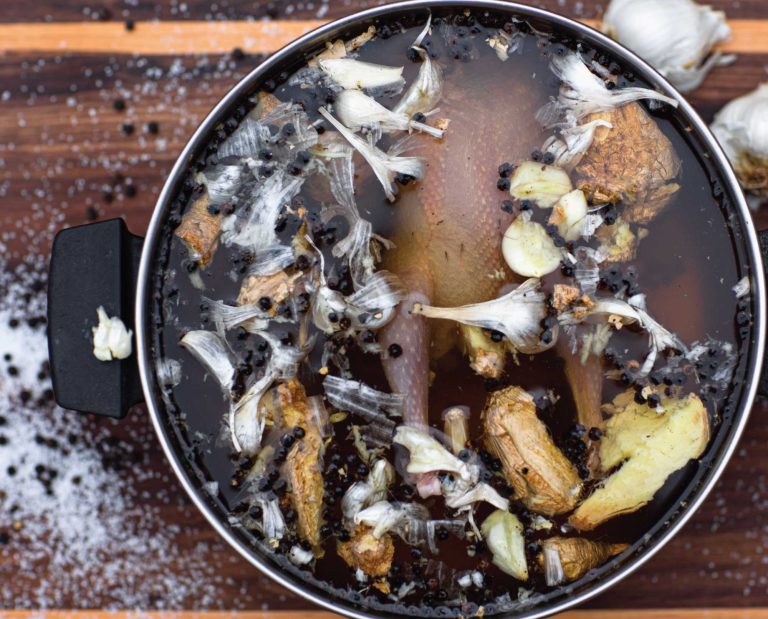
Because of their mostly carnivorous diet, their skin and fat are light to dark orange in coloration and often smell just like the food that they eat. These ducks rank low on the edibility scale, and I have to assume most ruddy ducks are shot due to misidentification. Skinning these ducks entirely and brining the meat overnight in a salt/brown sugar mix will help to improve the flavor of the meat. If you’ve ever worked with merganser meat, you’ll understand.
The ruddy duck may not carry the same reputation as other waterfowl species, but it is closely tied to the health of wetlands across North America. As pressures on habitat and water quality continue, even common or “least concern” species depend on healthy, intact ecosystems to persist. Paying attention to species like the ruddy duck is a small but meaningful way to stay connected to the broader conservation challenges shaping the future of wetlands and upland environments.