

Dill Pickle and Rabbit Pierogi
Stretch rabbit meat further by making dumplings for the perfect wild comfort food
Rabbit and pierogi make so much sense together that it feels strange that we don’t see it more often.
After all, Eastern European food traditions have always been deeply connected to both hunting and foraging. Rural families across Poland, Ukraine, Hungary, Slovakia, and beyond historically relied heavily on wild mushrooms, preserved vegetables, cultivated root crops, dairy, and whatever wild proteins happened to be available nearby. Rabbit, hare, grouse, partridge, duck, and other small game were all celebrated and made their way into home-cooked dishes. Pierogi themselves fit naturally into that world, too.
Modern North Americans often think of pierogi primarily as comfort food; soft or crispy dumplings stuffed with potato and cheese, usually served under a pile of onions, bacon, and sour cream. Cozy winter food.
Historically though, pierogi were a practical food. Like many dumplings from around the world, they evolved as an efficient way to stretch modest ingredients into something hearty, filling, and deeply satisfying that could feed the whole family.
Rabbit fits beautifully into that tradition. A single rabbit saddle, minus the legs, doesn’t necessarily make for an especially dramatic centerpiece meal on its own. But once pulled off the bone and combined with caramelized onions, sour cream, herbs, and dough, it suddenly becomes something far more substantial and comforting. Pierogies reward modest ingredients. That’s part of their irresistible charm.
Rabbit also possesses the right kind of flavor for dumplings. Strongly flavored meats can sometimes dominate fillings entirely, while very bland meats risk disappearing into the background. Rabbit sits comfortably in that middle ground; savory and distinctly meaty, but still mild enough to absorb the surrounding flavors.
And yes, that includes dill pickles. At first glance, dill pickle pierogi might sound like a vague novelty or suspiciously TikTok-friendly. In reality though, they make perfect sense here.
Eastern European cuisines have long known this about rich foods: starch, butter, onions, and dairy desperately need acidity to remain balanced and interesting. That’s why pickles, sauerkraut, soured cream, mustard, vinegar, and fermented vegetables appear so frequently throughout the region’s cooking traditions. Without those sharp, sour elements, many otherwise comforting dishes would quickly become overwhelmingly heavy.
The dill pickles in these pierogi aren’t there to be quirky. They brighten the filling, cut through the richness of the sour cream and onions, and provide small bursts of acidity that make the rabbit itself feel more vibrant and savory. The pickle brine helps too, subtly seasoning the filling while adding even more tang and depth.
The texture of rabbit also lends itself particularly well to dumplings. Once cooked, rabbit meat shreds and chops very easily into small, even pieces that distribute beautifully throughout fillings. It avoids the stringiness that some larger game meats can develop, while remaining much more interesting texturally than ground meat.
Rabbit saddles are especially useful here because they allow you to maximize the entire middle section of the animal, including the rib meat if you’re willing to take the extra time picking it clean. Dumplings like pierogi historically emerged in cultures where wasting edible meat simply wasn’t acceptable, and there’s something deeply satisfying about seeing that care and attention directly improve the final dish. The more carefully you process the rabbit, the better the pierogies become.
That sort of nose-to-tail practicality is part of why rabbit and pierogi feel so naturally compatible in the first place.
Neither belongs to the world of showpiece cooking. Rabbit, despite occasional attempts by chefs to frame it otherwise, is not especially luxurious, and pierogi were never designed to be elegant. Both belong more comfortably in the world of practical cooking; meals built around thrift, seasonality, preservation, and making careful use of available resources.
Some of the world’s greatest comfort foods came about specifically because they were designed to make modest ingredients feel complete and satisfying. Pierogi absolutely belong in that category. Adding rabbit to the equation simply pushes the whole thing even further in the right direction.
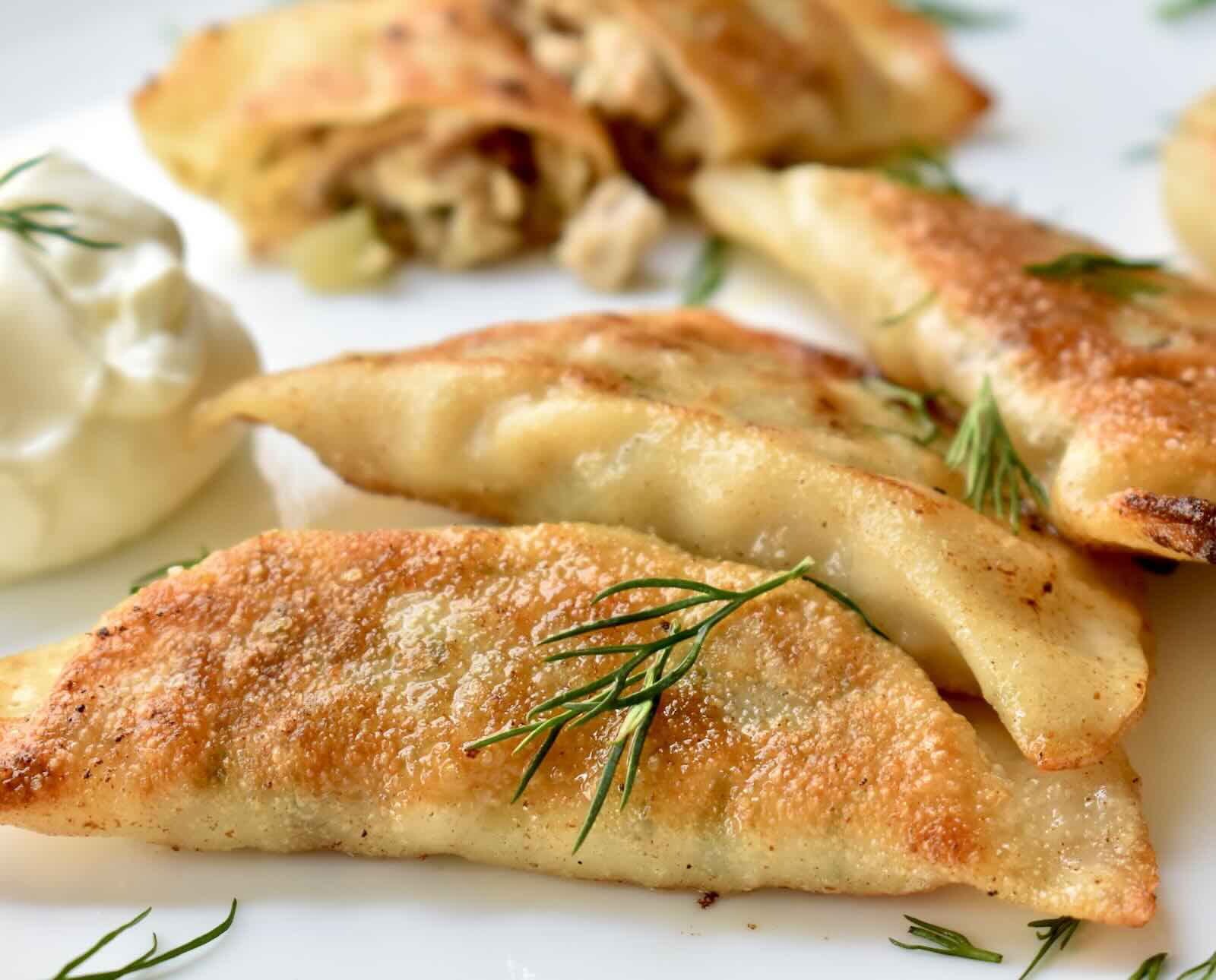
Served hot with caramelized onions, extra dill, sour cream, and browned butter, these pierogi feel deeply familiar even if you’ve never eaten rabbit in a dumpling before. Which, to be honest, might be the clearest sign that the pairing made sense all along.

Dill Pickle and Rabbit Pierogi
Ingredients
Method
- Preheat oven to 400°F.
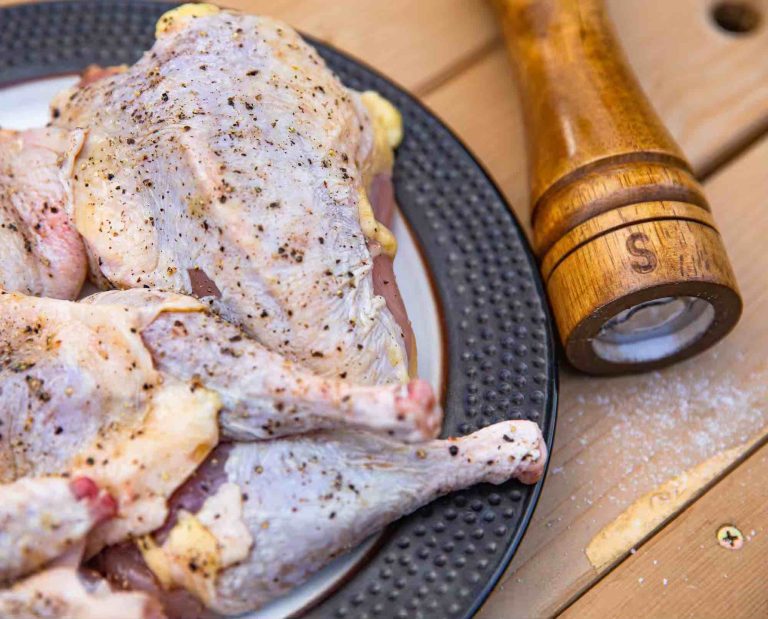
- Season rabbit well with salt and pepper. Rub with oil.
- Transfer to baking sheet and roast for 30 minutes, until browned and just cooked through. You’re not looking for fall-apart, just cooked and lightly roasted.
- Meanwhile, melt the butter in a skillet over medium-low heat. Add the sliced onion and pinch of salt. Cook for 20-30 minutes, stirring often, until the onions are deeply golden and soft.
- Remove the rabbit from the oven and let cool slightly. Remove all meat from the bones (either discard the bones, or simmer for several hours for some bonus rabbit stock). Chop or shred the meat into small, even pieces (no long shreds). Set aside.
- In a bowl, combine the chopped rabbit, caramelized onions, chopped dill pickles, pickle brine, fresh dill, and sour cream. Season with black pepper and adjust salt to taste (pickles bring salt already). Chill slightly before filling.
- Make the dough by mixing the flour and salt in a large bowl. Add egg, water, and sour cream. Knead for about 5 minutes, or until smooth. Cover and rest for about 20 minutes.
- Roll dough thin (about 1/16”). Cut into 3-inch circles. Add about 1 tablespoon of the rabbit filling to each. Fold and seal tightly (press edges firmly).
- Bring a pot of salted water to a boil. Add the pierogi for 3-4 minutes, until they float. Remove and drain. Enjoy as-is, or fry for crispy pierogi.
- Melt the butter over medium-high heat in a skillet. Add the sliced onion and cook until onions are crispy and browned. Add the boiled pierogi and lightly crisp both sides.
- Serve with browned butter, onions, extra sour cream, and optional extra dill. Enjoy!
Nutrition
Notes
- Roast whole (or halved) rabbit at 400°F for 35–45 minutes
- Legs will take slightly longer—cook until tender