

Pekin Ducks: Raising America’s Favorite Meat Duck
Learn about Pekin duck history, egg production, lifespan, temperament, and why they’re one of the best duck breeds for homesteads
Pekin ducks are the most popular domestic duck breed in North America and among the world’s most widely raised meat ducks. Known for their rapid growth, calm temperament, excellent meat production, and surprisingly good egg-laying ability, they have become a favorite for commercial farms and backyard homesteads alike. Here’s what to know about their history and care, which might help you decide whether Pekin ducks are right for your flock.
What is a Pekin Duck?
During the years that I’ve been a homesteader, the art of deciding which domestic duck breeds we keep and why have been in a constant state of evolution. Sometimes, in order to figure out what you want, you have to go learn what you don’t want. Nothing could be truer than the process of figuring out how to keep ducks that will put on weight and ultimately end up on the table. Little did I know, I didn’t need to look any further than the classic Pekin duck.
| Trait | Details |
| Origin | China |
| Purpose | Meat and egg production |
| Average Weight | 8-12 pounds |
| Egg Production | 150-250 eggs/year |
| Lifespan | 5-12 years |
| Temperament | Calm, friendly, docile |
| Flight | Flightless |
| Best For | Homesteaders looking for a dual-purpose duck that lays eggs and can be raised for meat |
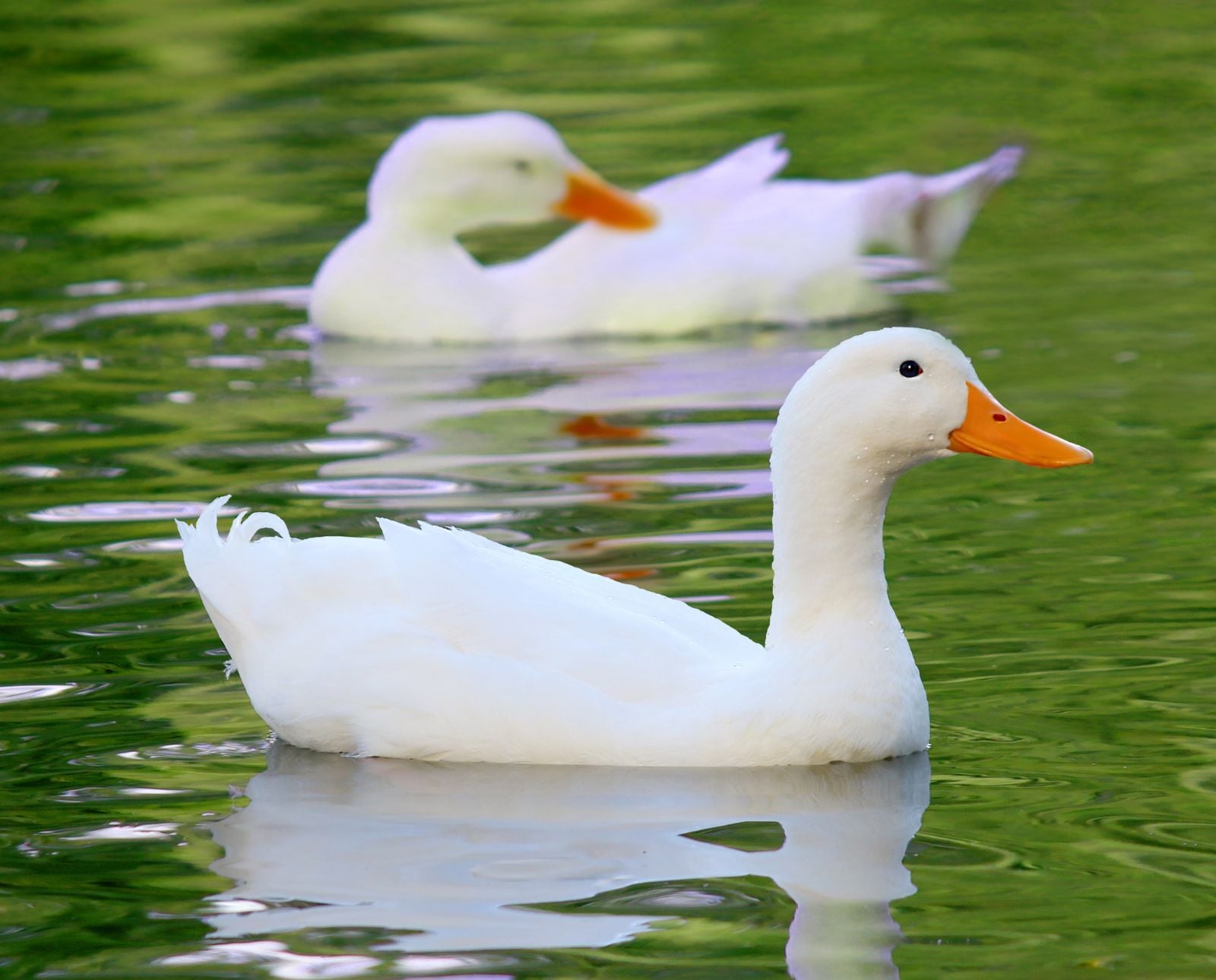
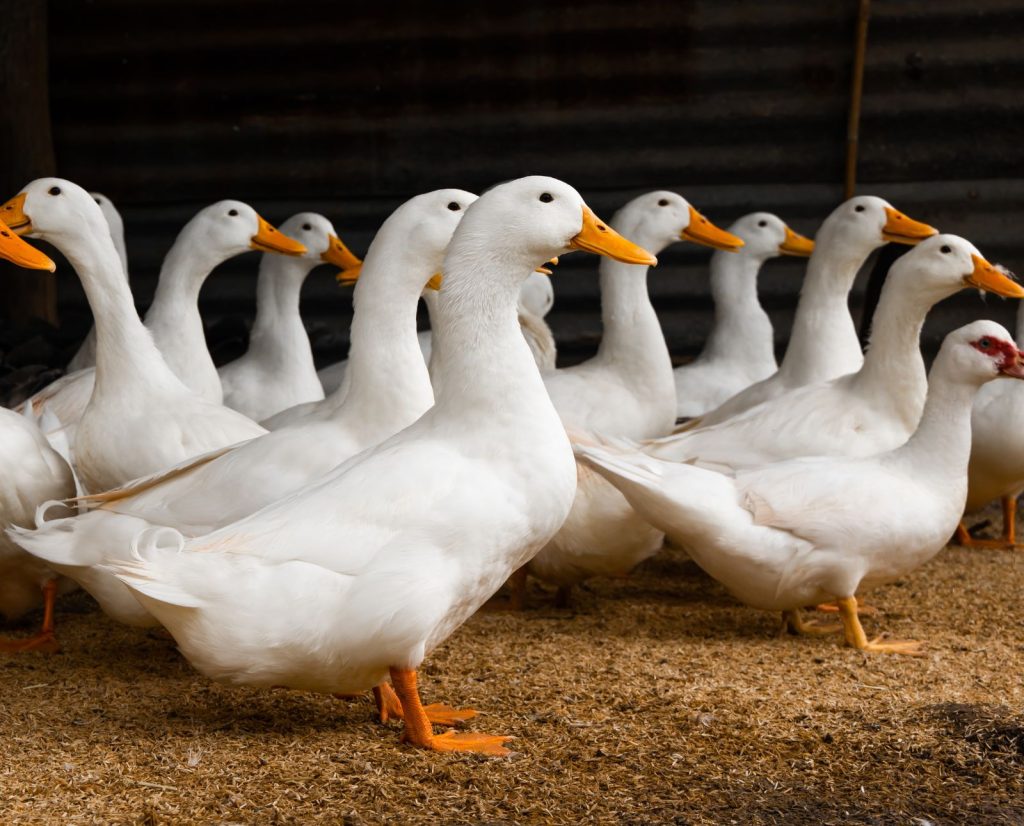
Pekin ducks are a large breed of domesticated waterfowl that are what most folks imagine when they picture a stereotypical farm duck. The average Pekin hen weighs roughly eight pounds, with the drakes weighing an average of nine pounds, though they can sometimes reach twelve, making them ideal for those who want to raise meat ducks. In fact, it’s this exact trait that has made this breed one of the most commercially raised meat ducks in history.
Pekin Duck History
Donald Duck is widely believed to have been modeled after a Pekin duck, thanks to his white feathers, orange bill, and orange legs. However, this breed did not originate in North America. They were developed in China, half the world away. Some records describe this duck as far back in history as the late 1300s before being imported to Great Britain in 1872. If their name sounds slightly familiar, it’s because as these ducks’ gained popularity, they were eventually named after the Chinese city of Peking, which later was renamed Beijing.
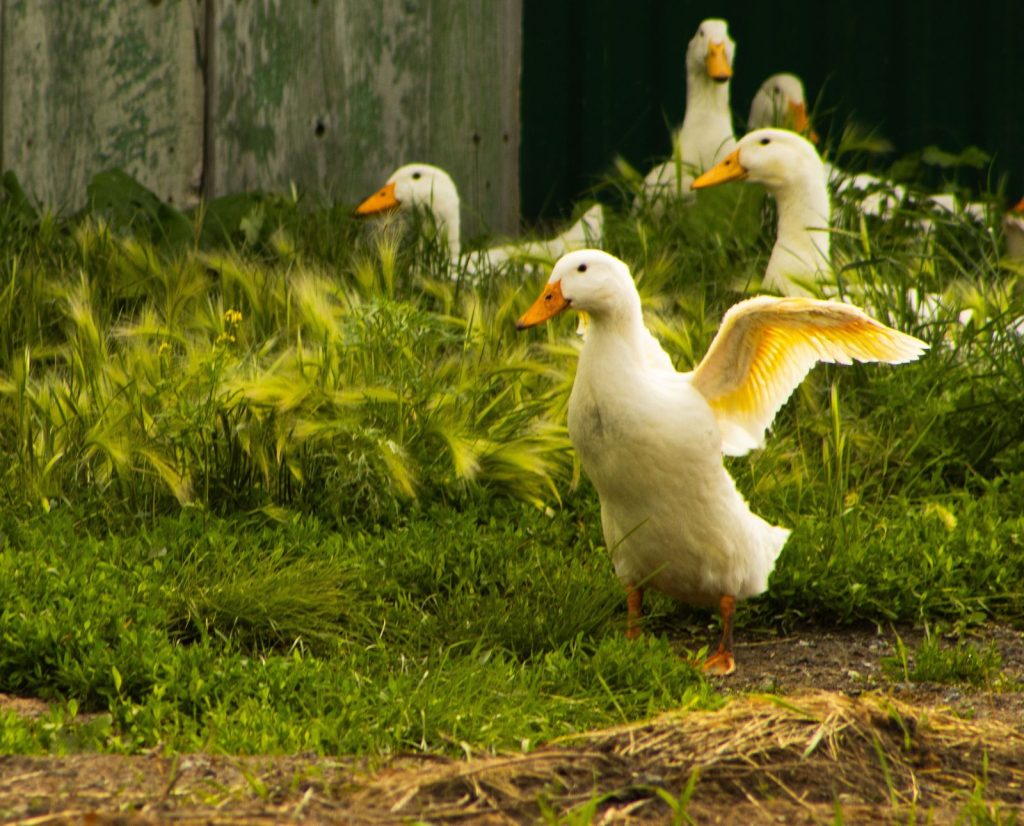
The very first Pekins arrived in America in 1873 where they continued into different domestic variations through the ages. These ducks were the mainstay in waterfowl husbandry for a very long time. Even so, the consistency, or what could be thought of as a breed standard, that makes them unique still stands true: Pekin ducks are white with a yellow bill and orange shanks that run the entirety of the legs. Any variations away from what is considered to be the gold standard, including size, are regarded by many as defects in the genetic lineage of the breed.
Pekin Duck Egg and Meat Production
So how does the mighty Pekin fair as an asset on the modern-day homestead for those who want the classic farm duck aesthetic? While these birds were ultimately modified through the centuries as a meat bird, they have become so much more.
Pekin ducks are very docile, people-friendly birds. In some cases, they can be referred to as a dual-purpose duck. Their ability to put on pounds in a relatively short amount of time is often the main focal point in conversation, but it should also be noted that these birds are also capable of laying between 150 to 250 eggs per hen per year, which puts them in the same class as many of the finest domestic duck breeds renowned for egg production. Oddly enough, it’s been my experience that egg production can vary between individuals from different bloodlines, so while one Pekin hen might lay over two hundred eggs in a calendar year, another from the same flock may only lay one hundred.
Read: Quail or Chickens: Which Domestic Bird is Right For You?
As with many other breeds of domestic ducks, egg laying generally starts when Pekin ducks are between five or six months of age. The hens stop laying while molting and during the winter due to the low hours of sunlight.
Pekin Ducks On The Homestead: Free-Ranging and Raising Young
Pekin Ducks are fantastic foragers if allowed to free range, favoring all different kinds of slugs, snails, worms, beetles, and various other insects. It’s also important to mention that their diets often include plenty of greens as well. Because the mighty Pekin doesn’t discriminate between fresh blades of grass and the tasty arugula growing in your garden, be sure to fence off anything that you don’t want them to get into.
Because of their size, Pekin ducks are not capable of flight, and frankly I think that’s a good thing.
Now, one aspect about these particular domestic ducks that I have always found questionable was their ability to brood, hatch their own eggs, and be good mothers to their ducklings. In fact, I had been strongly cautioned about even attempting to let Pekin ducks raise their own, with second-hand accounts of disaster because the “mothering” instincts had been bred out of them. As it turned out, like with many species of domesticated fowl and poultry, some individuals have that mothering instinct in them, and some don’t. Giving them the right conditions and the grace to try, and if necessary, to try again, is imperative. Older hens are also more likely to become broody and make better mothers.
Raising Pekin Ducks: Things Homesteaders Should Know
When investing in Pekin ducklings, an important factor to take into consideration is that these ducklings are fast-growing when compared to other breeds of domestic waterfowl. At eight weeks old, they are fully feathered and will be nearing market weights if not already there. This translates into the need for having proper housing ready for them much earlier than you may realize.
Because the Pekin duck puts on a lot of weight very quickly, that can translate into several different health issues. The reality is that many varieties of birds that are specifically bred for meat production often aren’t meant to live long lives. This domestic duck breed is a pleasant exception, with an average life expectancy of five to twelve years, but this is also dependent on the bloodline, diet (they can overeat if not supervised), and internal defects.
When purchasing birds for your own homestead, it will serve you well to be diligent about observing how the birds are treated in the place from which you are buying them. Don’t be afraid to ask questions pertaining to the health of their flock, whether they’ve had ducks that have died in ways that seemed random, and how many times a day their birds are fed. If the flock appears obese, unhealthy, or shows any sign of otherwise being stressed, consider finding another source to buy your adult birds or ducklings from.
Breeding and Selling Purebred Pekin Ducks
Depending on what your long-term goals are for having Pekin ducks on your homestead, you may want to consider selling fertilized Pekin eggs for the purpose of passing purebred lineages along. I have bought a dozen fertilized Pekin eggs for thirty dollars and done so happily knowing that what I was getting had come from a reputable source that actually cared about the bloodline. True, Pekins have changed in various ways throughout the centuries, but all of the major attributes that make this domestic duck breed what it is are of value to other homesteaders.
Read: Raising Domestic Quail For Profit
So, if you’re thinking about selling eggs, ducklings, or adult Pekin ducks as purebreds, you’re going to want to take preventative measures on your homestead to see to it that your hens can’t breed with any drakes that could spoil the gene pool. Separating your ducks is essential to this, as is making sure that you have enough hens from other lineages so that inbreeding doesn’t become an issue.
Are Pekin Ducks Right For Your Homestead?
Pekin ducks are an excellent choice for new and experienced homesteaders alike. Their calm temperament, rapid growth, dependable egg production, and ability to forage make them one of the most versatile domestic duck breeds available. Whether your goal is producing meat, collecting eggs, or simply enjoying a flock of friendly birds, Pekins remain one of the best all-around choices.
Initially, Pekin ducks were a breed that I had written off as uninteresting. I had also read second-hand accounts of health issue horror stories within this breed, a couple of which had merit, but most of which did not. But as I learned more about this breed, I concluded that I had been wrong about it. By raising Pekin ducks on your homestead, you’re not only maintaining a certain level of self-sufficiency, but also taking part in something that people across the world have been engaged in for centuries. Frankly, that’s pretty cool to think about.