

Goose Gizzard Grits ‘n’ Gravy
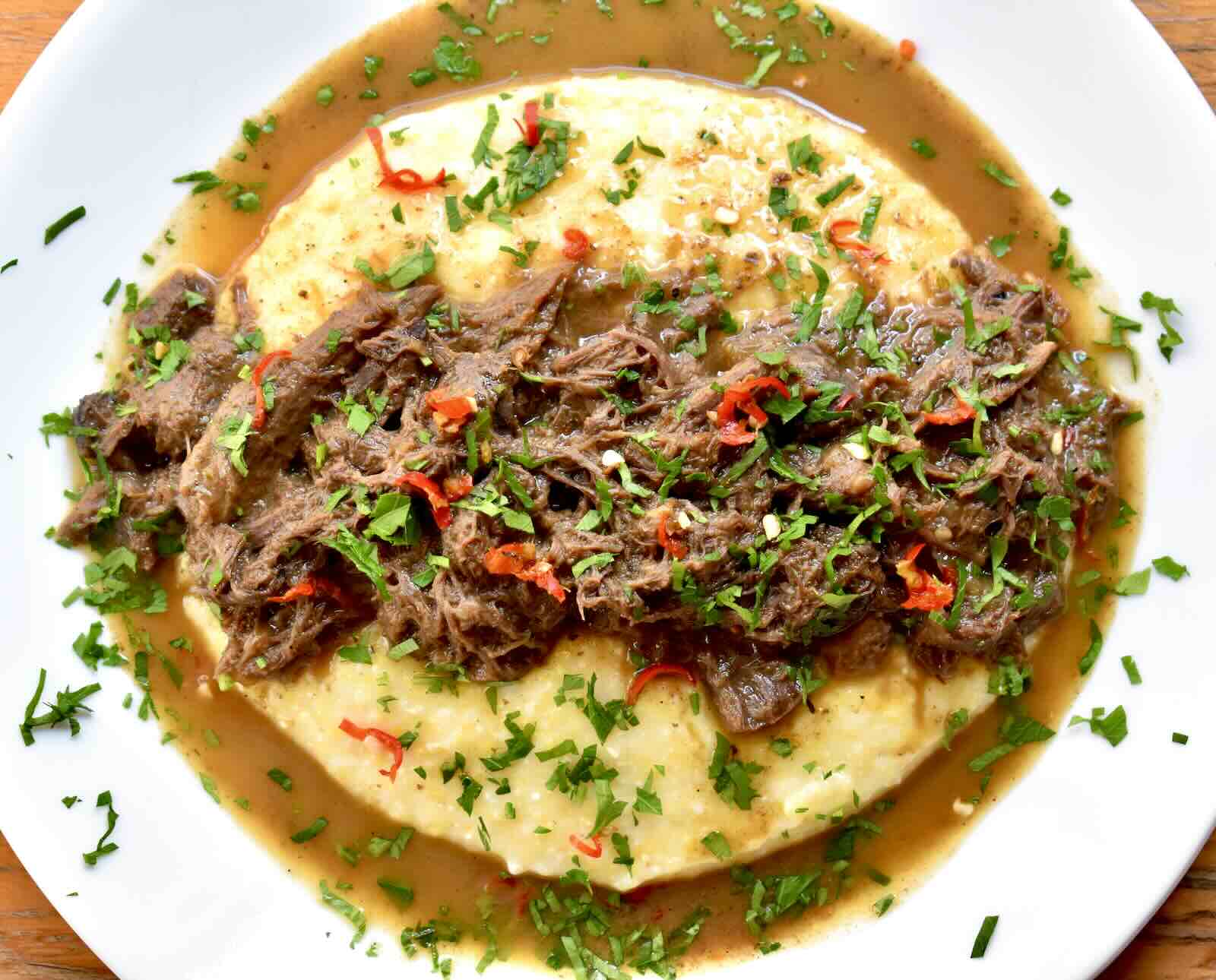
Smoky, cheesy grits are topped with a meaty gravy made from goose gizzards
I’ve always been a gizzard fan. As a child, my dad and I would “fight” over the roasted turkey giblets during the holidays. I think we saw it as a rare bonding activity in the kitchen, where we often didn’t see eye-to-eye. It was a rare treat that showed up only once or twice a year, when we’d buy a turkey that came with a pouch containing a heart and gizzard. We’d just roast them in the pan with the turkey, and I’d gnaw on the chewy and springy organs, to the disgust of my sisters.
Becoming a hunter as an adult meant that I suddenly had access to a near-endless number of gizzards, whether they be from grouse, doves, ducks, geese, or turkeys. I had enough to begin experimenting with them as an ingredient in their own right, rather than just a bonus chewy morsel.
I also learned that they don’t have to be chewy!
Gizzards are muscular organs, acting as powerful grinders in birds (as well as crocodilians, earthworms, some fish, and a few crustaceans) that help crush seeds to make them more digestible. Birds swallow seeds whole, along with tiny stones and grit, which all get passed through the stomach, or proventriculus, and into the gizzard, or ventriculus.
Inside the gizzard, the seeds are then crushed, with the help of the grit, between two tough and fleshy grinding plates, backed by robust muscles that contract, pulverizing the seeds into smaller, more digestible pieces. Think of a gizzard like a mortar and pestle, breaking down whole spices with the help of some coarse salt.
The resulting paste and fragments are then passed through the intestinal system, where nutrients are extracted by digestive juices. In some carnivorous birds, like owls, the gizzard also helps to compact indigestible items like bones and fur, which form tight pellets to be regurgitated.
Gizzards can be useful hunting tools. When ruffed grouse hunting, I’ll often look for small deposits of gravel where birds are likely looking to stuff their gizzards along with their morning meal. You can also break gizzards apart post-hunt, checking their contents to see what they’ve been eating. This can help you find more animals later–are there lots of alder buds in the gizzard today? Then focus on hunting in alder copses tomorrow!
All of that muscular action in the gizzard is the culprit behind its notorious chewiness. Like other hard-working muscles in the body (think neck or shank on a mammal or wings on waterfowl), constant movement and effort lead to toughness. But, much like those aforementioned muscles, gizzards do become tender if cooked long enough.
Braising or pressure cooking the gizzards for a good amount of time (length depends on species and size of species–a greater Canada goose gizzard can be the size of a softball, where a dove gizzard is the size of a thumbnail) will wrestle any gizzard into submission.
For this recipe, I continued cooking them past the point of tender submission, all the way to the point where I could shred them into a meaty gravy, perfect served over smoky, cheesy grits.
Before cooking the gizzards you’ve brought home, remember that they aren’t just muscles, but also contain inedible grinding plates, as well as a fair amount of grit. This must all be removed before cooking. There is a way that you can remove both of the main muscles whole, but it is a bit messy, finicky, and time-consuming if you’re processing a lot of them.
Hank Shaw and I were chatting about that, and both agreed that this method is much easier, resulting in very little meat loss:
- Find the two lobes of moon-shaped muscle on either side of the grit sack
- Slice both of those muscles off the sack, staying on the outside of the grinding plates (if you see the yellowish grinding plate where you’re cutting, simply move your blade further in a touch)
- Trim off any thick silverskin by slipping the tip of your knife underneath it and sliding it between the membrane and the muscle
From there, gizzards can be corned, pickled, braised, or fried!

Ingredients
Method
- Add the gizzards, beer, stock, onions, garlic, and spice blend to a slow cooker and cook on low for around 12 hours, or until gizzards are soft and tender and can shred apart.
- Transfer the gizzards to a bowl and turn off the slow cooker, saving the liquid. Add the butter to a large pot over medium heat. Once melted, add the flour, whisking it every 10-30 seconds for 4 or 5 minutes. Slowly ladle the liquid from the slow cooker into the roux in the pot, whisking it in as you go. After half is added you can dump the rest in. Turn heat down to medium low.
- Using a fork, smash the gizzards, shredding the meat up, then add the meat to the gravy in the pot. Mix well.
- Add the vinegar, sugar, Worcestershire, and cream. Taste and season with salt, pepper, and more spice blend to taste. Cook until the gravy becomes thick and silky.
- Meanwhile, cook grits per package instructions. Near the end, whisk in the shredded cheese (you can also add butter for more richness).
- Serve the gravy/stew on top of the grits and garnish with sliced chilies and chopped parsley. Enjoy!