

Unconventional Duck Hunting Tips That Actually Work
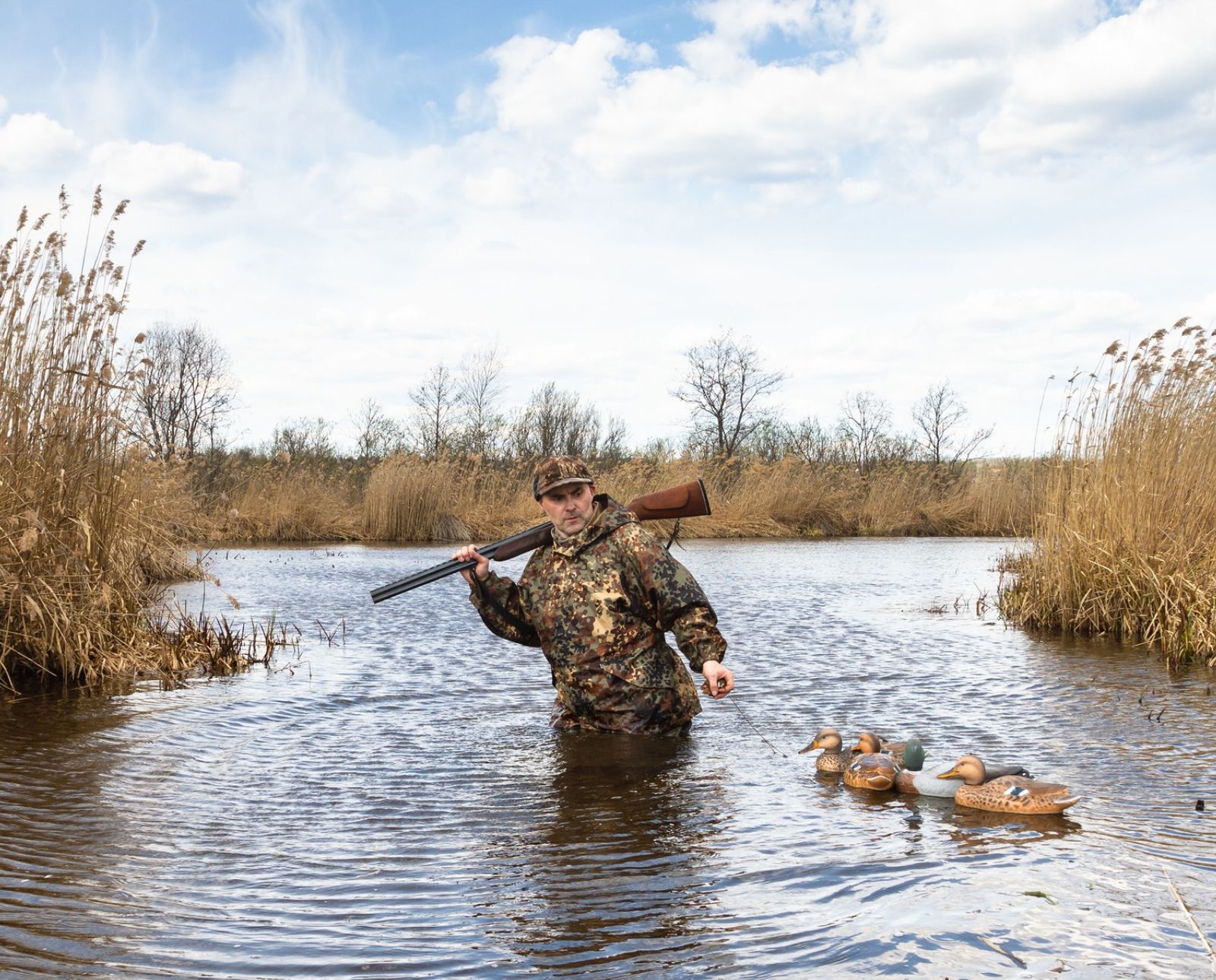
From homemade jerk rigs to unconventional diver duck setups, these creative waterfowl hunting tactics can help put more birds on the table
Every duck hunter has a few tricks up their sleeve. Some involve expensive gear or elaborate decoy spreads, while others are so simple that you wonder why you hadn’t thought of them sooner. Over the years, I’ve discovered that some of the most effective duck hunting tactics are also the most unconventional.
From homemade jerk rigs that bring motion to a lifeless decoy spread to using goose decoys to attract wary mallards, thinking outside the box can make a real difference in the field. Sometimes, a little creativity is all it takes to turn a slow morning into a successful hunt.
Below are four unconventional duck hunting tips that have earned a permanent place in my bag of tricks. They’ve made enough of a difference in my waterfowling experience to leave a lasting impression, not to mention plenty of ducks in the freezer. I probably shouldn’t share them, but I’ll do it anyway, despite my better judgment.
Homemade Jerk Rigs to Add Motion to Duck Decoys
Commercially made jerk rigs are one of the biggest game changers that you could add to your decoy setup, but it takes very little effort to make your own. When you do, you then have the ability to customize it however you see fit. For example, up until recently, I had a homemade rig that extended out thirty feet to a large three-way swivel, with each eye connected to another thirty feet of line, both of which ended with anchors. Each line could accommodate five decoys, which greatly improved the amount of motion I created from one jerk rig. The difference was evident by how many species of puddle ducks would end up in the bottom of the canoe at the day’s end.
The basic concept of the jerk rig is to give decoys motion when they otherwise would not be capable of it. Jerk rigs are especially helpful when the wind is next to nonexistent. They’re based on a simple concept that is easily altered to fit various needs, so take a couple steps back and see what you can come up with to maximize your jerk rig’s potential.
When you’re coming up with your own jerk rig design, I want to spare you the grief ahead of time by offering the sage advice of figuring out the best way to store your new rig prior to hitting the water. Twist ties can get you through your preliminary trials ahead of the season and will keep your rig compact. If you need to keep an intricate rig divided into several sections, consider using the same sort of snap swivels that you would for hooking your decoys onto a commercial rig. They’re cheap to buy and pretty durable.
DIY Jug and Bottle Decoys for Bigger Decoy Spreads
Using empty, rinsed-out bleach jugs as duck decoys is a tactic that snuck up on me about five years ago. In the years between now and then, I’ve come up with a couple of ways to really get the most out of this cheap and effective way to increase my spread.
The basic idea is to use the best of your decoys on the outer edge of your spread, and to use the large white jugs (or similar large bottles) as dummy decoys to increase the perceived appearance of the size of your fake flock of birds. Incoming ducks, usually divers, see the details of the outside decoys while the white jugs give the impression of far more birds while being the furthest away from the incoming waterfowl.
Read: Tips for Late Season Duck Hunting
A huge benefit to this slight is actually painting the jugs in a black-and-white fashion that roughly resembles the birds that you’re chasing. Maybe add a little bit of charcoal grey in there, too. More than this, it’s important to understand how one of these bottles will actually float on the surface if nothing is done to stabilize it—that is to say, very, very unnaturally—but this is easily remedied. Take the lid off and fill about one-third of the jug with gravel. Then fill up the jug with spray foam, making sure that the gravel is on the bottom below where you intend to spray paint. Doing so will greatly improve the way that the bottles sit in the water and move in breezier conditions, adding more life to your spread as well.
Perhaps my favorite aspect of using this method is that I tend to hunt with a few friends who have a track record of putting a lot of pellets into my good decoys. Utilizing repurposed jugs that cost me next to nothing mitigates the overall loss from being shot up, too. But make no mistake about it, if divers are your bread and butter, this is a fantastic way to increase the appeal of your spread, especially on bigger bodies of water, and especially if you’re on a budget.
Hunting Diver Ducks From a Ladder
This idea came to me from reading a great article about fly fishing for giant cutthroat trout in a faraway paradise and quickly proved effective in my neck of the woods, especially for species like long-tailed ducks on the Great Lakes. Some locations offer the ability to wade out into the lake more than one hundred yards before you’re belly-deep in water, but because of these shallow conditions, the birds never come within shooting distance of the shore. They know better. Oddly enough, as soon as I dragged a step ladder out and set myself up on it, the ducks couldn’t have cared less that I was out there and came right in. Chaos ensued, birds hit the water, and my success ratio climbed considerably.
This goes without saying, but safety is paramount when thinking about leaning on a step ladder on some sandbar of a wide-open expanse of water. Always tell someone where you’ll be hunting and when they should expect you to get home. If you can, hunt with a buddy when you plan to employ the ladder method. Anchor the legs of the ladder to the lake bottom; I usually use shoreline rocks that are heavy enough that they won’t falter in a wind. I wear a drab-colored life jacket, too.
I know what you’re thinking—with a getup like that, how are the ducks going to be convinced to come in? Well, most divers don’t know the difference between you and a rock, so many shooting opportunities still arise.
One more note on this, it’s imperative that you have a means to actually retrieve the birds that you’re shooting. I tend to deploy this whole ladder method in places where I can wade back to a kayak, which I use to retrieve the birds once I’ve grounded them. A tender boat is all the better, even if it’s a tinner with a 9.9HP on the back.
Using Goose Decoys to Attract Mallards
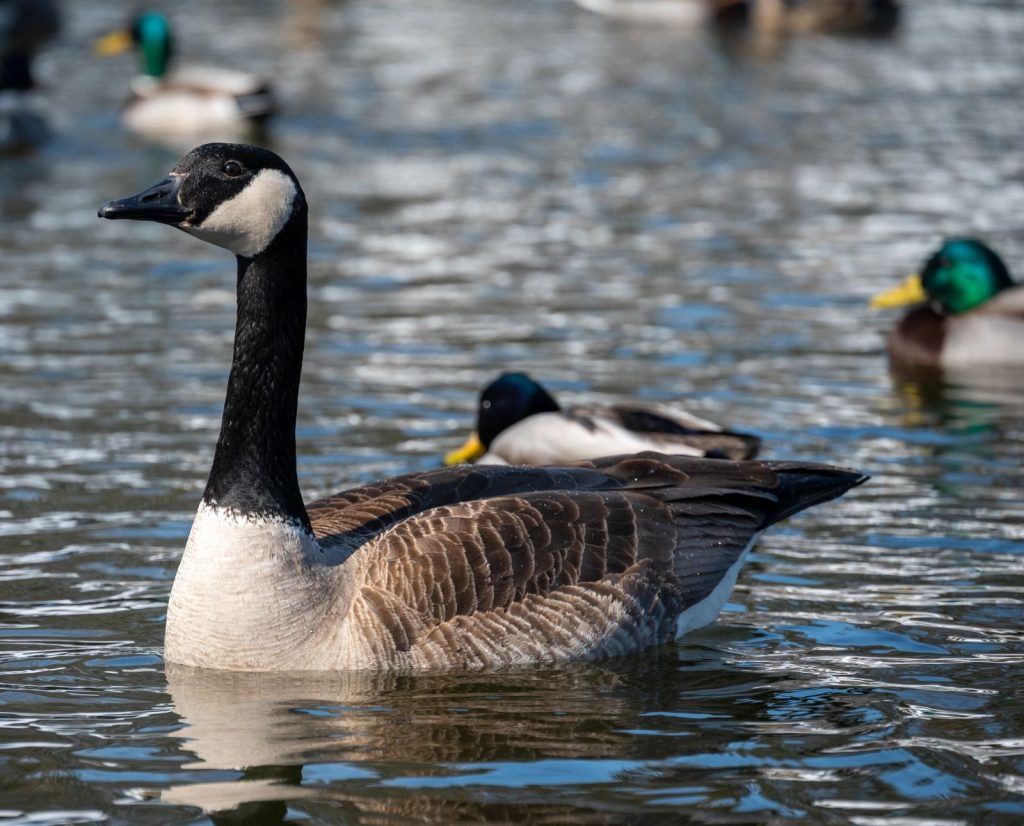
Some folks know about this already, but for those who don’t, the best mallard decoy that you could possibly add to your spread is a floating goose, or better yet, several.
This plays perfectly into the entire confidence decoy concept. Mallards and Canada geese have this strange relationship where the geese couldn’t be bothered by the company of ducks, yet the ducks feel that much more secure being with the outskirts of the geese because the geese will sound the alarm long before the mallards are aware of the danger.
For this reason alone, and especially when I’m hunting in marsh areas, I have plenty more goose decoys than mallards. In fact, the dominance of geese in my area is so prominent, I can conduct successful hunts simply by deploying a dozen floating geese with a half dozen motion mallard decoys on the outskirts and have birds come in during peak hours without issue, and despite the added pressure from other hunters close by. Mallards simply feel that much safer when they’re around geese.
With all of this being said, I’d be a terrible educator if I didn’t mention that if your hunting spots have gone stagnant and new birds aren’t moving through, the ducks will become wise to your act after a couple of hunts. If you’re hunting the exact same place each time and with the same layout, don’t be surprised if you start to notice ducks flaring. It doesn’t take them long to get wise to your act.
The only thing that limits us is our level of creativity. Unleash yours this hunting season and put more ducks on the table and more memories to cherish in your mind.