

Nasal Discharge in Dogs: Causes, Symptoms, and When to See a Veterinarian
Veterinarian Joe Spoo explores the causes of nose injuries in dogs, including foreign bodies like sticks and grass awns
Nasal discharge in dogs can range from a minor irritation caused by dust or pollen to a serious injury involving a stick, grass awn, or other foreign object lodged in the nose. Hunting dogs are especially prone to nose injuries because they spend hours pushing through heavy cover with their noses leading the way. Understanding the causes of nasal discharge in dogs and knowing when veterinary care is needed can help keep your dog healthy and hunting all season long.
What Causes Nasal Discharge in Dogs?
Nasal discharge in dogs can be caused by environmental irritants, allergies, infections, nasal trauma, or foreign bodies lodged within the nasal passages. Hunting dogs face an elevated risk because they regularly encounter dust, grass awns, sticks, seeds, and dense vegetation while working in the field. Determining the cause of the discharge is the first step in deciding whether simple home care or veterinary treatment is needed.
Recognizing the Severity of Nose Injuries in Dogs
If you run hard-charging dogs long enough, you are guaranteed to encounter issues with their nose. These can range from minor irritation to a severe trauma related to something jammed up the nose. Understanding how to recognize these various concerns, and more importantly how to address them, is a vitally important component to keeping your pup in the field the entire hunting season.
If you think about the heavy cover we ask these dogs to run through, the numerous obstacles and the fact they are leading with their noses, it’s shocking that we don’t see more traumatic injuries. However, when they do occur, it’s important to be able to recognize when there’s a problem, the degree of the problem and whether it’s something you can address yourself or if it’s something that needs the attention of your veterinarian.
My Dog Had a 4-inch Stick Up Her Nose: A First-Hand Account With Nasal Trauma
Years ago, on a South Dakota pheasant opener, we were hunting a little brushy draw through the middle of a cornfield when my English Setter, Maggie, started sneezing violently. I caught up to her and the blood was pouring out of her right nostril. I carried her back to the truck and her day was over. I sedated her to look with a scope but the amount of bleeding and trauma didn’t allow me to see much. I placed her on antibiotics and hoped for the best.
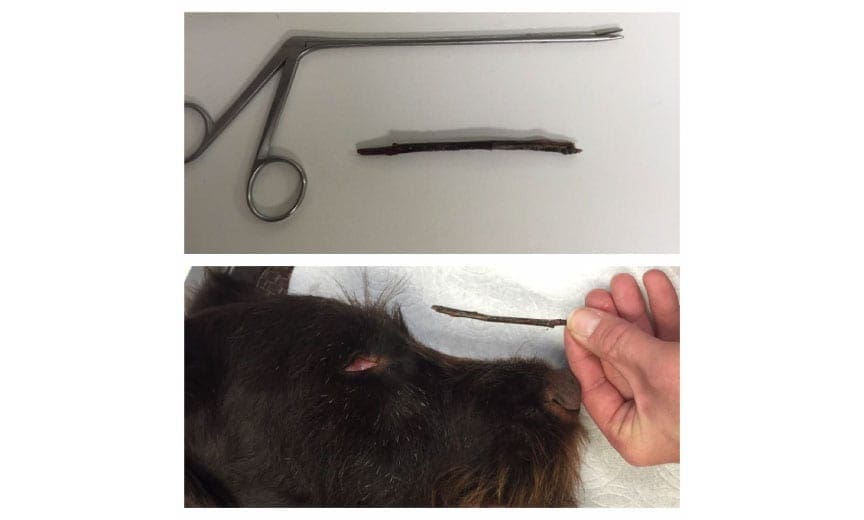
Over the month-long course of medications, she still had a small amount of discharge and my plan was to take her to the university for a CT at the end of the antibiotics as these were in the days before we had those capabilities in-house. Other than the discharge and occasional raspy, nasally breathing she continued to seem normal and so I continued to hunt her and she performed like a rockstar. We were wrapping up a three-day trip and I planned on her hunting one last spot. I opened the crate to get her out and she again started to sneeze violently. Out on the tailgate came an approximately four-inch-long, blood-covered stick. I was shocked and amazed that this little dog had hunted for nearly a month with this thing jammed up her nose. To make it more impressive, shortly after sneezing it out, she nailed a covey of sharptails in a stiff 25 mph wind.
Nearly two decades later I’m now more aggressive when a gun dog presents with her symptoms and make sure we find the offending stick, grass awn, or weed as soon as possible. Unfortunately, these foreign body issues will require a trip to the vet clinic as these dogs need to be under heavy sedation and many times fully under anesthesia as the tissues of the nose are very sensitive. The good news is that removing them usually doesn’t require some fancy fiber optic scope or a rigid videoscope. The vast majority of these can be removed through an otoscope (the scope used to examine your dog’s ears) and with an alligator forceps. In rare occasions, some dogs will require more aggressive diagnostics, like a CT, and a flexible scope to get further into the nasal passages.
Nasal Discharge in Dogs Caused by Dust, Pollen, and Irritation
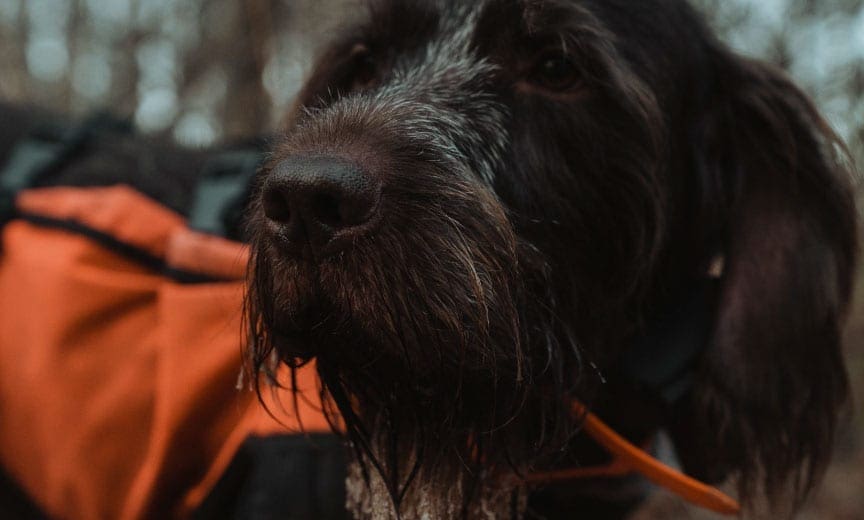
The more common issue that we see with our hunting dogs are dogs that have irritation brought on by the conditions in the field. The two most common offenders are dust and pollen. In dry years out West, dust, especially around fence lines and roads, can wreak havoc on a dog’s nose and ability to scent game. In luscious green years, we can see a similar problem with pollens in the early season. The good news is that both problems can be addressed in the field.
Every fall, I stock the truck with several bottles of saline eye flush to be used to flush out the eyes, nose and wounds. The key here is that you want saline, not contact solution. Not many years ago the contact aisle was all saline with a few bottles of solution; now it is all solution and you must hunt for the straight saline.
Using Saline to Flush A Dog’s Nose
The process of flushing is pretty simple. You gently take the dog by the muzzle and tip its head back and then allow the saline to run into the nostrils, one at a time. You will not want to forcibly squirt the saline in as this will be irritating but rather allow it to gently run into the nose. If your pup looks at you like they are asking “why are you drowning me” and they begin to swallow, you know you are doing it correctly. Basically, you are mimicking what is accomplished with a neti pot, but instead of having it run out the other nostril you are having it run to the back of the dog’s throat. It doesn’t take much to flush the nasal passages; after a couple of swallows I usually switch to the other nostril. I find that this is something, on the days that you do it, that you are only doing once a day unless you are in horribly dusty conditions.
Nasal Discharge in Dogs from Foreign Bodies and Nose Trauma
While many cases of nasal discharge in dogs are caused by temporary irritation, persistent discharge should never be ignored. Discharge from only one nostril, repeated sneezing, nosebleeds, difficulty breathing, or thick green mucus can all indicate a foreign body or nasal injury that requires veterinary attention. Discharge from only one nostril is particularly concerning because it often indicates a foreign body, localized infection, or nasal injury rather than a simple environmental irritation. Early diagnosis can prevent chronic inflammation and more serious complications.
The major issue is differentiating if your dog has a foreign body that needs to be addressed or an irritation. For a foreign body the dog will usually have consistent, and oftentimes violent, sneezing episodes. They will usually pull their nose to one side looking like they are irritated or about to sneeze and the hallmark is discharge that is different from one nostril to the other. In severe cases, there will be a thick, green, nasty looking discharge from the nostril. In the more typical case it will just be an increase in the normal clear-looking discharge. Sometimes these changes can be subtle; if there is a question, err on the side of a veterinary exam, and if one nostril is obviously different from the other then definitely seek veterinary attention.
So much of our upland experience is guided by our canine companion’s nose. It’s imperative to understand the problems that occur and how to address them to keep your partner happy and healthy all season long.