

The Art of Dove Hunting Solo
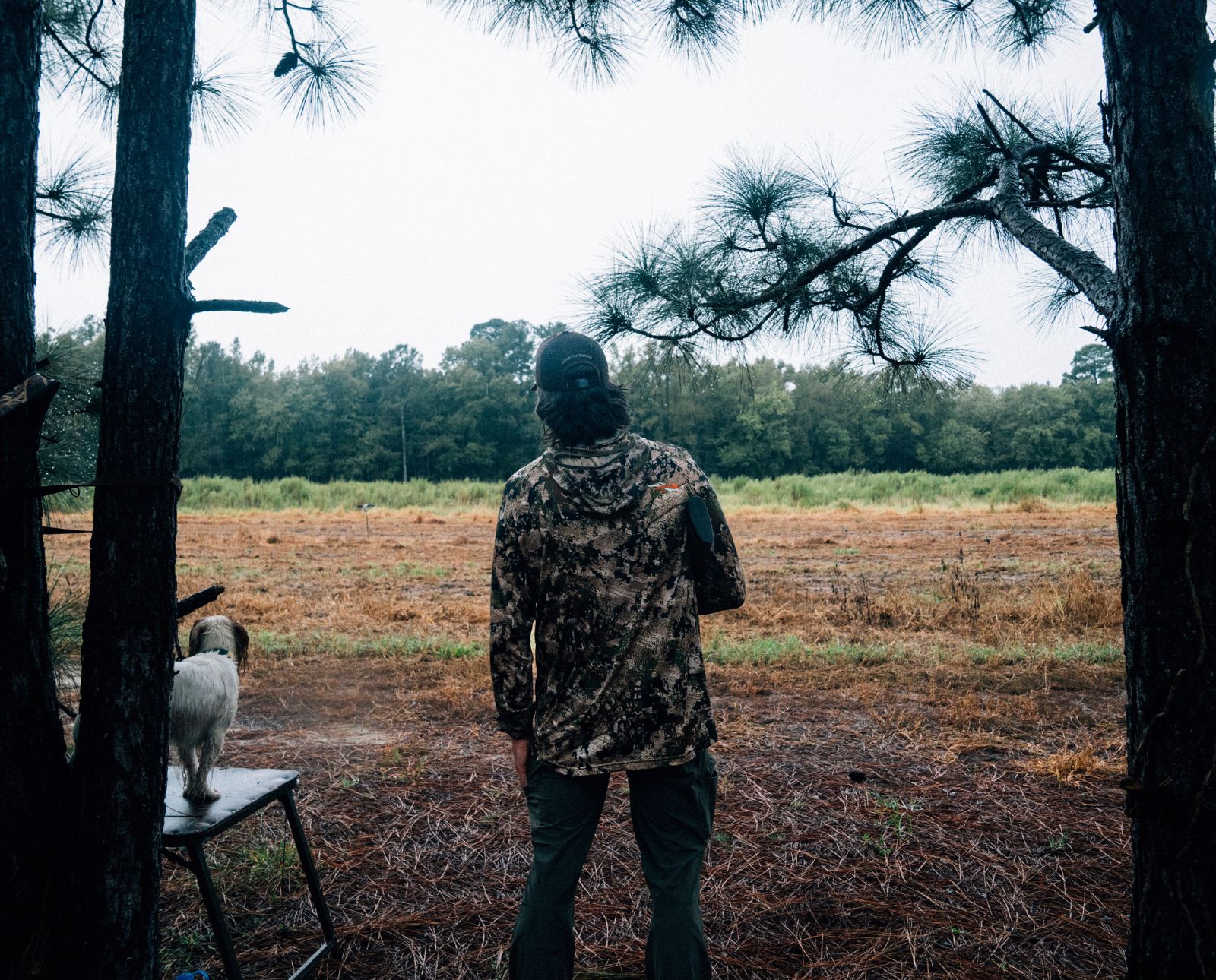
Skip the crowds, travel light, and discover the rewards of dove hunting alone
Even if you’ve never spent time sitting on a field edge scanning the sky for mourning doves (bless your heart), you probably have a picture in your mind of what the average dove hunt looks like. That’s especially true this time of year, when all the big brands in the hunting space are falling over themselves making sure we know that they know what dove hunting is all about. Lifted OHVs, questionable fashion choices, and must-have cocktail recipes are shoved in our faces during this annual unofficial contest to see if one can’t pile more dead birds on their tailgate than the next guy. All of this makes the simplicity of solo dove hunting increasingly appealing to me.
The hunting industry’s carefully curated playlists and artfully crafted scenes are, to me, the pumpkin spice of the bird hunting scene. Their arrival seems to come earlier every year, and the vibe is just off. I believe the youngsters refer to it as “getting the ick.”
If you think I’m being harsh, I get it. To those who might feel that way, I suggest attending one of the hunts I described above and see how it feels when someone you thought you knew walks up with a limit of doves in a Walmart bag, saying, “I don’t really like cleaning birds. Does anyone want to take these?”
If you find yourself nodding along with my opinions, solo dove hunting may be for you. Dove hunting alone allows you to avoid the nonsense and hunt on your own terms.
Dove Hunting Alone Is Uncommon
I’ve only been on a few hunts that met the criteria to be included in my sweeping generalizations in the opening paragraph, but I feel much better now, so thanks for listening. I have also, to get down off my high horse, hosted one or two hunts that fall into the category of performative nonsense. I won’t pretend that there isn’t something special about sharing a fast-paced hunt and a few after-the-fact cold beers with family and friends. That said, every weekend can’t be opening weekend, and not everyone is willing or able to put the work in to hunt doves on their own.
If you’ve been bitten by the bug like I have and think you might want to dove hunt more than once a year, get comfortable with the idea of doing it alone. I am well aware that I’m not the first person to spend a few hours by themselves in a dove field. That said, during my nearly 30-year bird hunting career, I’ve met, like, three other people who would publicly admit to dove hunting alone. I’ve met very few people who are as crazy about these little gray birds as I am.
Watch: Little Grey Birds – Dove Hunting in North Carolina
Before you head into the field, note that mourning doves are migratory gamebirds, and dove hunters are subject to federal regulations as well as state-specific seasons, bag limits, shooting hours, and licensing requirements. Hunters should also understand federal baiting regulations before hunting agricultural fields or other managed areas. Always check current state and federal migratory bird regulations before heading afield.
How to Find Solo Dove Hunting Spots
To get right to it, mourning doves need food (read: seeds on bare ground), water, and somewhere to roost. If you can locate those three things within a half-mile of each other and can legally hunt the area, you’ve got your dove hunting spot. Most grain farmers I know are happy to have one or two folks sit in their cut fields from time to time, so don’t be afraid to scout with onX Hunt and knock on doors for permission. I’ve taken to keeping a few of North Carolina Wildlife Resources Commission landowner permission/liability release forms in my truck and have had them come in handy on more than one occasion.
If private land isn’t an option, there’s probably a public dove field close by. In my home state of North Carolina, we use the PAWS online mapping tool to identify the location of public dove fields and find out what the state planted in a given year. Also, it doesn’t have to be grain. An informal crop survey from the most recent strap of doves that I cleaned produced corn, wheat, sicklepod, pokeberry, blackberry, millet, and numerous small, unidentifiable seeds. They have their preferences, but I wouldn’t put them in the category of picky eaters.
Additionally, as always with public ground, off-hours are better, and those who hike the farthest from their trucks are generally rewarded with heavier straps. Keep that in mind when picking a spot.
One thing to look out for is a perch. Over the years, I’ve noticed a clear pattern in how birds enter a field to feed. They almost always stop and perch at a natural midpoint between their roost and their feeding area. I suspect they’re scanning the immediate area for predators before they fly down to the ground and leave themselves exposed during feeding. Power lines and dead trees standing in open space are the two most frequently used perches that I’ve observed. If you can find one or both of those things adjacent to your spot, set up 30 to 40 yards on the upwind side and try to be as still as you can. Doves are looking for movement when they look for danger, so stillness is the best camouflage.
Solo Dove Hunting Gear
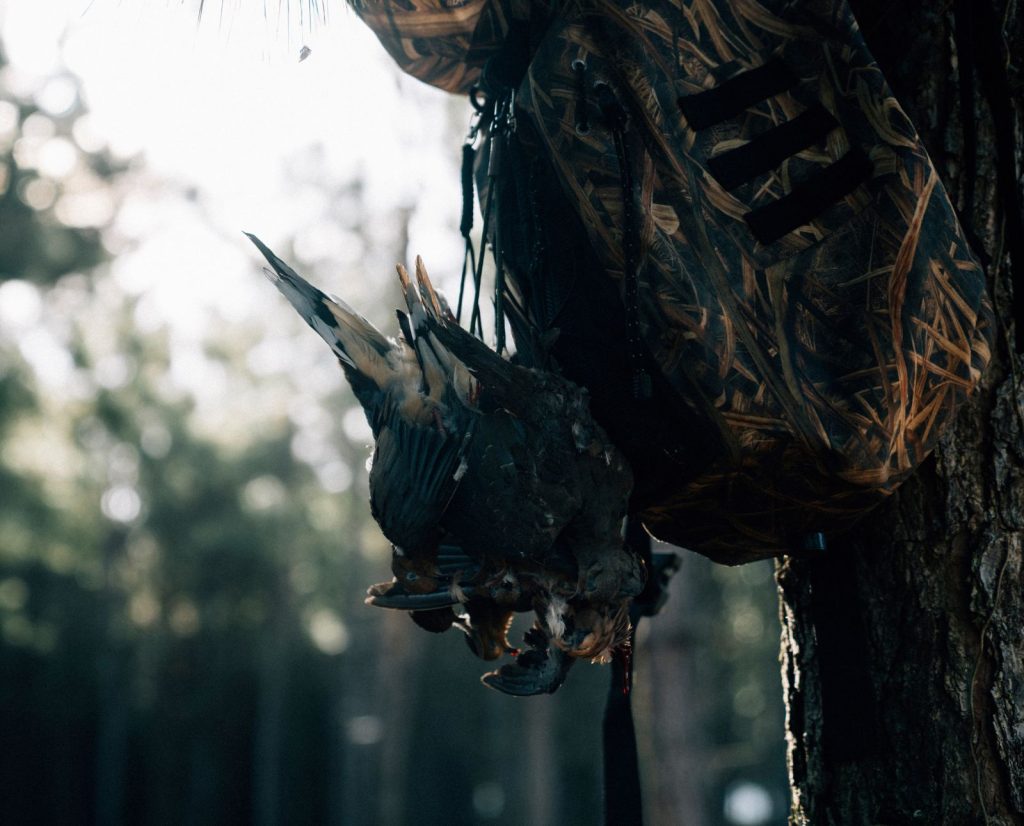
When it comes to solo dove hunting gear, think fast and light. At some point, you will inevitably find that your setup isn’t “on the x,” so being able to relocate and get in between the birds and their preferred flight path and feeding area is critical. Don’t be afraid to fine-tune. Routinely, my repositioning efforts of 20 to 30 yards make the difference between a respectable strap and going home empty-handed.
When selecting gear for the field, each item must be something you can quickly move 100 yards on your own. My basic checklist is as follows:
- A shotgun
- One box of shells
- A waterproof backpack
- A rain jacket
- Motion decoys (more on these later)
- Faulk’s D8 dove call
- A stand for the dog
- A stool for me
- Water for myself and the dog
When it comes to clothing, it doesn’t need to be anything special. Just make sure to dress for warm (and potentially wet) weather and to wear earth tones.
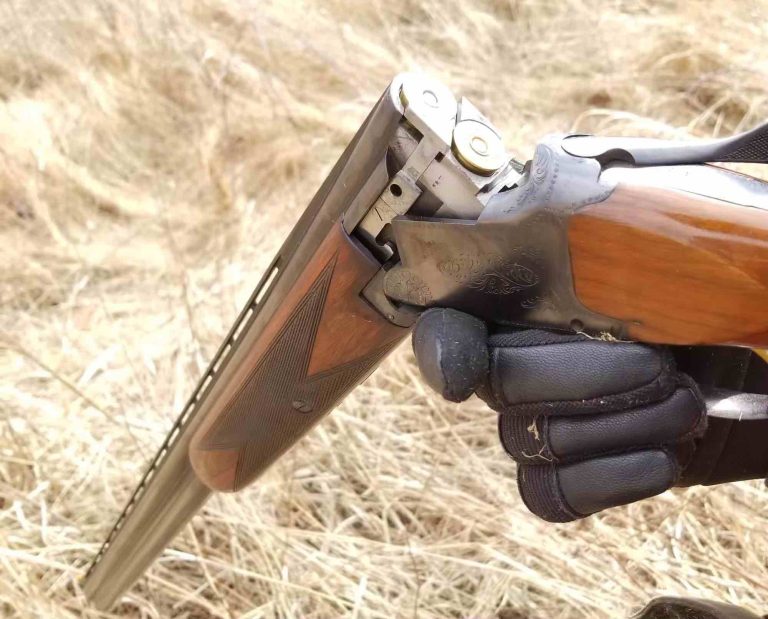
As for the shotgun, it doesn’t have to be pretty, fancy, or expensive. It just needs to swing reasonably well and go bang when you pull the trigger. I started on an old pump-action 12-gauge that came out of a pawn shop, and it served me well for over a decade. Over the years, though, I have noticed that a 20-gauge seems to bother the birds much less. A dove that hears a single 20-gauge shot will generally circle back around in short order if you’ve done your homework and are sitting where he wants to be, but the sound of a 12-gauge seems to send them hauling ass for the next county no matter what.
Do Spinning-wing Decoys Still Work for Dove Hunting?
While we’re on the subject of wariness, I’d like to share a fairly recent observation of mine regarding spinning-wing motion decoys. In short: the jig is up.
Towards the end of my 2024 dove season, I was getting suspicious. It just didn’t feel like birds were drawn to the decoys like they had been in previous years, and I’d been a spinning-wing evangelist (especially in the case of mourning doves) for a decade-plus at that point. After the first two hunts of my 2025 season, I was nearly convinced. They seemed to be avoiding spinning wings like the plague, changing their flight paths by hundreds of yards. About two hours into my second sit of the year, a companion suggested we pull the decoys. The difference was instantly noticeable, and I’d advise that anyone hunting with motion decoys be ready to do the same this season.
Solo Dove Hunting with a Dog
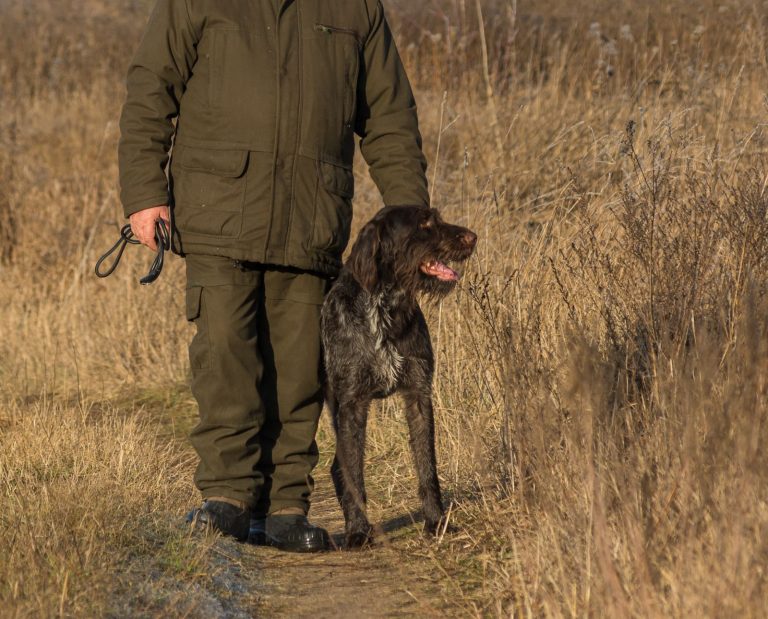
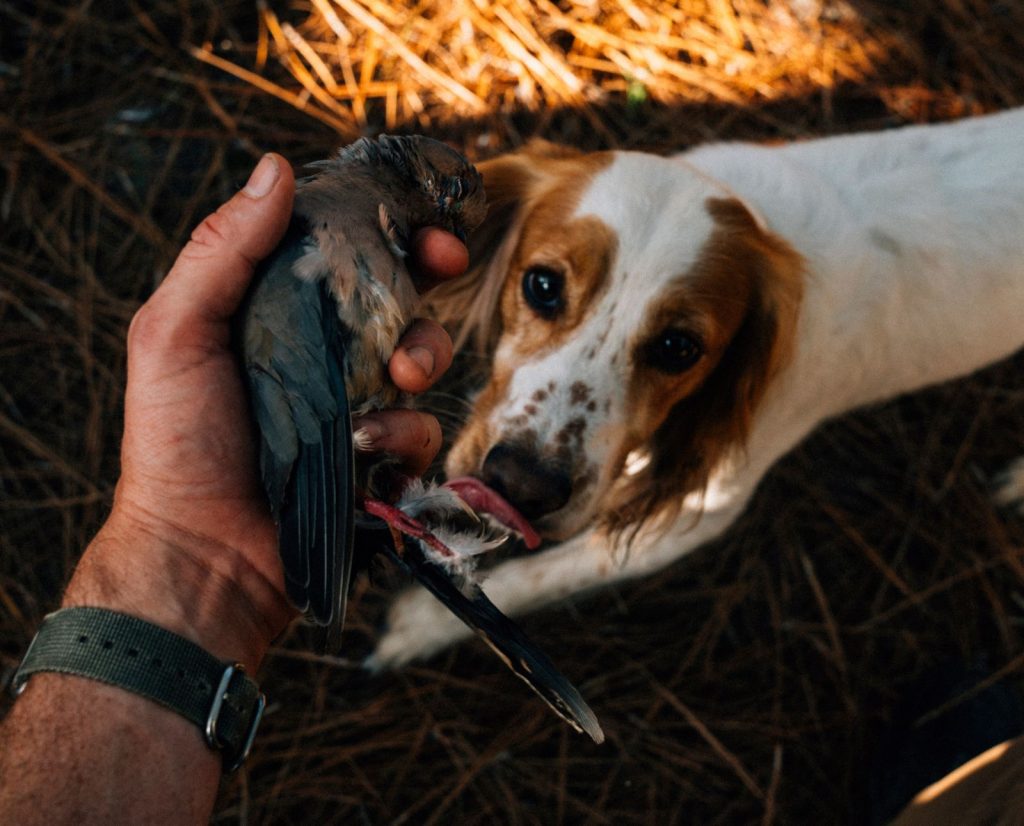
To truly hunt doves effectively, a steady retriever is imperative. I’ve spent more than two decades chasing every bird the Southeast has to offer, and I’ve yet to encounter one that can disappear on the ground the way that a dove can. I have personally seen Labrador Retrievers, Cockers, and other spaniels excel in a dove field. I know for a fact that a wide range of other sporting breeds have proven themselves to be up to the task. The main thing to consider here is patience, both for the dog and the handler.
Action can be intermittent in the dove field, so it pays to hone the senses required to stay tuned in. Don’t get frustrated if it takes your dog a season or two to come around to sitting still and waiting for action, especially if you hunt with a spaniel or a versatile breed. Putting in the time and effort to develop a “dove switch” in your dog will pay dividends if you plan to hunt these birds regularly.
Why You Should Dove Hunt Alone
If you’ve made it this far, the only thing left to do is load up your gear, grab the dog, and head out to the closest WMA (after checking that the season is open in your area, of course). My main piece of advice? Don’t overcomplicate it. You don’t need a ton of expensive gear, a fancy shotgun, or a trial-winning dog to have a safe and effective dove hunt.
Cook: Project Upland’s Dove Recipes
I always try to approach my time in a dove field from a meditative perspective. Time spent wondering where the birds are never seems to help much. But, I’ve found that when I focus on the natural world around me—and my gratitude for the fact that I’m healthy enough and possess enough free time to be out in it with a loyal companion at my side—that’s when the birds show up.
I don’t remember the first time I sat in a dove field on my own, but I do remember that it took me a few tries to “get it.” September in my part of the world is usually pleasant, save the odd hurricane or two and the fact that mosquitoes and ticks are still fairly active. The humidity starts dropping and 85-degree days feel comfortable for the first time in months. The creek bottoms are lined with river birch trees just starting to show yellow in their leaves, and it seems like the whitetails change their coats from summer red to winter gray overnight. It’s a time of year that always feels in-between to me; I can see pieces of all four seasons when I look around.
These things make solo dove hunting a worthwhile endeavor even if I never find a reason to click the safety off.