


Hungarian Partridge Hunting: Why Huns Are the Ultimate Bonus Bird
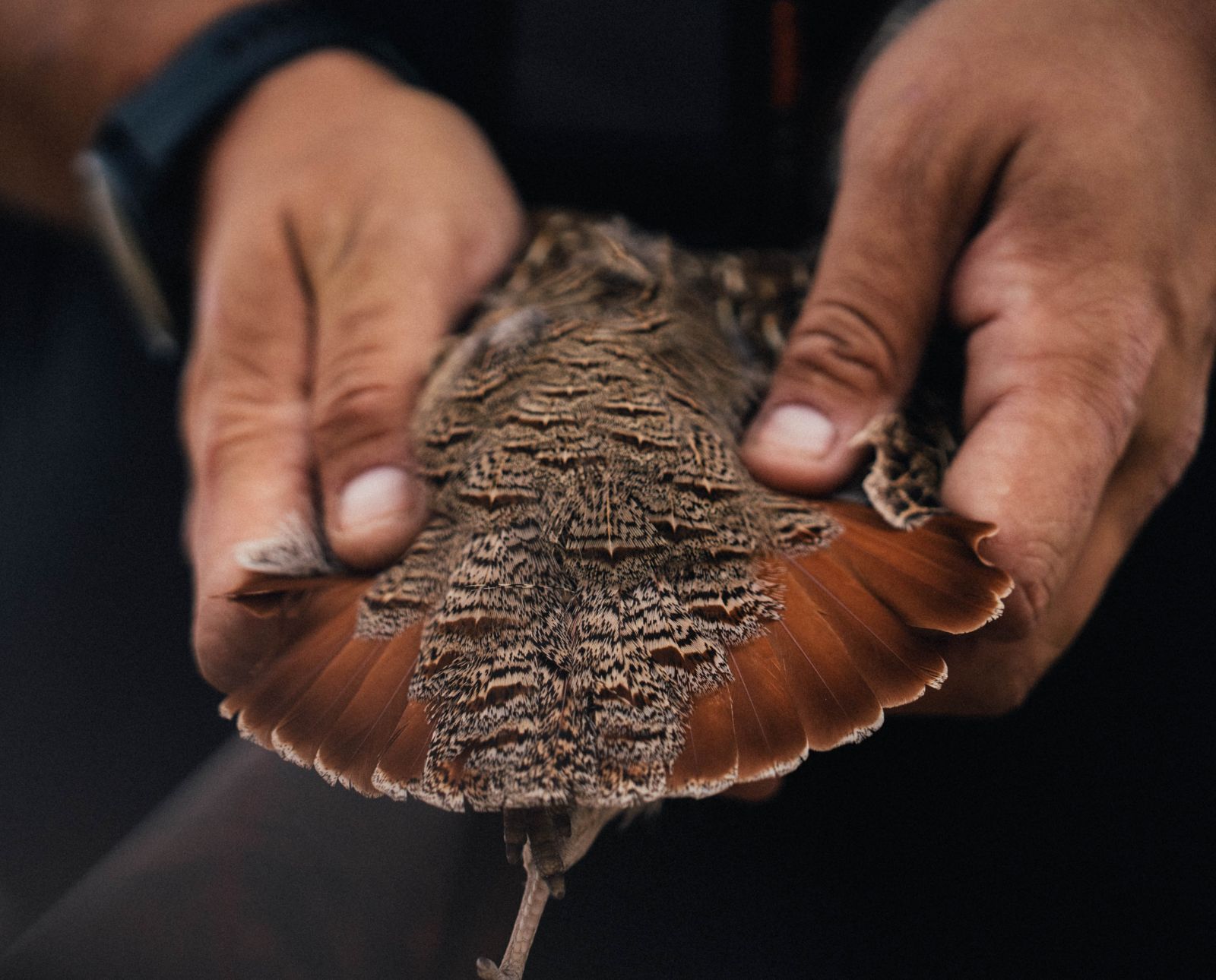
Why gray partridge—also called Hungarian partridge and Huns—can be so hard to find in agricultural lands and on the range
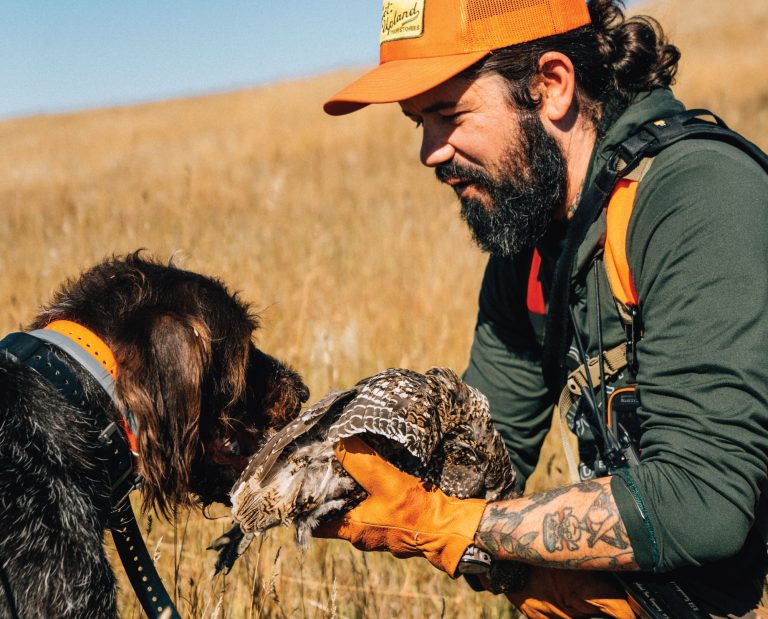
Gray partridge, also called Hungarian partridge or Huns, deserve a far more respectable descriptor, yet the moniker “bonus bird” has its reasons. Huns are often referred to as bonus birds because they aren’t very predictable until one has unexpectedly flushed them, often while chasing other birds.
One time, I was chasing Huns when a late season covey flushed just out of range. The birds sailed over the horizon, dipping into the creek drainage that meandered through towering basin big sagebrush. The only reason I was at this spot was because I had inadvertently flushed a covey of Huns while switching between hunting valley quail along the creek to chukar in the rimrock above. That day, like I’d done a hundred times before, I found myself wondering how anyone could predict where to find Huns if they—or someone they knew—hadn’t already flushed a covey in the area.
Let’s explore why Huns are so hard to find, and consider that it can be worth splitting gray partridge into two groups: agricultural Huns (or ag Huns) and range Huns.
Agricultural Huns and Range Huns: Pseudo Subspecies
Note: Depending on the authority source, there are six to eight official subspecies of Gray Partridge.
After chasing Huns for decades, and with some insight from B.O. Williams, I’ve started informally thinking of Huns as two types: agricultural Huns and range Huns.
Ag Huns live around cultivated lands. For most bird hunters, ag Huns represent the species. I’ve even given them a pseudo-scientific name: Perdix perdix abandonedfarmensis—Latin for partridge that live by vacated farmsteads. The other, range Huns, inhabit rangeland far removed from cultivated agriculture and are lesser-known to most bird hunters. My unofficial scientific name for them is Perdix perdix homeontherangensis—Latin for partridge that live on the range.
Tips for Hunting Hungarian Partridge on the Range
The aforementioned disappearing covey was the rangeland type, the kind that becomes expert at vanishing into the sea of sage. I can’t count the number of times I’ve been bested in that situation. I’ve learned a few ways to improve my odds, though. First, range Huns usually don’t fly more than a few hundred yards, and I try to get downwind of where I think they landed to give my dogs the best scenting conditions possible. Second, I let the dogs range as wide as they’re willing. And third, I look for landmarks, from a clump of shrubs to a rocky outcrop, or even a slightly taller sagebrush patch.
I don’t fully understand the relationship between Huns and landmarks, but there is something to it. Sure, there are plenty of times when the original flush—or the reflush—has no obvious feature. But more often than not, there’s something to pick up on, though I usually don’t recognize it until after I bump them—or, more likely, one of my dogs makes the find.
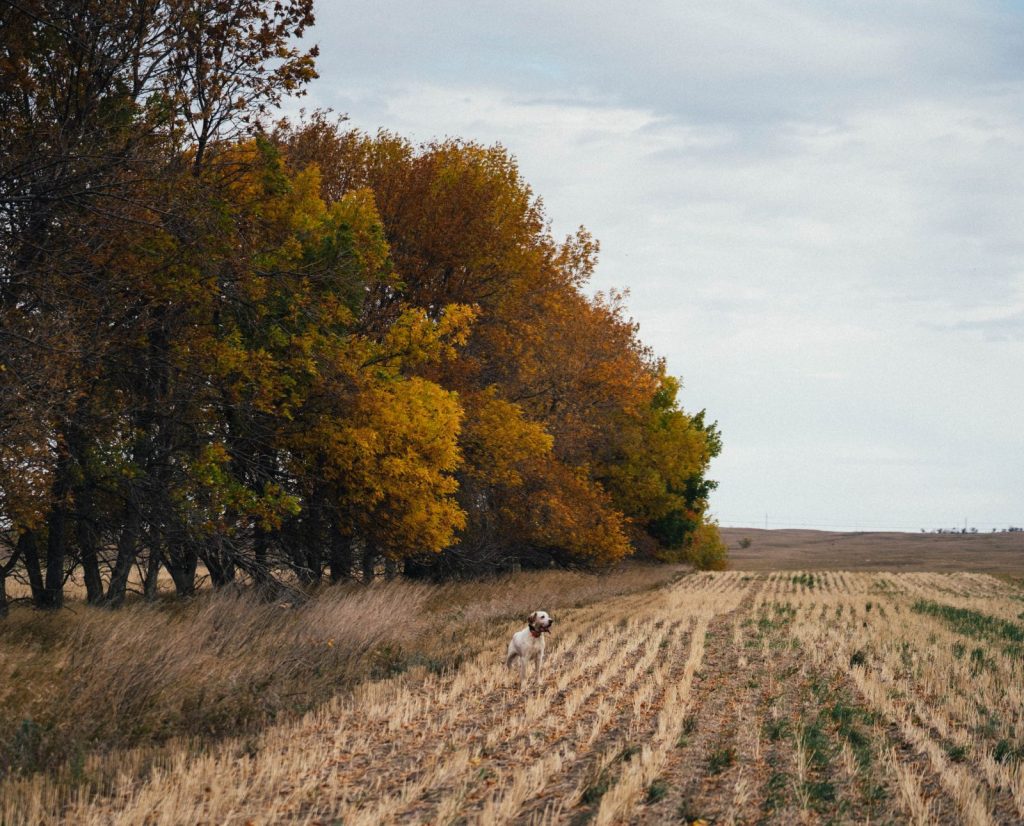
Hungarian Partridge Hunting Experiences: Ag Huns
I’ve hunted every species of North American quail and partridge, and none come close to Huns’ level of covey cohesion. It is extremely rare to get a popcorn flush; they almost always take off and land in unison. Pay attention, though—if they do split up from the main group, that is when they are most vulnerable and willing to hold for point. You need to go quickly, too, because if you give them even a little time, they’ll reunite.
Some of my earliest upland memories include Huns and North Dakota dirt roads in the late 1980s. My dad would get off work at 5 p.m., rush home, and we’d load the dogs and head out for some road hunting before sunset. When we first moved there, I was nine years old, two years shy of my dad’s shotgun carrying rule, but I was already obsessed with bird dogs and upland hunting. Huns were plentiful, and they loved the wheat stubble fields common in our area. I trained my eyes to scan down the stubble rows as they blurred together looking for little gray-brown heads sticking just above the cut line.
Quick tip: It’s much easier to spot Huns in wheat fields when the stubble rows run perpendicular to the road.
Once spotted, we’d stop and either jump out for a shot or flush them to better cover and put the dogs to work. Along the way, dad usually bought us each a Snickers bar and a can of root beer, for me a nostalgic, if admittedly odd, taste combination. Those evenings were the beginning of my upland field skills. Skills that eventually blossomed into my career and upland life.
In 1986, the Conservation Reserve Program (CRP) began, and by the late 1980s, it had reshaped much of North Dakota’s landscape. Pheasant and sharptail populations exploded with the addition of all that grass cover. Huns, on the other hand, seemed harder to find. In my experience, Huns don’t care much for tall, heavy grass cover.
During my younger years, I chased Huns in western North Dakota and northeastern Montana, in that mix of prairie, row crop, and the occasional abandoned farm. Huns love abandoned farmsteads. I’m not entirely sure why. Again and again, I’ve found Huns in the vicinity of those relic buildings on the prairie. I like to think of these European transplants as lasting tributes to those who built the structures, our proverbial breadbasket, and country. My ancestors. To this day, I never pass up a chance to look for Huns around an abandoned farm.
Read: Hunting Huns in Montana
Nearly two decades ago along Montana’s Hi-Line, I used aerial imagery to scout abandoned farmsteads on Block Management lands, and we flushed one or more Hun coveys at 11 of the 12 places we stopped. These experiences shaped my perception of ag Huns, birds tied to the broken edges of farmland and prairie, and I felt reasonably competent at finding them. But then came range Huns.
Why Hungarian Partridge Are So Hard to Find on the Range
In the late 2000s, a couple of bird-hunting friends introduced me to some new country in neighboring states. My main draw was public land valley quail and chukar. The bonus bird was range Huns—and lots of them. While Hun populations are subject to ups and downs like any gamebird, I have never seen higher densities than in these rangelands.
After many years, I now have places where I can readily target Huns, and they are anything but bonus birds. However, there’s a lingering challenge with range Huns—namely, I can target them only because I already know they’re there. I’ve asked multiple bird hunters who regularly chase Huns, even those considered experts: “If you, or anyone you know, had never been to an area, how would you predict whether Huns occupied the area and where they’d be on that landscape?” Invariably, the response has been a blank stare, stumped mumbles, followed by an explanation that begins with “Well…you see I would already know because…”
Watch: Love Letter to North Dakota – A Hungarian Partridge and Sharp-tailed Grouse Story
With most gamebirds, the answer is fairly straightforward. Identifying pheasant habitat is easy—thick grass or other cover within a reasonable distance to a row crop. Most quail species follow a similar logic: heavy shrubs paired with relatively open herbaceous cover. Chukar habitat may be the most predictable of them all. Now, before you jump to conclusions, I’ve spent far too much time chasing those little devils to suggest they’re easy to bag, but their kind of country rarely lies. Gray partridge are not so predictable, especially Range Huns.
Range Huns are kind of like that old friend—someone you’ve occasionally felt close with, but upon reflection, you realize no matter how deep you’ve gone for your part, they’ve always kept you in their shallow end. I’ve been chasing Huns for more than four decades now, and yet some barrier remains, a subtle mystery I can’t seem to break through. At best, I can extrapolate characteristics projecting outward while anchored to the area where I’ve already found them. But those same ingredients don’t always translate to other landscapes. This unpredictability is exactly why this magnificent gamebird has been—and for the foreseeable future will remain for most—a bonus bird.

The Learning Continues
Somewhere out in that basalt country, the covey I watched disappear likely settled back into the sagebrush and stitched itself together again like they always do. But I couldn’t find them. Maybe if I had swung wider downwind, or searched for a better landmark, I might have found them again. Or maybe not. After all these years chasing Huns across wheat stubble, abandoned farmsteads, and endless sagebrush, I still can’t say I fully understand them. I’ve learned a few patterns and picked up some tricks, but I still usually rely on the same thing that first pointed me toward them: a covey flushing where I didn’t expect it. And maybe that’s exactly why gray partridge are the ultimate bonus bird…for now, anyways.
As a wildlife professor working on western rangelands, I have some research ideas that could statistically tease apart gray partridge habitat selection, ideas with potential to break through that barrier and serve both my bird hunting and professional careers. So, hopefully, there is more information on how to best identify Hun habitat to come.


Good article. Thank you for sharing!
So true. They do love old abandoned farm steads. Some old lilac rows up next to crop lands probably lets them hide better.
As someone trying to figure out how to get into upland hunting I have to say I’m still not sure how to do it, but these articles aren’t making it any LESS tantalizing!!