

Can Hunting Reduce Ruffed Grouse Populations? Additive vs. Compensatory Mortality
What research on hunting mortality, season timing, and hunting pressure tells us about ruffed grouse populations
This article originally appeared in the winter 2023 issue of Project Upland Magazine.
Like many upland birds, ruffed grouse live and die at the lower end of the food chain. In fact, they’re designed to be eaten. Disease and accidents kill a small percentage of grouse, but most die at the hands—or beaks and talons or teeth and claws—of a predator. Goshawks, barred owls, and other avian predators frequently dine on ruffed grouse, as do opportunistic mammals like red foxes. Given the chance, any predator will take a grouse at any age, from eggs and chicks to juveniles and adults.
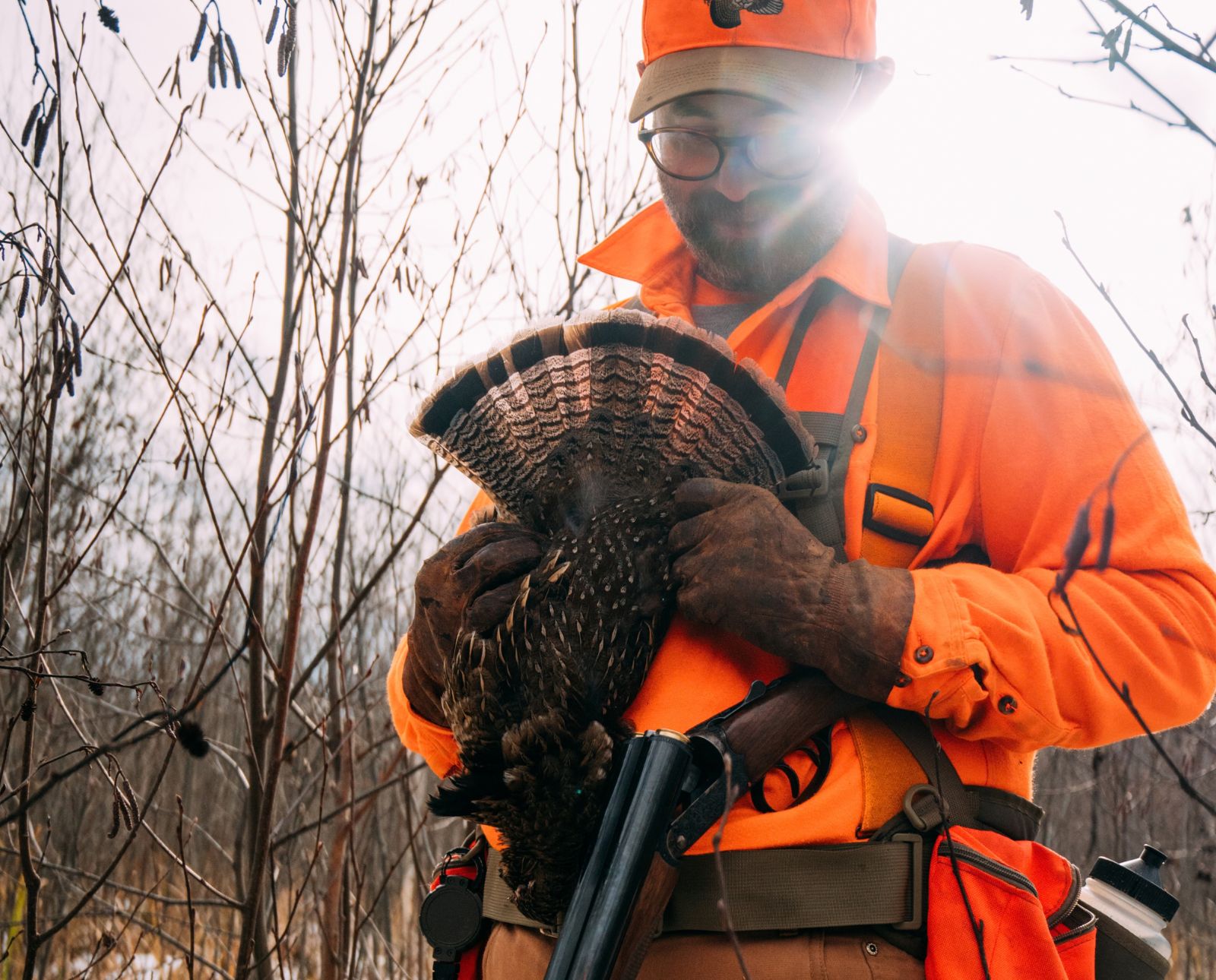
We, too, prey on ruffed grouse and can be quite efficient at killing them, especially with a good bird dog and competence with a shotgun. We, however, are the only predators who consider our predation. Some of us, at least some of the time, are conscious predators. A goshawk never worries about a limit, about taking too many birds, about additive or compensatory mortality. It simply eats to survive.
As fall turns to winter and the first snowflakes drift down to the frozen landscape after a long season, that’s when I start to think about my killing. I might even brood about it, knowing ruffed grouse face a long, dark, and cold winter after the constant pressure of our hunting season. I want them to be there come spring. I want to hear their muffled drumming in the woods as the snow melts and the earth comes alive and greens. Such thoughts dampen my killing. Leopold was right: “Subtract the grouse, and the whole thing is dead.”
Additive vs. Compensatory Mortality in Ruffed Grouse
Population dynamics of prey species are complex and often not easily understood. For at least 75 years since Bump and Gardiner published The Ruffed Grouse, grouse hunters, biologists, and natural resource departments have debated whether human hunting is an additive or compensatory mortality on grouse populations. In other words, can human hunting depress populations? Could we endanger the ruffed grouse, the bird we profess to love?
Rocky Gutierrez, a former wildlife researcher and now a professor emeritus at the University of Minnesota, writes in A Passion For Grouse that researchers have been trying to understand if human hunting can depress ruffed grouse populations. Up to a certain point in the season, the birds we shoot are compensatory, meaning that every bird we shoot would have died due to a hungry goshawk, accident, or disease, regardless of our predation. Up to that threshold, human hunting would not depress the breeding population.
“After this point has been passed, birds taken by hunters add to natural mortality,” writes Gutierrez. “When additive mortality occurs, the density of the breeding population will be lower than it would have been in the absence of hunting.”
Listen: Alaina Roth, Wisconsin’s Ruffed Grouse Specialist – Project Upland Podcast
When does this threshold occur, and how can we know when we’ve crossed it and limit our killing? If this threshold is crossed, it will be late in the season as harvested bird numbers mount. In Wisconsin, October is the prime month for ruffed grouse hunting, as it is for many of the Lake States and eastern part of the country, and this is the month when most of the birds get shot. After gun deer season in November and after the first snows, the Wisconsin woods empty out as hunter effort wanes. But a few ardent hunters continue to chase birds, particularly in mild winters. This often leads to discussions and sometimes heated arguments about the ethics of winter hunting and the killing of “seed” birds.
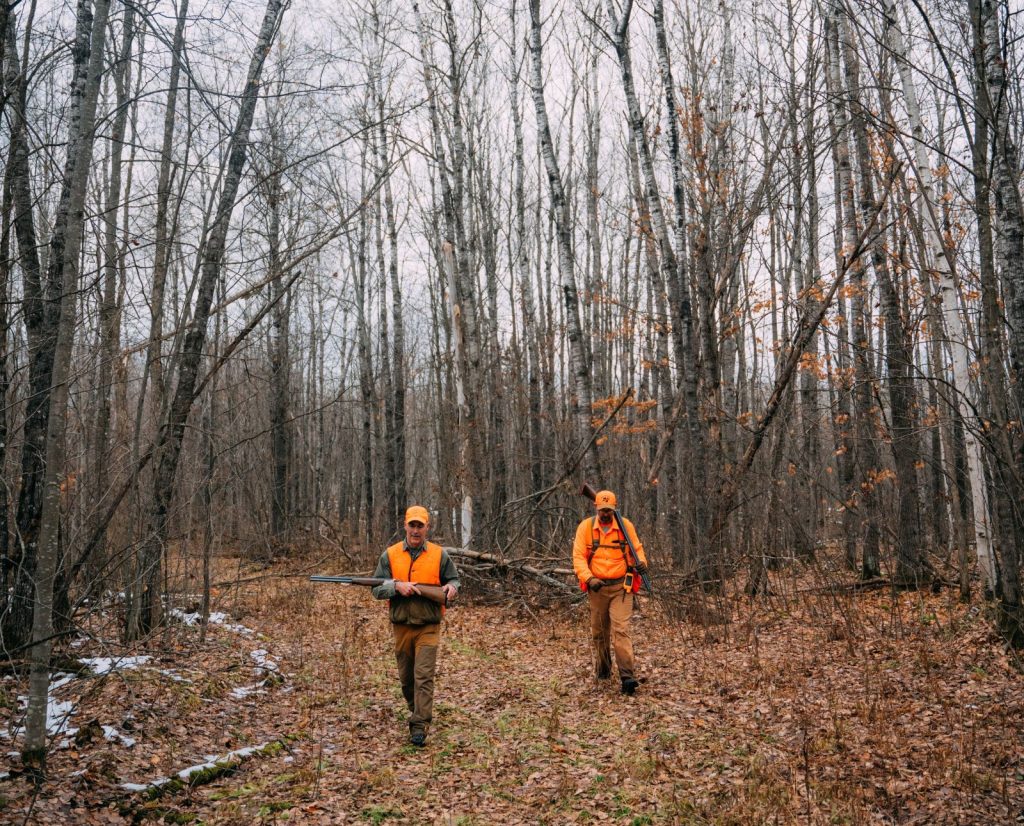
Can Hunting Reduce Ruffed Grouse Populations?
One Wisconsin study published in 1991 revealed that human hunting can lead to additive mortality. After radio-collaring nearly 400 ruffed grouse in central Wisconsin, Robert Small, James Holzwart, and Donald Rusch found that of the 222 mortalities recovered, 159 were from non-human predation and 63 from human hunting. Their research over seven years suggested that human predation was “at least partially, if not completely, additive to natural mortality.” After realizing that hunting pressure and mortality was more significant on public than private land, they concluded that ruffed grouse populations “will be substantially reduced in areas with high hunting mortality and reduced immigration due to fragmented habitat.” Note they didn’t say “could” but “will” be reduced and, more importantly, that large blocks of quality habitat were essential to ruffed grouse survival. We can all agree that big chunks of suitable habitat are vital to healthy grouse populations.
The most famous debate about bird mortality was the one in the late ’70s and early ’80s between George Bird Evans and the West Virginia DNR. In his essay “The Golden Goose Egg,” Evans criticized the DNR for excessively long seasons, which at that time ended on February 28. “Birds that are shot after New Year’s Day represent a critically high percent of the birds remaining in the coverts,” he wrote. “In years of grouse lows, this can be disastrous.”
Read: What’s Limiting Eastern Ruffed Grouse Populations?
According to Evans, the West Virginia game department subscribed to the theory that gunning pressure had no effect on ruffed grouse, that all of our hunting and killing was compensatory and never additive, hence West Virginia’s long season. We could kill as many as we wanted to or could. This theory still floats around, and some hunters think game populations are invincible and can rebound no matter how many birds we shoot.
Evans didn’t buy the DNR’s thinking and ridiculed the department’s response that gun pressure did not affect grouse. “You do not shoot a species to the edge of oblivion and expect the two surviving birds will be a compatible pair and, if mated, a brood will ensue,” he wrote. “You dare not shoot-out covers.” Several decades later, West Virginia’s grouse season still runs to the end of February.
Does Late Season Grouse Hunting Matter?
Gutierrez stated in a telephone interview that as the season progresses, ruffed grouse, like all game birds, tend to get warier as they are hunted, and mostly seasoned veterans survive into late fall. With fewer birds on the landscape, a law of diminishing returns deters many hunters, so hunting pressure also declines in the later part of the season as these hunters stay home or move on to other pursuits. These factors help maintain populations.
But it’s not just shooting birds that harms ruffed grouse in winter. “It’s not so much the hunting mortality as it is the disturbance,” Gutierrez said. Grouse need to conserve energy in winter, and getting flushed uses up precious calories. They also might get pushed to the edges of their home range, into territory where they’re not as familiar with the cover, which might expose them to other predators. Winter hunting—moving them around—might actually kill birds indirectly.
How States Manage Ruffed Grouse Hunting
Game departments use two basic tools to avoid additive mortality: season length and bag limits. Ruffed grouse daily bag limits vary widely across the country, with five per day typical in the Lake States to as low as two per day in Pennsylvania and just one in Connecticut. Possession limits are double or triple the daily bag limit.
Some states also set seasonal bag limits. These are essentially an honor system requesting that hunters end their season after harvesting the maximum number of birds for that year. Massachusetts, for instance, still has a seasonal limit of 15 birds, while Connecticut limits hunters to just eight ruffed grouse per year. Daily bag limits, possession limits, and season limits seem to be predicated on an honor system.
Hunters often react angrily when game departments change seasons and bag limits as populations fluctuate, and they try to adjust to these population dynamics. In my 30-plus years of hunting ruffed grouse and woodcock in Wisconsin, both bag limits and season length have been reduced. Our sharp-tailed grouse season was canceled five years ago. These changes reflect the declining numbers of our game birds or the perception of a decline, as well as a desire of game management to err on the side of caution.
In 2020, the Natural Resources Board reduced the length of our Wisconsin ruffed grouse season by approximately one month, ending it in early January instead of the traditional January 31st. Some upland hunters, those few who continued to hunt in the winter months, were upset by this early closure. Still, the board was concerned about an unforeseen and unexplainable dip in the grouse population and decided to act conservatively. They didn’t have proof that human predation was additive, but they shortened the season regardless.
In the past, however, Wisconsin game managers were much more draconian and didn’t hesitate to close the entire ruffed grouse season, particularly before the population cycle was better understood. The entire season was closed in 1945 and again in 1946. The Wisconsin Conservation Department was reacting to low grouse numbers when they were at the bottom of their cycle, which they really didn’t understand. Nor do we today, for that matter. In Wisconsin Grouse Problems, published in 1948, the author blames sun spots as one potential cause of the cycle.
Gutierrez maintains that game departments set season and bag limits with rigid default mechanisms. They are not nimble and dynamic, able to react to current population trends. “The key to harvest management in North America is always to be conservative,” Gutierrez writes in A Passion for Grouse. “Hunting bag limits are never set in anticipation of short-term trends in abundance or cycles. They are set by species biology, tradition and conservatively to ensure survival of adequate numbers of breeders.”
More nimble management plans could possibly be implemented for upland birds, but would they be practical, and would game management agencies have the funding to do such a thing? Most states can’t even afford an upland bird biologist, let alone design a dynamic season structure to avoid additive mortality. And how would you police it?
But even the most dynamic plan might not prevent the shooting out of a particular covert, especially those that are small and isolated. These coverts contain fewer birds to start with and cannot be easily repopulated if they are islands distanced from larger contiguous blocks of habitat with higher populations. The farther away isolated coverts lie from these blocks, the more difficult they are to reseed.
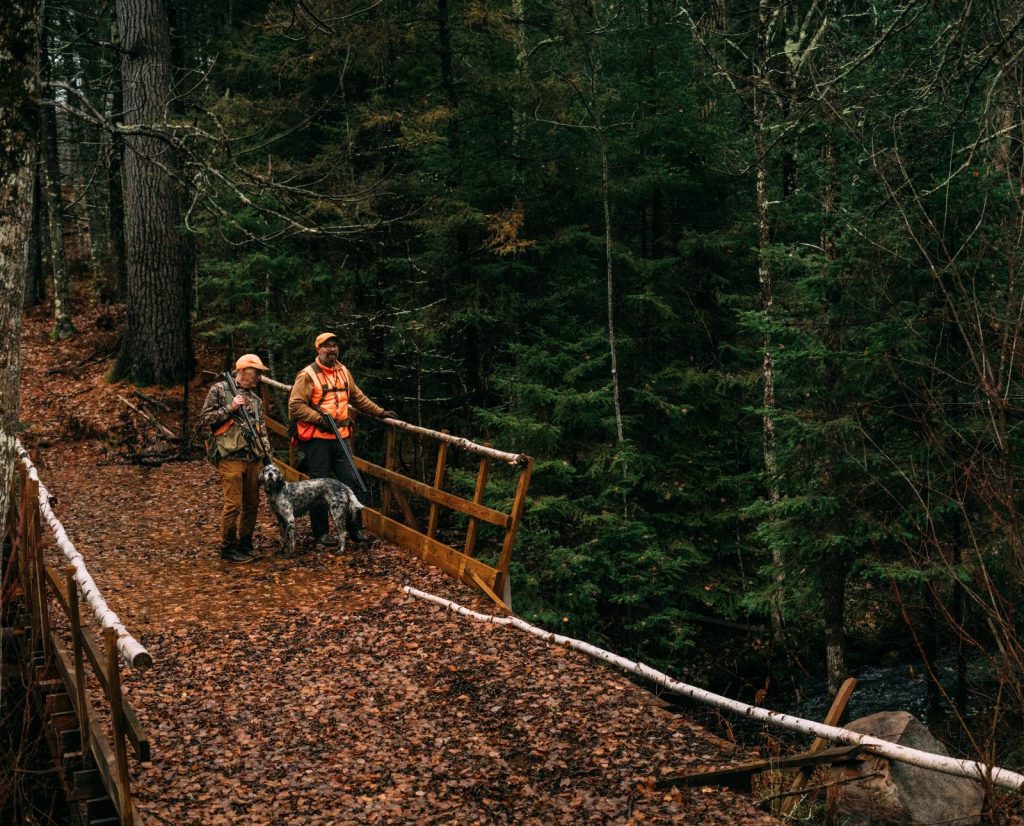
Self-Imposed Limits for Ruffed Grouse Hunters
As upland hunters, we can police ourselves. But this is difficult, especially on public land where most of us do our ruffed grouse hunting. It’s easy to monitor and control access on private land, but that is not so on land open to any and all hunters. Here, we have vague ideas about how heavy the hunting pressure has been, how many ruffed grouse have been taken, or how many remain. We can make educated guesses about the pressure from the number of cars or trucks in a given lot, feathers and guts left from shot birds, or spent shell casings in the woods, but in the end, it’s only a guess. Because we can never be sure about gunning pressure, it’s easy to rationalize harvesting one more bird from a covert because if you don’t, then you reason somebody else probably will.
Read: The Ethics of Bag Limits and Self-Imposed Limits
If only we could sex ruffed grouse when we flush them and, like pheasants, shoot by law only the males. I’ve read pheasant hunters can shoot over 90 percent of the roosters and still not get into additive mortality territory. Some quail hunters claim they can tell males from females in a covey flush, so they shoot only the menfolk. Such practices help maintain upland bird populations, but for ruffed grouse, this is wishful thinking. In the later stages of the season, I cringe when I shoot a female bird.
Last season, I shot my last grouse on November 29 in the midst of a heavy snowstorm, which ultimately dumped about a foot of snow that day. Although our season ran until early January, I only hunted one more time, on Christmas Eve. I was following a Christmas hunt tradition we’d established years earlier, but with all the snow piled up in the woods, I was home drinking coffee much sooner than I expected, and I knew I was done for the year even though there were nearly two weeks left in the season.
The winter weather and the deep snow effectively ended my season, taking the decision whether to hunt or not the rest of the winter out of my hands. Sometimes Mother Nature knows best. With all the snow on the ground, it was a good winter for ruffed grouse who could lie cozy in their snow roosts but not so good for the hunters. That’s never a bad thing.