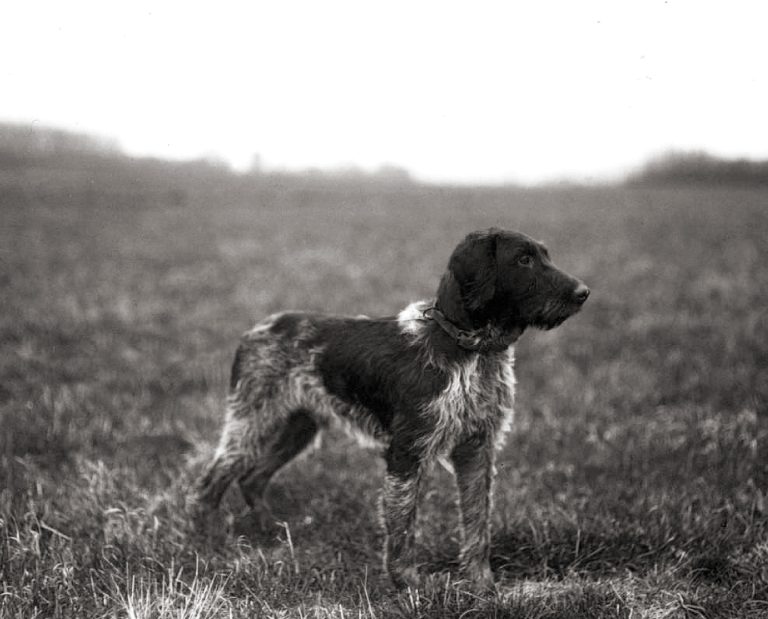


Chesapeake Bay Retriever: The Ultimate American Waterfowl Hunting Dog
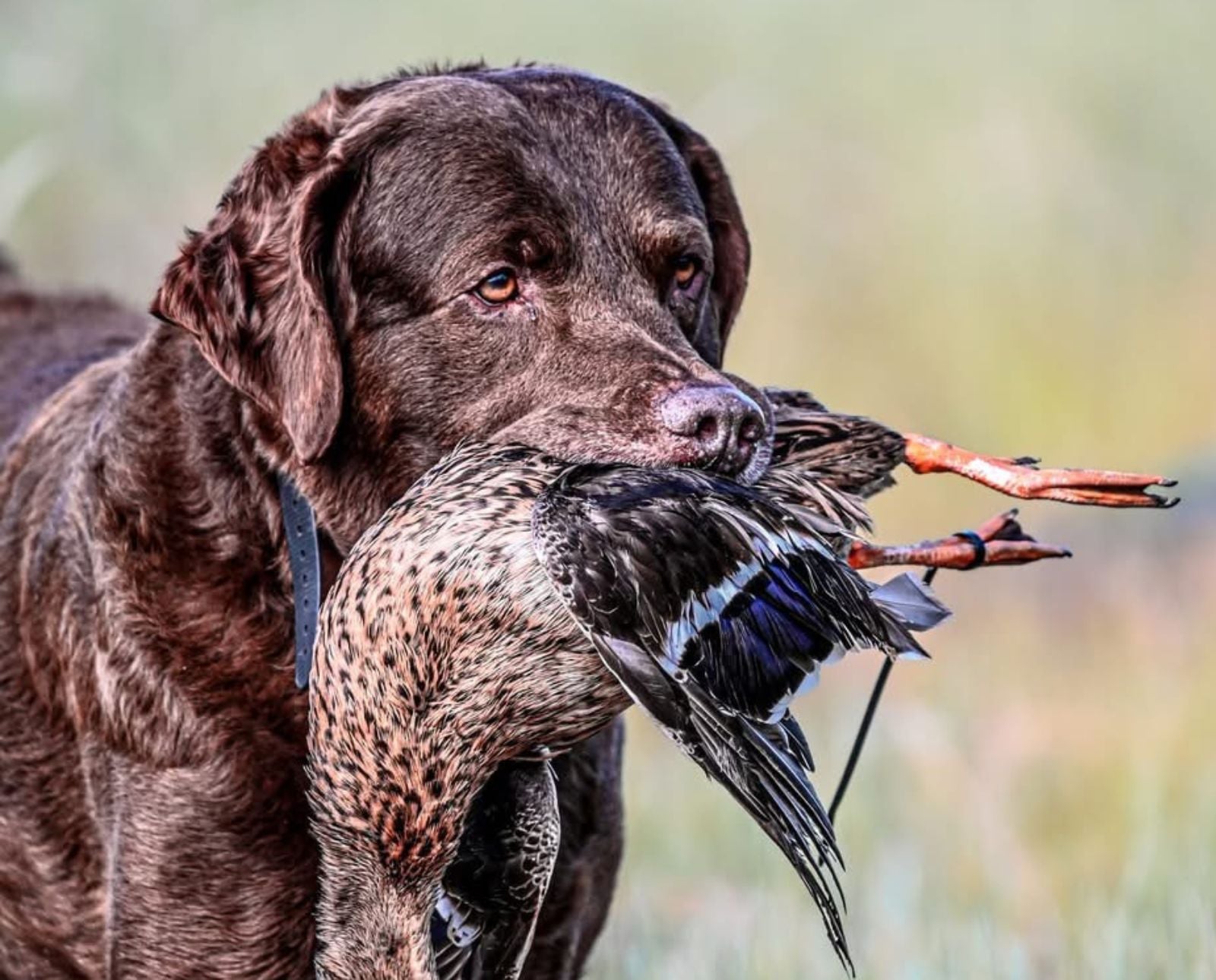
This all-American hunting dog breed is deeply rooted in the history and culture of waterfowl hunting
Although the times were tough back when folks made a living supplying markets with thousands of freshly harvested ducks and geese, the Chesapeake Bay Retrievers that were developed to thrive in these conditions were even tougher. To know this American hunting dog breed is to understand its history, including what it was developed for and the work these dogs did.
What is a Chesapeake Bay Retriever?
The Chesapeake Bay Retriever is a hunting dog breed named after the famous bay in Maryland and Virginia where it originated. It is the only retriever breed developed in the United States. Originally bred along the Chesapeake Bay for market waterfowl hunting, the breed is known for its waterproof coat, protective temperament, intelligence, and exceptional retrieving ability in cold weather.
These waterfowl dogs were used by the market hunters who worked the Chesapeake Bay. Routinely retrieving hundreds of downed ducks, geese, and swans in the most adverse conditions, they had to battle all day and halfway through the night through frigid temperatures, rough seas, high tides, and icy surf. This was all in an effort to fill the American consumers’ demand for fresh meat.
After long days retrieving birds from the water, the dogs were then asked to perform the Herculean task of guarding the gunner’s rig throughout the night as they traveled to the local market to deliver the fowl. The birds would be shipped north to the finest restaurants in New York, Baltimore, and Chicago.
In Nash Buckingham’s classic book Game Bag, the author mentions his personal Chesapeake Bay Retriever named Pat and highlights the breed’s power and work ethic. Nash’s dog was known for making hundreds of retrieves while shooting on the mighty Mississippi River. “Pat has challenged the treacherous might of the most powerful river on Earth. He’s battled its every hazard and fury, and beaten down every obstacle its restless cunning could devise. Yep, he’s licked Ole Miss at her own game, with no odds or quarter asked or given,” he wrote. Plain and simple, the Chesapeake Bay Retriever was purposely bred to work with flaming courage and unspeakable devotion.
Chesapeake Bay Retriever History
The Chesapeake Bay Retriever’s storied history can be traced to a pair of pups rescued from a sinking ship off the coast of Maryland in 1807. The pups, Canton and Sailor, eventually attained great reputations as outstanding water dogs.
Listen: The History of the Labrador and Chesapeake Bay Retrievers – Hunting Dog Confidential Podcast
Living on opposite sides of the bay, Canton and Sailor presumably were never bred together; however, some of their descendants inevitably were. While these two provided the foundation for the Chesapeake, other breeds naturally were crossed with them to create the hunting dog we know today. The wealthy owners of the infamous duck clubs that lined both shores of the Chesapeake Bay worked hard to carefully mate select dogs and create the breed standard. By the late 1800s, the Chesapeake Bay Retriever had been firmly established. In 1878, the Chesapeake was officially recognized as one of the original nine breeds before the American Kennel Club (AKC) was founded in 1884, becoming the first retriever to receive this formal acknowledgement.
Chesapeake Bay Retriever Breed Standards
| Characteristics | Details |
| Breed Name | Chesapeake Bay Retriever |
| Height | Males: 23-26 inches Females: 21-24 inches |
| Weight | Males: 60-80 lbs Females: 55-70 lbs |
| Coat | Coat should be thick and short, no more than 1 ½″ long, with a dense, fine, and wooly undercoat. A Chesapeake’s coat should resist water in the same way a duck’s feathers do. |
| Coat Color | Brown, sedge, and deadgrass |
| Lifespan | 10-12 years |
| Health Issues | Can be prone to hereditary conditions like hip and elbow dysplasia, degenerative myelopathy (DM), exercise-induced collapse (EIC), and eye disorders (PRA). As a deep-chested, active breed, they are highly susceptible to gastric torsion (bloat), and their thick coats can lead to skin allergies and ear infections. |
| Character | Intelligent, affectionate, hard-working, happy, loyal, and protective |
| Population | 3,700 to 4,000 pups are registered annually with the AKC. As of 2025, they were the 56th most popular breed out of the 205 recognized AKC breeds. |
| Range | Close to medium |
| Good For | Waterfowl hunting, upland bird hunting, hiking, swimming, obedience, tracking, shed hunting, agility, companionship |
| Breed Clubs | The American Chesapeake Club |
| Fun Facts | Became Maryland’s state dog in 1964 |
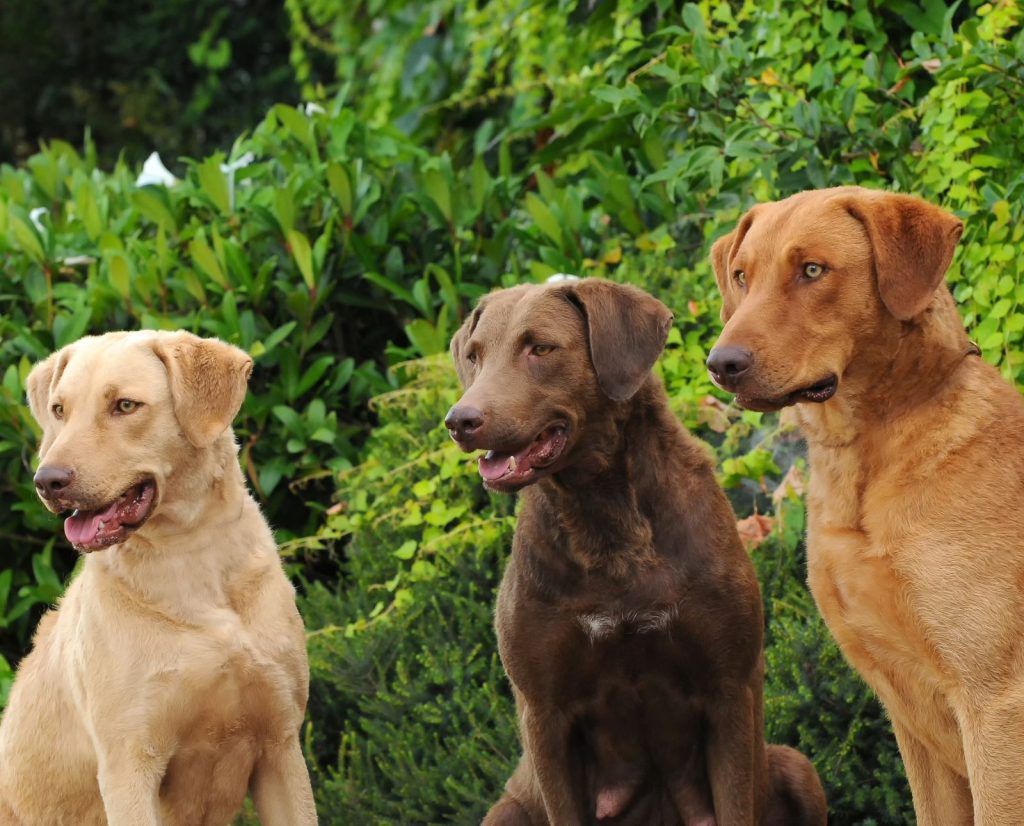
The Chesapeake Bay Retriever’s characteristics are specifically suited to enable this breed to function with ease, efficiency, and endurance. The breed’s double coat consists of a short, harsh, wavy outer coat and a dense, fine, woolly undercoat, and is ideally suited for the icy, rugged conditions in which they often work. The color of the Chesapeake’s coat must blend in and match the environment in which they work. These colors range from a mud-like brown to reddish sedge and even a light blonde color called deadgrass.
This breed’s body is strong and well-balanced. They are a powerfully built animal of moderate size and medium length in body and legs. Males stand between 23 to 26 inches, and females between 21 to 24 inches. Males weigh between 60 to 80 lbs and females between 55 to 70 lbs. They have a deep, wide chest, and the shoulders are built with full liberty of movement, with no tendency for weakness in any feature. The breed’s distinctive hindquarters, which can be a bit higher at the hip, contribute to its strong rear drive, which is especially helpful in the marshy footing of the wetlands they frequent. The Chesapeake’s skull is broad and round, and its jaws are of sufficient length and strength to carry large game birds like Canada geese with ease.
Chesapeake Bay Retriever Temperament
The Chesapeake Bay Retriever is known for being loyal, intelligent, and fiercely devoted to its family. Unlike Labrador or Golden Retrievers, breeds known for being naturally outgoing with everyone they meet, Chesapeakes tend to be more reserved around strangers and are often protective of their people and property. This trait is a reflection of the breed’s history, as these dogs were expected not only to retrieve waterfowl in harsh conditions but also to guard boats, equipment, and harvested game. While they are affectionate and gentle with family members, they are also confident, independent thinkers who appreciate having a job to do. Early socialization is important to help them develop into well-mannered adults, especially in unfamiliar situations. With proper training and socialization, Chesapeake Bay Retrievers make exceptional companions, combining a strong work ethic with a deep bond to their owners.
Chesapeake Bay Retriever Trainability
Chesapeake Bay Retrievers are independent-thinking dogs that possess great memories. Training must be consistent as they are very clever, even as puppies. Building a solid obedience base is imperative. Once you have shown a Chesapeake something, they do not forget it, regardless of whether the behavior was positive or negative. As a result, it is important to take training slowly and reinforce the positive behaviors you want to encourage.
Due to their intelligence, Chesapeakes tend to bore quickly in training. Their boredom is often interpreted as stubbornness. Long, repetitive sessions are not usually successful. You are best off with short, 10- to 15-minute sessions a few times a day. Keep the pace and tempo upbeat and positive. Additionally, Chesapeakes thrive off of encouragement. Words of praise and positivity go a long way during the training process and throughout their lives.
Socialization is extremely important as they inherently carry a desire to guard and protect. Chesapeakes are very aware of their surroundings and tend to keep a close eye on their family, forming tight bonds with their owners. This innate desire is a credit to the years of service by keeping a watchful eye on the market hunter’s birds, boats, and homes.
Chesapeakes are very affectionate and consider themselves an equal member of the family. They are true companion dogs that love to be by your side, whether in the blind, on a patio, or simply following you from room to room. They are active dogs who love to swim, hike, compete, hunt, and retrieve, truly doing anything their owner likes to do.
The Rise of the Modern, Dual-Purpose Chesapeake Bay Retriever
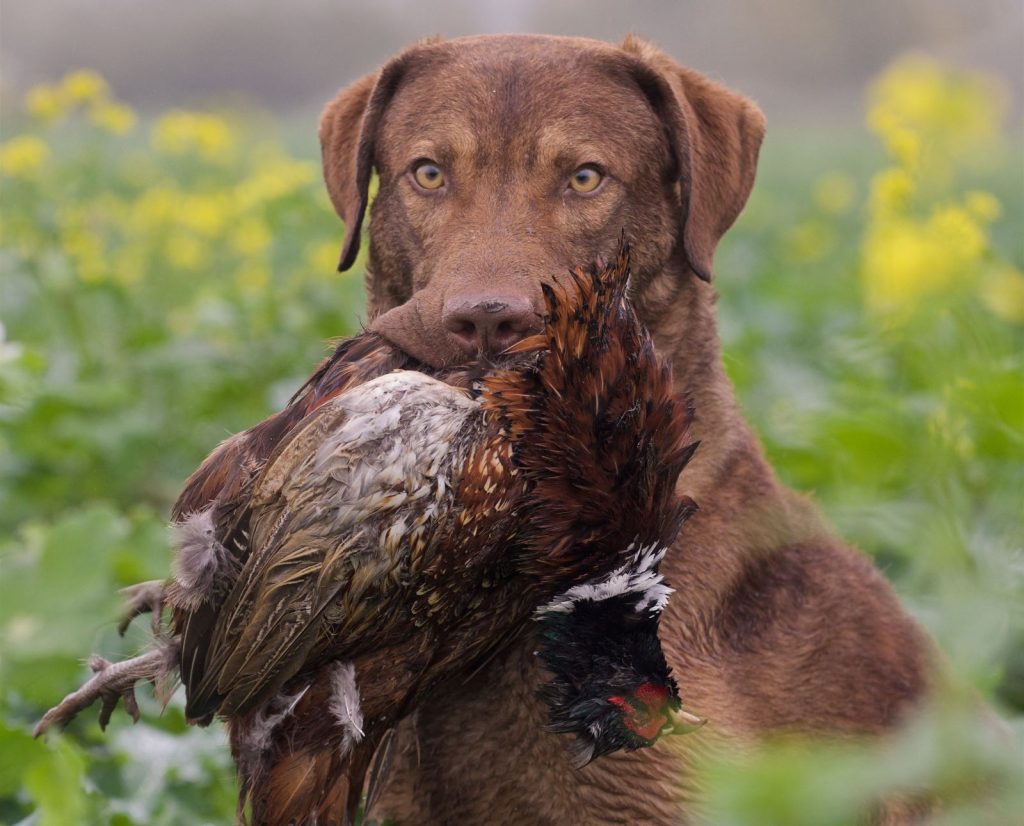
As times have changed, the Chesapeake Bay Retriever has as well. With shorter waterfowl seasons and smaller bag limits, the brown bombers have adapted and become dual-purpose dogs. Many have become very proficient in the uplands, and in many hunters’ eyes, they are a pheasant’s worst nightmare.
Besides being excellent gundogs and devoted companions, these extremely versatile dogs also excel in competition at field trials, hunt tests, dog shows, and obedience trials. The greatest strength of the breed is the fact that there is no split between conformation and field lines. In other words, you can have your dog in the duck blind in the morning, show it in the conformation ring mid-day, and then chase roosters into the evening.
The Chesapeake Bay Retriever is a true multi-purpose dog. This quality is a credit to the breeders, both past and present. Through over 200 years of careful and selective breeding, today’s Chesapeakes look and move as they did in the late 1800s.
The Future of Chesapeake Bay Retrievers
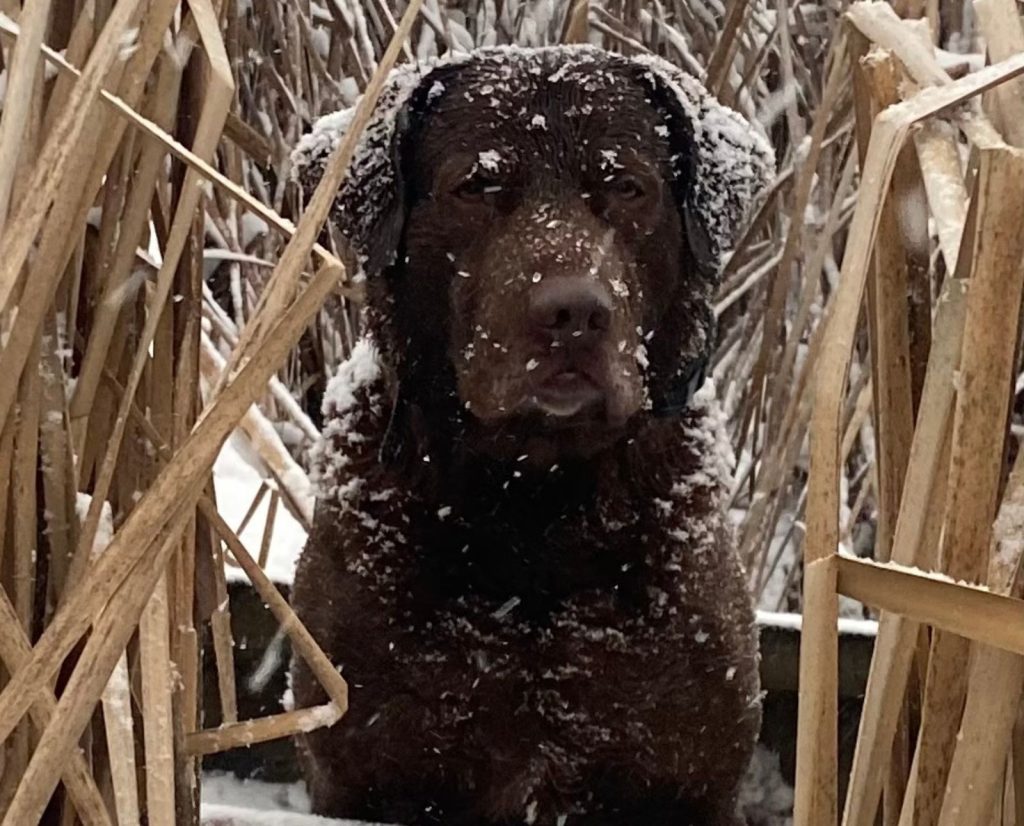
Chesapeake Bay Retrievers are as deeply entwined with waterfowling as the decoys we use and the calls we blow. This four-by-four of the retriever world has stood the test of time and continues to thrive. As long as cold north winds blow, lakes begin to turn hard, and the icy sting of sleet pelts away at our faces, there will always be big, blocky Chesapeakes by waterfowler’s sides, standing guard over the decoys. Their amber eyes will be to the sky as their thick, wavy coat gets covered in snow. Their ears will be perked, ready for the call to duty, just as they have been for more than 215 years.