

Hunting Eurasian Collared-Doves for the Table
If you can’t beat ‘em, eat ‘em
This article originally appeared in the winter 2024 issue of Project Upland Magazine.
“Birder” isn’t a label I’ve ever applied to myself. However, if I put a little thought into it, I realize that birds have been a part of my life for as long as I can remember. Before I could read, I memorized every bird in a children’s edition of a Peterson field guide, so proud to recite the names my parents read to me. Even now, when I see an unfamiliar bird, sometimes a species name will pop into my head without warning from the dark recesses of an early childhood memory. I don’t know why I know it, but it’s tucked away back there, occupying a few bytes of space. I suppose that makes me a bit of a birder, even if I don’t carry a treasured life list of sightings.
I do enjoy birds; I like watching them, learning about them, and—yes—hunting them. I’m not into bird feeders, but I managed (read: lovingly neglected) our landscaping in a way that was, apparently, wildly attractive to songbirds. Towhees and juncos scratched in the leaf litter beneath the shrubs in search of morsels, cedar waxwings descended on the berry bushes with an infectious fervor, and every spring a whirlwind of ruby-crowned kinglets took up a flittering—and fleeting—residence in the alders.
When we left the temperate rainforest region of the Pacific Northwest and relocated to a rural, agricultural valley carved out of the sage steppe, the sudden lack of native yard birds hit me with a jarring wave of disappointment. Gone were the colorful finches, the antics of the jays, and the occasional breathtaking flash of a tanager. In their place were thousands of starlings, a few house sparrows, and the ubiquitous Eurasian collared-dove. The only native birds I initially saw at the new house were barn swallows, a handful of snipe, and a roving band of magpies—the latter of which I was advised by locals to shoot on sight (spoiler: I did not).
Read: The Art of Dove Hunting Solo
As I stewed over the starlings and their irritating ability to thrive so magnificently on this man-made landscape, my thoughts were interrupted by the haunting coos of the similarly invasive and wildly adaptable Eurasian collared-doves. A vision of a dove popper appeared before me.
Hmm.
I’d never hunted doves before. I like to think my hunting interests are as versatile as my dogs’, but nothing ever sounded particularly appealing about jostling for elbow room in a public sunflower field, sweating and burning in the late summer sun, only to sit and wait for birds that may or may not show up. Meh. I usually have better things to do in September.
But there were those flying poppers out the window again. I studied the patterns of where they went each morning and where they returned in the evenings. It wasn’t that hard, and there were certainly plenty of them around. It was time to start planning my hunt.
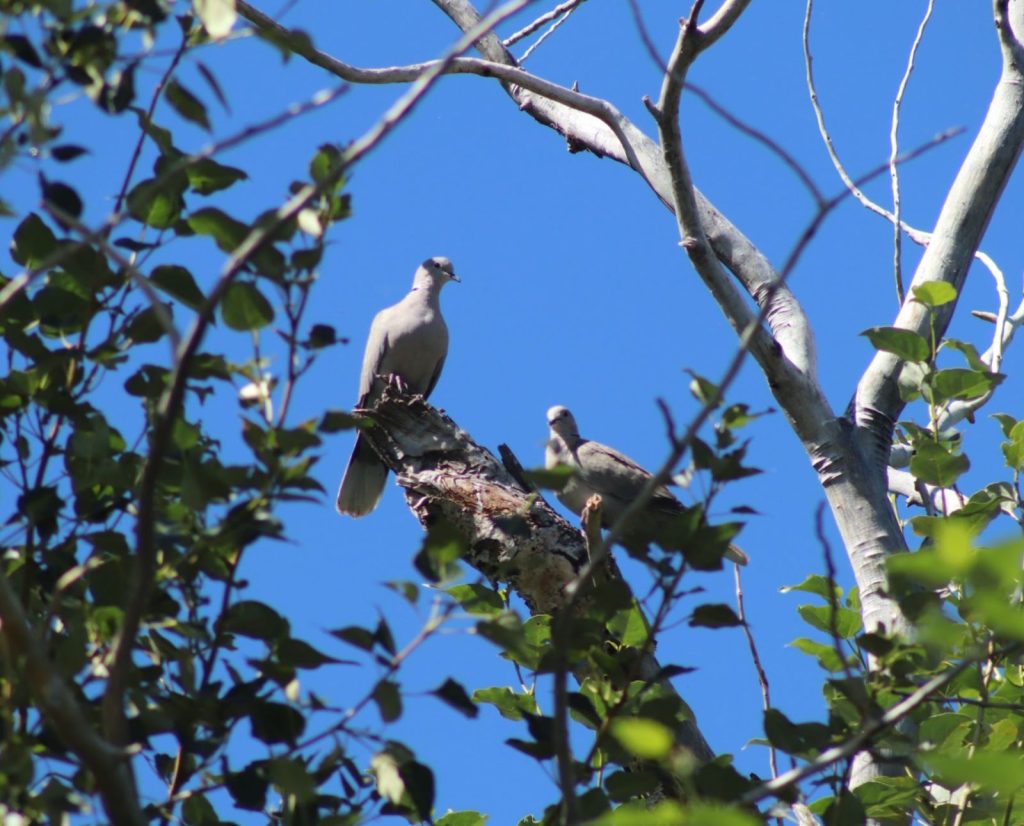
How Eurasian Collared-Doves Conquered North America
Eurasian collared-doves are on a short list of the world’s most successful colonizing birds, being highly adaptable and able to thrive in a variety of landscapes. They are historically native to the region surrounding India, with a rapid spread into and throughout Europe documented in the early twentieth century. The initial introduction of these birds into the United States is attributed to a flock that escaped from a pet store in the Bahamas in 1974, which soon made their way to Florida. The rest, as they say, is history. Their expansion was swift, and Eurasian collared-doves are now found throughout most of the United States, particularly in agricultural regions.
The true ecological impact of their growth isn’t widely studied or understood, at least not in terms that have kept up with their rapid expansion. According to the Texas Invasive Species Institute, “Eurasian collared-doves are extremely successful colonizers and breeders, and some scientists believe that they may be competing with native North American doves, although negative effects have yet to be explicitly demonstrated. In California, Eurasian collared-doves may be competitively displacing another non-native dove, the spotted dove (Streptopelia chinensis). When present in large numbers, they can discourage other species from using bird feeders, and may even aggressively defend these food sources, chasing other birds away.”
The Cornell Lab of Ornithology conducted a study using ten years of data gathered through its Project FeederWatch program. By linking dove sightings with human development data, the researchers tracked the preferred habitat and the spread of collared-doves alongside that of native dove species throughout Florida. The results weren’t exactly what the authors expected.
“[We] studied the relationship between collared-dove abundance and the abundance of other dove species in the study area, anticipating a negative effect on established species following the introduction of a potential competitor,” the authors stated. “Contrary to our expectations, the site-level abundance of four other dove species all increased with collared-dove abundance throughout the sampling period. Interactions between collared-doves and native species should be further studied in different environments as this invasive bird rapidly colonizes North America.”
Anecdotes abound in which large groups of Eurasian collared-doves have been witnessed displacing local populations of native doves, but for now, science hasn’t proven this reasonably logical assumption. As a result, states have taken varied approaches to whether or not to implement control measures, as well as what those measures should be. Some states, such as my home state of Washington, have an open hunting season with no bag limits and no closure dates. Other states combine them with the mourning dove season but may remove the bag limit for the collared-doves. Hunting opportunities aside, it’s well understood that their uncontrolled spread makes any sort of attempt at eradication virtually impossible at this point.
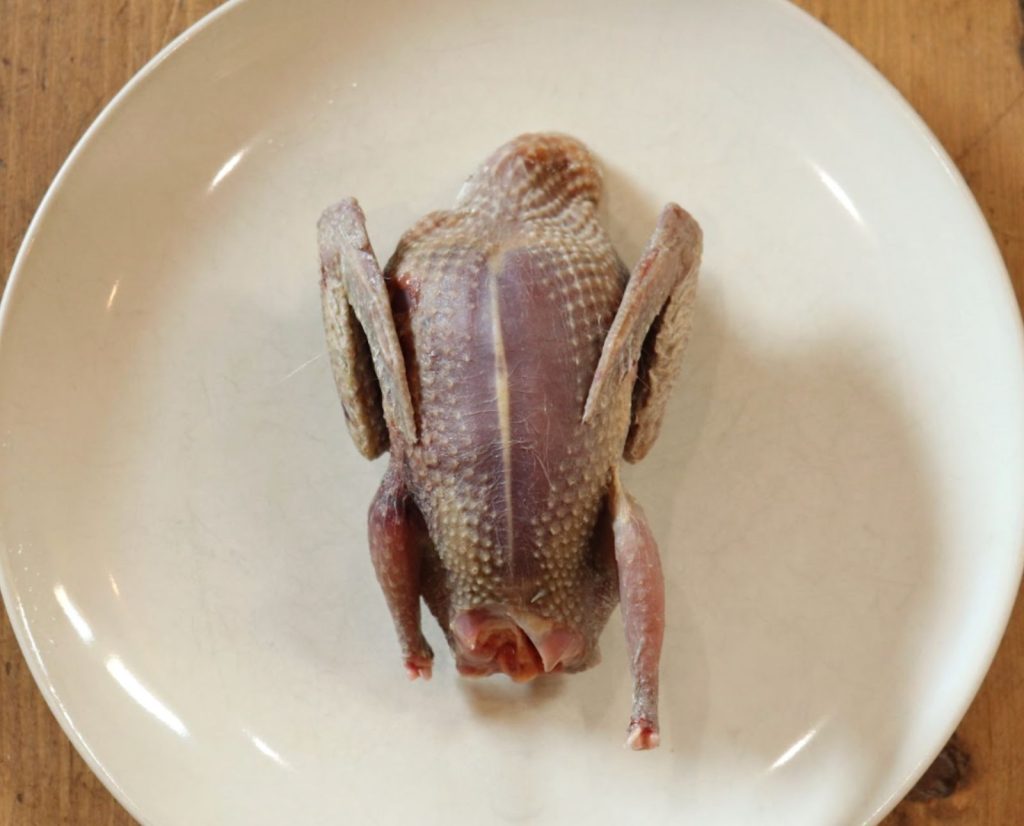
Hunting My First Eurasian Collared-Dove
I waited until September for my first attempt at hunting collared-doves on our property, not because the season wasn’t open before then, but because I wanted to be absolutely confident in my ability to discern the differences between collared-doves and mourning doves. I headed out the door with a very confused dog who wasn’t sure if we were going for a walk or if perhaps I’d finally lost my mind. I just told her we were going to do some duck blind practice.
Cook: Project Upland’s Dove Recipes
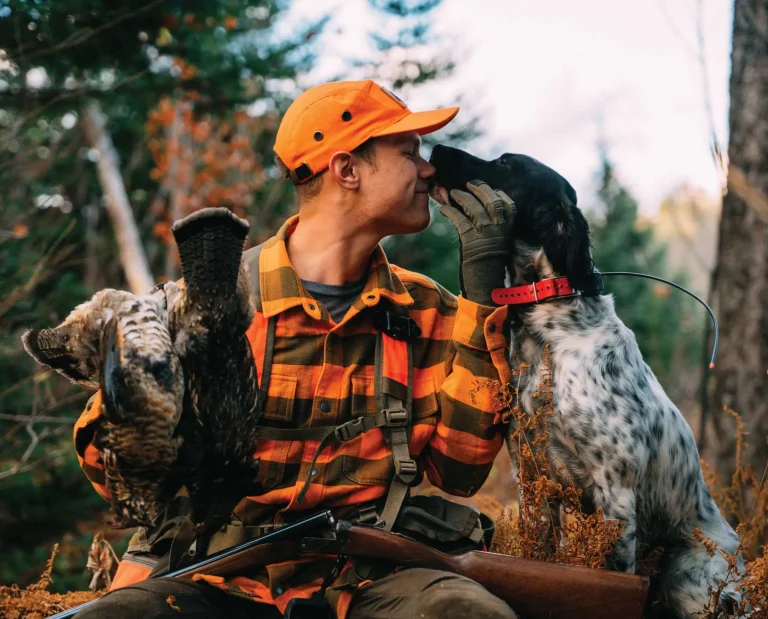
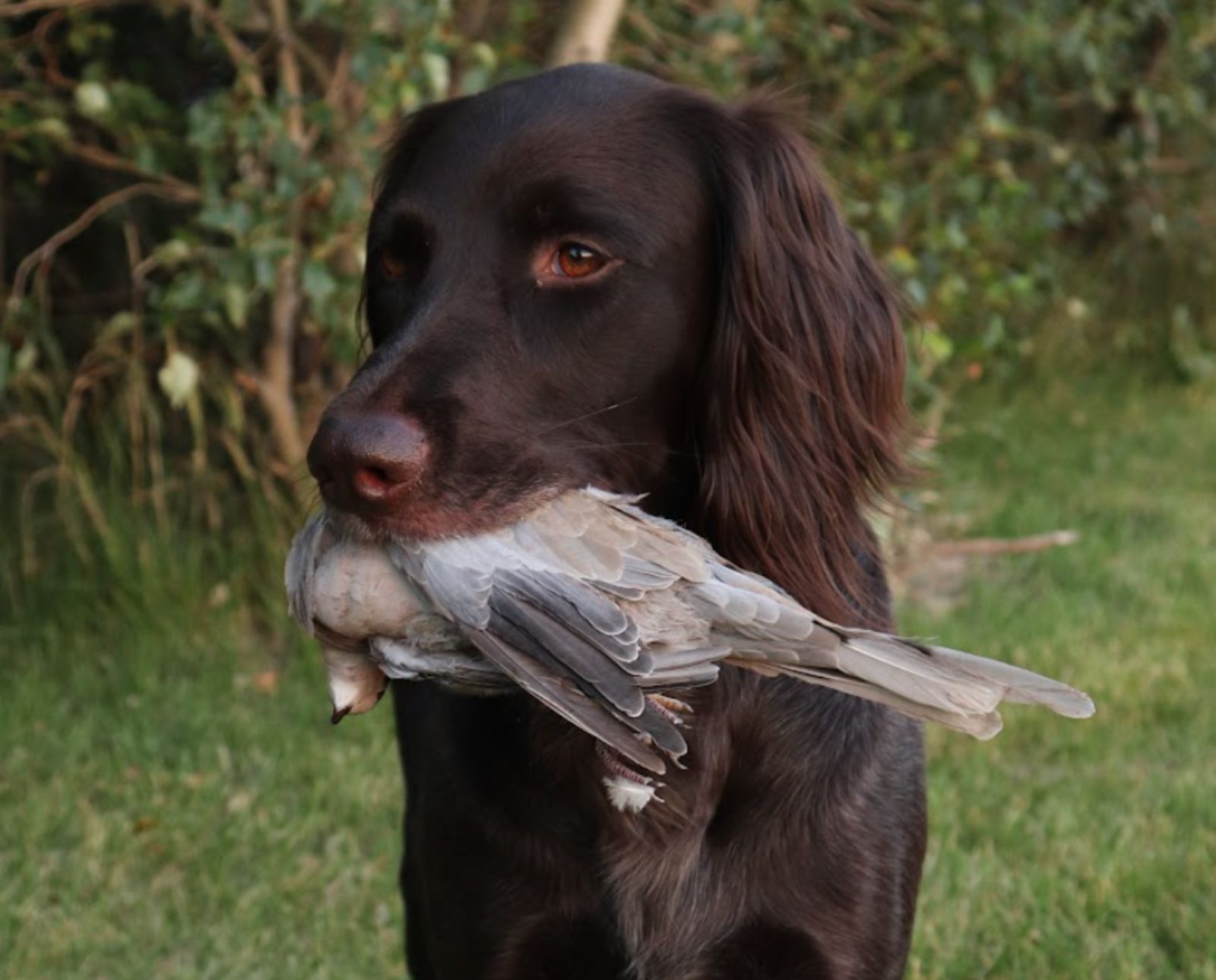
As the doves started to move around for the evening shuffle, I picked one out and covered it with the barrel of my 20-gauge. To my surprise, and more so to the surprise of my incredulous dog, it fell into the grass with a thud.
“Fetch.”
She returned with the bird, beautiful in its understated markings. I admired it in the fading light as we walked back to the house. One was enough for now—I wanted to taste it and see if it was something I wanted to keep hunting. We were met by the two other dogs, who simply could not wrap their minds around hunting within view of the living room windows and suddenly had some strong feelings about who was chosen for that inaugural dove hunt.
The dove plucked easily and cleanly, and I spatchcocked it for a quick sizzle in the cast-iron frying pan. As with every other first bird I’ve shot, I seasoned it simply with salt so I could really understand the flavor. The result was delicious: an invasive bird served with a hint of self-righteousness in “doing my part for conservation” while also having a really good time in my own yard.
Suffice it to say, it wasn’t my last collared-dove.